


Dima Hasao: Is Sixth Schedule enough to protect tribal land?
This case points at the contradiction of land transfer system in this tribal region & how it threatens public interest; hearing of the case on Sept 1

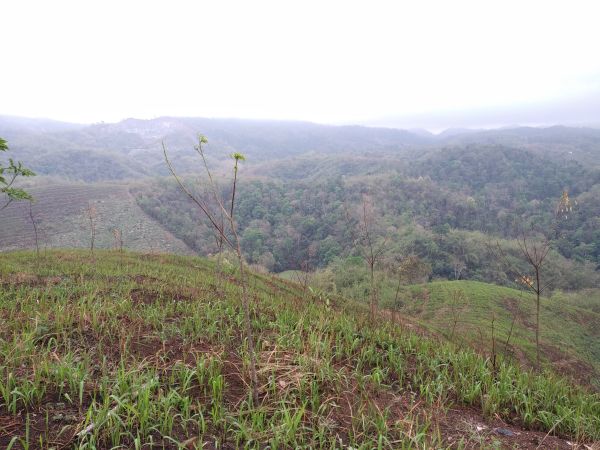
 The case of the transfer of over 3,000 bighas of land in Dima Hasao in Assam to a cement company raises a crucial question: Is the tribal land protected under the Sixth Schedule to the Constitution safe?
In this particular case, there remains a legal loophole that may allow the argument of protected tribal land to slip through.
Justice Sanjay Kumar Medhi of the Gauhati High Court recently reacted to granting over 3,000 bighas to Mahabal Cements, a subsidiary of JK Lakshmi Cement, saying, “Is this some kind of a joke?” Medhi’s response would have been the response of any conscious citizen.
Transfer of tribal land to a private company on such a large scale is a threat to the interests of the tribal people. It seemed to be a “joke”, because the transfer of the tribal land to a private entity might look like a blunder. However, it is possible as per the provisions of law.
This brings us to another crucial question — is this not a contradiction of the system of land transfer in a Sixth Schedule area?
Is there a contradiction?
It is a contradiction of the provisions meant for safeguarding tribal land. In the spirit, it should prevent the transfer of the tribal land to non-tribals and protect tribal individuals from losing land. But, if the clauses are carefully analysed, they carry the scope of this blunder.
The district of Dima Hasao in Assam is a protected area under the Sixth Schedule of articles 244(2) and 275(1). It was introduced to conserve the traditional practices of tribal people within a non-tribal majority of Assam. It recommended the establishment of an autonomous district council in identified districts. Therefore, Dima Hasao (previously North Cachar Hills district) is under the North Cachar Hills Autonomous Council (NCHAC), functioning as per the Assam Autonomous Districts (Constitution of District Councils) Rules, 1951 (amended).
Land is a state subject in India; hence, respective states enact their own acts for land administration. So does the state of Assam.
Though Para 3(1)a of the Sixth Schedule grants power to NCHAC to make its own law for land administration, it has adopted the ‘Assam Land and Revenue Regulation, 1886 (amended in 1947, 1962 and 1981)’, which is applied in the State of Assam. However, other district councils in the North East have their own laws regarding land, like the Khasi Hills Autonomous District Council and the Jaintia Hills Autonomous District Council. It depends on the respective district councils.
Escape route
In the context of Dima Hasao, if one looks at the documents of land regulations, there are provisions that prevent the transfer of tribal land to non-tribals. As per Section 160(2) of the Assam Land and Revenue Regulation, 1886 (amended), the state government has the power to specify the classes of people who are entitled to the protection.
Similarly, as per Section 161, the state government may constitute the areas dominated by the protected classes into ‘belts or blocks’ for effective protective measures. The land belonging to the protected classes cannot be transferred to a person not belonging to the protected class as per Section 164(2).
However, despite these provisions, there are clauses which provide an escape route for the state government. Section 162(4) permits the state government to revoke the provisions which prevent land transfer. Similarly, Para 3(1)(a) of the Sixth Schedule states that the state government can acquire any land by compulsory acquisition for ‘public purposes’, and no law made by the respective autonomous district councils can prevent this.
What is ‘public purpose’?
Now, how do we define ‘public purpose’?
The definition of the term ‘public purpose’ is not static and varies from one context to another. But the state’s right of Eminent Domain in land acquisition (principal believing that private interests are subservient to public welfare) has raised questions with the increasing number of private actors in these projects.
The respective courts have also refrained from suggesting any standard definition of ‘public purpose’. They stated that instead of a single standard definition, the term should be inclusive and open to accommodating multiple elements (Amlanjyoti Goswami’s argument in the paper titled ‘Land Acquisition, Rehabilitation and Resettlement: Laws and Politics’, 2011).
Though there is no particular definition of ‘public purpose’, Section 2(1) of ‘The Right to Fair Compensation and Transparency in Land Acquisition, Rehabilitation and Resettlement Act, 2013’ contains the categories of projects that can be considered as the ‘public purpose’. It also includes the project for industrial corridors or mining activities, which can be based on a model of public-private partnership.
Additionally, the draft notification in 2006, as per the (Environmental Protection) Rules, 1986, restricts projects based on their potential environmental impacts. The project of mining in Dima Hasao claims 3,2000 bighas (8,094 hectares approx.) of land, which is more than the 50-hectare threshold and falls in the Category A projects.
Category A & tribal land
Category A projects are solely based on lease area and not on the type of land, whether it is barren or agricultural or forested. It requires prior clearance from the Expert Appraisal Committee (EAC) of the Ministry of Environment, Forests and Climate Change. The committee checks the compatibility of the project with environmental norms.
The process of involving tribal people in such decision-making has also been a point of concern when resistance against such projects is visible in different parts of the country, like Chhattisgarh and Kancha Gadchibowli. This court case regarding 3,2000 bighas of land transfer is also an example of the resistance to such transfers.
In other words, the State government has the legal means to escape the safety measures of the Sixth Schedule in certain cases related to ‘public purposes’.
The autonomous district council (here the North Cachar Hills Autonomous Council), composed of tribal people, has the power to make laws, but it also cannot prevent any acquisition if the state government does it through the compulsory acquisition for a ‘public purpose’.
Threat to public interest
Similarly, there is a loophole in tribal areas of other parts of the country protected by different provisions like the Fifth Schedule. However, it will be better for the scope of the article to limit itself to Sixth Schedule areas, as other areas will have different specific laws, institutions and historical contexts.
In the above-mentioned case, it is fairly possible for the cement company to get permission as per the law. It will be clearer with the further proceedings of the court.
The hearing of the case is on Monday (September 1).
However, the real threat to public interest is that the private cement company can have the vast land granted legally.
There are provisions of the Sixth Schedule duly implemented in this region, and despite this, loss of tribal land could occur. Is this enough for the spirit of the Sixth Schedule to remain intact? Where do constitutional provisions fail to safeguard the tribal interests?
Understanding of land
The answer lies in the trade-off between the understanding of land. There is one understanding of land reflected in the traditional practices of tribal people, and there is a second understanding reflected in the state and private-led development processes.
Generally, the tribes residing in the Sixth Schedule areas have the institution of community land. It works as a safety net for the tribal people. As it is the community land of the tribals residing in the area, non-tribals do not have the right over those lands.
Secondly, all the members of the community have the right to access community land for their livelihood. It prevents the accumulation of land within a few hands.
However, the state and private-led development processes have led to the privatisation and commodification of the land resource. Additionally, the process of land transfer has drastically increased through sale and purchase, which was earlier through inheritance by virtue of being a member of the community. It has, by default, changed the eligibility of occupying and accessing land in these areas.
Privatisation vs community land & plight of poor tribals
In today’s world, the occupation and access to land are determined by the amount of wealth one has and not only by the virtue of the community. More money and resources mean more land that one can occupy. Within this changing scenario, who will own the land? Definitely, the affluent. They could be non-tribals as they have more resources and wealth.
But even among tribals, the rich will accumulate vast stretches of land, and fellow tribals will be left landless if the institution of community land is destroyed by privatisation. This process has opened Pandora’s Box in these areas.
The constitutional provisions of the Sixth Schedule were basically formulated to conserve the autonomy of tribal practice of community land from the second understanding of privatised and commodified land.
However, development processes have introduced the second understanding of land in tribal areas. Government schemes and policies are also endorsing the privatisation of land. For instance, basic needs like bank loans and benefits of the government schemes depend on the availability of ownership records of private land. Similarly, land transfer to large projects of private companies is already introducing private ownership.
Alienation of poor tribals from owning land
It must be understood that the public interest of tribal people lies in their ability to occupy, access and protect their land. Traditionally, it was ensured through the institution of community land. The development process brought privatisation, which tends to alienate a large tribal population from accessing and owning the land.
However, even if land transfer and privatisation are required for development, limiting the exceptions in transferring tribal land to non-tribals and appropriating land ceilings might help in reducing the ill impacts. It could be the primary step to safeguard the public interest of the tribal people.
Further steps would be subject to intensive research on the issue. But the Sixth Schedule will be fruitful not by its mere existence but only if its spirit is conserved, which is equal access of tribal land to the tribal populace and not a skewed distribution due to inequality of wealth in the tribal society and between tribals and non-tribals.