


Are hackers changemakers?
'Regardless of one’s view on the matter, the fact is that hackers can bring significant changes in a world increasingly reliant on technology'

Joseph M Kharkongor
The year is 2005, and the national RTI law was finally enacted after the Freedom of Information Act, 2002, failed to be implemented. It was the first time in history that human rights and fundamental freedoms were beautifully formulated in such detail.
But despite the RTI being instrumental in promoting transparency and accountability, it also faces several challenges that hinder its effectiveness — from delays and non-compliance to excessive use of exemptions, and not to mention the mindless 2019 amendments or even the Digital Personal Data Protection (DPDP) Act, 2023, which have raised concerns about weakening the RTI Act. Acquiring information has been a painful experience for many information activists across the country.
In such hopeless situations, who do we turn to? Hackers?
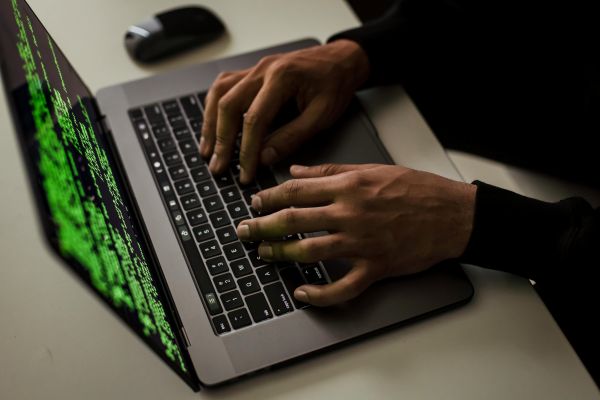
But what are hackers, you ask? For some, hackers are venal perpetrators of cyber-terrorism and a sinister threat to cybersecurity structures. For others, they are explorers with substantial computer skills who serve as advocates for the public good. Here in Meghalaya, one in particular has been the talk of the town and on the police radar for various hacking crimes.
But it was not long before his pranks took on a larger and more meaningful significance. From breaking into the MHA’s ‘foolproof’ computer systems to steal secrets, to taking over social media accounts to expose shameless preachers and politicians, this digital outlaw has disclosed evidence of wrongdoings of great substance. Three such disclosures are mentioned in this article.
Police abuse of power
New technologies are transforming the capabilities of law enforcement here in the state. Meghalaya Police (ahem! ahem!) now have devices to track our phones, and the latest software to hack our networks. They also have hacking tools to sift through the vast quantities of digital silt we leave behind on the Internet. And if rumours are to be believed, they can also deploy ‘big data’ algorithms meant ‘to predict where crimes will occur and who will commit them’ and can even transform the humble CCTV camera into a ‘Mission Impossible inspired biometric tracking device’ equipped with artificial intelligence meant to pick faces out of a crowd and, eventually, to mine gigabytes of stored footage to automatically reconstruct the movements of their targets.
Sure, each of these cutting-edge technologies bestowed upon by the current disposition gives the Meghalaya Police new and profound capabilities to monitor criminal suspects. But many of these tools raise troubling concerns about personal privacy.
Most of them operate in secret, without the knowledge or consent of targeted individuals and, often, without the ability to challenge how law enforcement uses them. Don’t believe me? In March of 2023, the Meghalaya Police department was left red-faced after this Shillong-based computer hacker exposed them for committing various IT crimes such as stealing of personal photos from social media accounts of people, including those of a man from Cambodia (name withheld) and using them without the consent or knowledge of the owner(s) to create fake accounts on platforms like Telegram.
This came to light after the hacker had dumped redacted portions of the evidence in a dark web forum.
No, the codes are not combinations to a personal locker nor do they belong to a nuclear bunker; there are strings of numbers separated by periods that are actually IP addresses used by the MLP’s cyber cell teams from Laitumkhrah, Nongthymmai and Tura to covertly spy on innocent civilians’ internet activities.
Yes, the MLP is now poking its incredibly large nose into innocent civilians’ private lives too; hijacking their web browsers, monitoring their social media accounts, viewing their phone gallery, remotely accessing their phone cameras and much more. These kinds of novel police practices test the constitutional limits on surveillance and raise profound questions about privacy, personal freedom and potential abuse.
And even as new surveillance tools (could) transform the relationship between people and the police, the public is often left in the dark about how the police use these tools and the rules, if any, that govern them. Some within the government have raised their voice on this matter, yet our police department shrouds them in secrecy. And what justifies this secrecy?
The principal justification offered by the Meghalaya Police has been simple and powerful: we must keep our methods secret to prevent criminals from circumventing our investigative techniques. Without secrecy, the argument goes, criminals would be able to evade law enforcement’s tools, crime would go undetected, and society would suffer the consequences.
Sorry, MLP! But in my opinion, I call this the anti-circumvention argument for secrecy.
Religious scandal
Religious leaders’ scandals happen. Needless to say, I don’t say that with any enthusiasm. In fact, it is greatly discouraging to me, but it’s true nonetheless. In mid-June, screengrabs of obscene chats between some religious leaders with sex workers were published on the same forum, spelling out the shocking reality of churches in Meghalaya.
Adultery by religious leaders is not a new phenomenon here. But are new conditions in today’s subculture exacerbating the problem of sexual sin? It’s an oversimplification to regard affairs by religious leaders merely as instances of sexual temptation, don’t you think?
This shocking disclosure compelled us to question how can our religious leaders fall so low? When is it ever okay to commit adultery? And how can one be so foolish, rather daring, to exchange nude photos and personal sex videos on unencrypted social media platforms?
A past survey conducted by Pornhub revealed Meghalaya as one of the highest consumers of online porn among Indian states. The survey made it amply clear that porn, despite being a taboo in the Ri Tip-Briew Tip-Blei, is watched by a large number of Meghalayans.
Indo-Bangla border killings
India and Bangladesh, over the years, have expressed their commitment to adhering to international human rights standards and are parties to the International Covenant on Civil and Political Rights, which explicitly prohibits torture in any form. Both countries have also acknowledged the rights of all persons to equality, justice and dignity. However, evidence hints otherwise.
In the last week of October 2022, extremely disturbing images of skeletal remains dumped inside a cave in a remote village situated at Meghalaya’s Indo-Bangla border extracted from the private email account of an insanely corrupt MHA official had shocked everyone. Going through the graphic images, I cannot help but wonder, how safe are we in our own land when violence knows no borders? Violence is a severe problem in the borders of Meghalaya; domestic violence and child abuse, in particular, are widespread as effective public security forces are seriously lacking. Those living on the borders of Meghalaya live in fear and are vulnerable to the many perils that plague the unfenced lands; however, the problem is utterly neglected by authorities.
A month after this leak, the Office of the United Nations High Commissioner for Human Rights also issued a communication to highlight allegations of cross-border artillery shelling and small arms fire. The communication made allegations of “a systematic pattern of indiscriminate cross-border killings from both countries, using artillery shelling and small arms against refugees and victims of trafficking”.
Using snipers, individuals as well as larger groups of migrants were you reportedly targeted. The Office of the High Commissioner for Human Rights have worked tirelessly to solve the problems of India and Bangladesh, urging both countries to maintain peace. But why is the NPP-led government not paying heed to the plight of border residents?
The shock of seeing all these human skeletal remains should prompt policymakers to do some soul-searching about the problem and not sweep the issue under the carpet like they have been doing all these years. The magnitude of this issue demands immediate action. The state and the central governments should take all necessary measures to ensure that lives and human dignity, which lie at the core of human rights, are respected. The time has come to put an end to border violence and killings. It is also time to uphold the human rights of those who are missing, the dignity of those who are presumed dead, and the rights of their families who deserve to find closure.
Often, the political debate leaves one with the impression that conflicts and terrorism require us to diminish human rights and freedoms. This rhetoric has put human rights on the defensive. It is important to insist that effective implementation of human rights is the best way to prevent conflict and terror and end suffering and inequality.
Disclosures like these are imperative and would have never been possible without hackers, as such type of data has always been kept hidden from the public eye. Let’s face it: the RTI is just not enough. When existing channels of acquiring information fail, it is often through hacking and stealing that democratic accountability can be ensured.
Regardless of one’s view on the matter, the fact remains that hackers have the potential to bring significant changes in a world increasingly reliant on technology. As Meghalaya moves closer towards digitalisation, hackers are figures that embody both peril and promise. And, if technology is to revolutionise democratic practice here in the state, Meghalayans must begin to use it in revolutionary ways and seriously consider digital disobedience as the new civil disobedience.
(The author is a private teacher and skill trainer. He is not involved in any of the hacking or uncovering of information, but plays the part of a middleman, passing on data received anonymously via email to the press. For any questions or concerns regarding material featured/mentioned in this article or any of the previous articles or letters by this author, email directly at roy_marbaniang@protonmail.com)