


The Shaistas, Arifas, Aminas, Naseemas and Shameems have many stories to tell and pains to share. However, their voices often get lost amid deep sighs and choking words. Their feelings are buried under stern gazes and the pseudo-pride of patriarchy. It is their stories that burn bright in Heart Lamp. This translation of collected short stories by Banu Mushtaq now sits on the bookshelf of almost every bibliophile after it received the Booker prize in May this year.
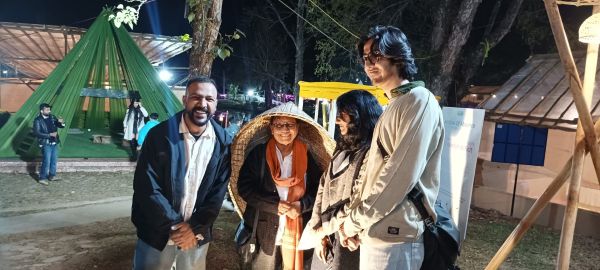
The author was in Shillong for the Literary Fest. An activist and a lawyer, Mushtaq has always swam against the tide, and controversies, condemnations and fatwas could never stop her from speaking the truth and telling the stories of marginalised women.
Though Mushtaq comes from a conservative Muslim family, she never let herself get caught in the fetters of unfounded restrictions and rules, especially those curtailing the freedom of girls and women. “My father was a great support. He has always been my hero,” she told the audience at the Shillong Literary Festival.
Mushtaq never wore a hijab, married for love and dressed up the way she wanted. She worked as a journalist with Lankesh Patrike, a Kannada weekly started by veteran journalist P. Lankesh. Later, his daughter, Gauri Lankesh, took over. Gauri was murdered by right-wing goons in 2017.
“I worked as a journalist for a decade. So, I wrote the truth back then. Later, through my stories, I told the truth,” she said.
For decades, Mushtaq worked for the rights of minority women and took up their causes before getting fame as an author. She wrote in Kannada, and Heart Lamp is the first translated collection of her stories, curated by Deepa Bhasthi.
“My mother tongue is Dakhni Urdu. But I studied in the Kannada medium… I write in Kannada, and my other stories and poems will also be translated,” she told the audience.
Sunday Monitor spoke to the author on the sidelines of the LitFest. Excerpts of the interview:
As an activist and a lawyer, you listen to the voices of women from even the most marginalised strata of society. For them, ‘feminism’ is a luxury amid all the struggles. So, when you tell their stories as an author, what does feminism mean to you? How do you feel when you are called a feminist writer?
Feminism means the struggle to obtain equal rights and opportunities for women. To gain that ultimate demand, the process is going on.
I feel proud when I am called a feminist writer. It is not shameful. It means that I am with downtrodden women, and I am with women who have been victimised and hunted. It is my bound duty to rescue them and be with them.
Women are the first victims of any socio-politico-economic upheavals in a country. They suffer silently, and their mental health issues are barely spoken about. So, what do you have to say about the current political situation in India, for which so many women are suffering?
I have come across a lot of cases like this. Men are also suffering from mental health issues. Men who really need counselling and therapy are governing us. It is the greatest tragedy we are facing.
Your descriptions of the women characters and their actions are as vivid as a photograph, like once Ismat Chughtai compared her writings with photographs. Is there any inspiration/influence of other women writers?
There are a lot of authors… but I document my life’s experiences. The most important thing that influences me is people, their sorrows, their struggles, their happiness… to be with people gives a different power, a different thinking process.
How are marginalised women represented in today’s Indian literature?
They don’t get any space… these women are completely ignored. That is why we are striving to get space for us and them.