


Shillong, Dec 1: The Centre has alerted the state on large number of injecting drug users and homosexual drug users.
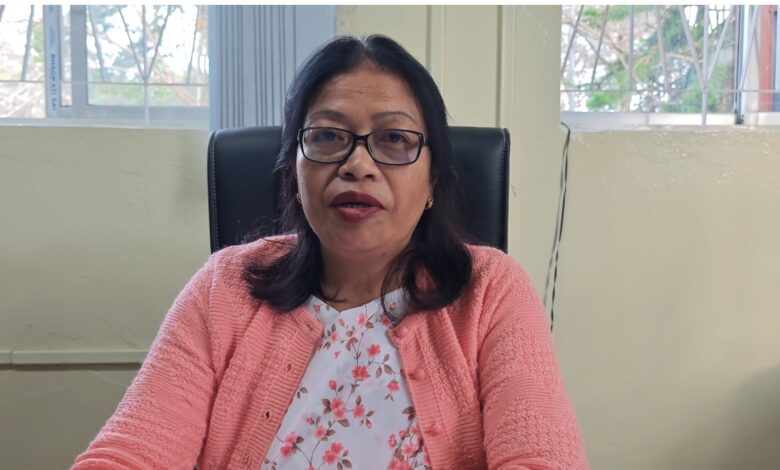
Project Director Meghalaya AIDS Control Society Dr KL Iawbor speaks to Meghalaya Monitor about the measures to address the concerns.
1.What would be your efforts to reduce the trend in East Khasi Hills?
Answer: Regarding drug abuse and its related issues in the state, it is to be clarified that the office of the Project Director, Meghalaya AIDS Control Society (MACS), has been mandated to implement only the “Harm-Reduction Programme” as per the guidelines laid down by the National AIDS Control Organization. Harm Reduction Services are being provided to People Who Inject Drugs to prevent the spread of blood-borne infections (HIV, Hepatitis B&C, etc) through sharing of infected Needles and Syringes. At present, MACS is providing harm reduction services through the Needle/Syringe Exchange Programme and Opioid Substitution Therapy. The Needle/Syringe Exchange programme is being provided through 9 NGOs across the state, while Opioid Substitution Therapy (OST) is being provided through 6 Main OST Centres and 5 Satellite OST Centres. Our efforts lie in saturating all injecting drug users in the state through harm reduction services through advocacy, sensitization, outreach activities, counseling and support to help injecting drug users transition to opioid substitution therapy.
However, to reduce the increasing trend of drug abuse in the state, Supply Reduction and Demand Reduction strategies also have to be in place, but these are beyond the mandate of MACS.
In response to your question regarding the increasing trend of “homosexual drug users” in the state, we can state that yes, we have homosexuals who are availing our services, such as counseling, condoms/lubes promotion, health screening, etc, through one NGO here in Shillong. But there are very few homosexual drug users who are ready to register with us. Thus, since the harm reduction programme is concentrated only for “injecting” drug users, we will have to work closely with the Social Welfare Department to be able to refer these homosexual drug users to drug rehabilitation centres.
2. Where does Meghalaya stand in terms of prevalence & people living with HIV (PLHIV)
According to the Sankalak 6th Edition (2023–24), Meghalaya records an adult HIV prevalence rate of 0.43 percent, with 0.45 percent among males and 0.41 percent among females. This rate is higher than the national average, placing the state among the top six in India in terms of HIV prevalence. In 2023, the state recorded 929 new HIV infections and 52 AIDS-related deaths, which included 29 males and 23 females.
3.Though over 90 percent are aware that they are living with HIV/AIDS, why do only over 79% go for anti-retroviral treatment?
Although over 90 percent of people living with HIV in Meghalaya are aware of their status, only about 79 percent are currently receiving antiretroviral treatment (ART). According to the Sankalak 6th Edition (2023–24), this gap can be attributed to several interconnected factors. One of the main reasons is access and linkage challenges, as some individuals who test positive are not immediately connected to ART centres due to issues such as long travel distances, lack of transportation, or limited healthcare infrastructure in remote areas. Another key barrier is stigma and fear of disclosure. Many people hesitate to seek or continue treatment because of concerns about confidentiality or fear of being recognized at ART clinics, which can lead to social discrimination. On an individual level, side effects from medication, work or livelihood pressures, migration, and the misconception that feeling healthy means they no longer need treatment further affect adherence. These combined factors highlight the need for continuous community sensitization, stronger support systems, and improved service delivery to ensure that every person diagnosed with HIV can begin and remain on lifelong ART.
4 Coming to the state as a whole, more than 50% of cases are due to casual partners — what are the efforts to address the issue?
According to the Sankalak 6th Edition (2023–24), 52 percent of HIV transmissions in Meghalaya occur through heterosexual contact with casual, non-commercial, and non-regular partners, making it the second highest in the country after Chandigarh. This pattern highlights that a significant portion of new infections stems from behaviour-driven transmission linked to unprotected sex outside regular partnerships.
To address this, the Meghalaya AIDS Control Society (MACS), guided by NACO’s national strategy, has strengthened prevention and awareness initiatives through targeted behaviour change communication (BCC). These programmes focus on equipping individuals, especially young people, with accurate information, negotiation skills, and confidence to practice safe sex and make informed decisions. A key component is the Adolescent Education Programme (AEP), where teachers are trained to educate students about HIV prevention, stigma reduction, life skills, and responsible behaviour. This peer learning approach ensures correct and age-appropriate information reaches students directly within educational institutions.
Furthermore, condom promotion and accessibility have been expanded, ensuring free and affordable availability at health centres, community hotspots, and events. Campaigns in local languages help normalise condom use and build acceptance. The Test and Treat strategy is also actively promoted, encouraging frequent testing and immediate ART initiation for those diagnosed to prevent further transmission.
MACS also collaborates with youth networks, Red Ribbon Clubs, and cultural and sporting events to make awareness efforts more relatable and community-driven. These combined actions aim to tackle the behavioural roots of HIV transmission while fostering a culture of awareness, safety, and shared responsibility among the people of Meghalaya.
5. As per 2023–24 data, 52 percent of cases, second in the country after Chandigarh, were reported from heterosexual casual partners. Is it because of a lack of awareness of the dangers of the disease?
While the 52 percent figure may seem concerning, it also reflects greater awareness, improved testing coverage, and stronger reporting systems. More individuals in Meghalaya are now voluntarily coming forward for testing, which naturally leads to higher detection rates. This rise in reported cases shows that people are more aware, less fearful of stigma, and more proactive about their health. The Meghalaya AIDS Control Society’s ongoing efforts, including community-based testing, mobile health camps, and youth-led outreach, have made HIV testing more accessible and acceptable.
The Intensified IEC (Information, Education and Communication) Campaign 2025 was conducted across all twelve districts of Meghalaya to promote awareness on HIV and AIDS prevention, testing, treatment, and stigma reduction. The campaign adopted a multi-level approach that combined community outreach, school and college engagement, social media dissemination, and on-ground events. A total of 728 villages were successfully covered, along with three slums. Awareness sessions were held through 798 village-level meetings attended by 83,050 people and three slum level meetings with 1,100 participants. The campaign also featured thirteen folk performances with 1,750 attendees and eighteen flash mobs that reached more than 5,350 people.
Youth engagement formed a key part of the campaign, with 307 schools and 77 colleges conducting awareness sessions involving more than 13,655 students from schools and 11,410 participants from colleges. In addition, twelve rallies were held with 2,850 participants, and sixteen special health camps benefited 21,500 individuals through on-site HIV testing and counselling.
Household-level outreach was conducted through door-to-door campaigns that reached 2,650 households and directly engaged 8,550 individuals. Healthcare linkages were further strengthened through collaborations with 112 hospitals, while fourteen influencers were engaged to amplify the campaign’s reach both online and offline.
In total, 106,781 IEC materials were distributed throughout the campaign. The Intensified IEC Campaign 2025 successfully built momentum for HIV awareness across Meghalaya, combining traditional outreach with digital engagement to ensure maximum reach, visibility, and community participation.
6 Since HIV in Meghalaya was declared an epidemic, what urgent measures are being taken to normalize the situation?
A comprehensive set of measures has been prioritized in line with recommendations from Sankalak (6th Edition, 2023–24) and national guidance from NACO. The approach focuses on rapidly strengthening prevention, testing, treatment, and stigma reduction through strategies tailored to local realities.
The priority is to expand HIV testing and ensure immediate linkage to ART services. This involves scaling up both facility-based and community-based testing, organizing outreach health camps in high-prevalence areas, and ensuring that all individuals diagnosed with HIV are initiated on treatment without delay to achieve viral suppression. A strong example of this proactive approach is the Integrated Health Campaign, launched on 9th September 2025, which covered East Khasi Hills District. Under this campaign, 22 camps were conducted, covering 116 testing sites, and reaching over 6,000 individuals who were tested for HIV and other related health conditions.
The second focus is on targeted prevention programmes for key and high-risk populations such as men who have sex with men (MSM), injecting drug users (IDU), female sex workers (FSWs), migrants, and young people. These interventions include condom promotion, harm-reduction services, and peer-led outreach to encourage safer practices and regular testing.
To address stigma and discrimination, MACS continues to promote legal and rights-based awareness through community dialogues and engagement with faith-based organizations and institutions. Sensitization sessions now include discussions on the HIV and AIDS (Prevention & Control) Act, 2017, ensuring that people living with HIV are treated with dignity and respect.
From a health systems perspective, efforts are ongoing to decentralize ART centres, ensure uninterrupted drug supply, integrate TB/HIV services, and operationalize mobile clinics to reach remote areas. In addition, a data-driven approach using surveillance, hotspot mapping, and micro-planning is being used to target resources where they are most needed.
However, the success of these initiatives depends not only on government efforts but also on the active participation of the people. Every individual has a role to play by getting tested, adopting safe practices, rejecting stigma, and supporting those living with HIV.