


Honeymoon murder case: The horror welcomes her
Sonam’s agonising social media trial is not as much for her crime as it is for her gender, writes Swati Shaiwal

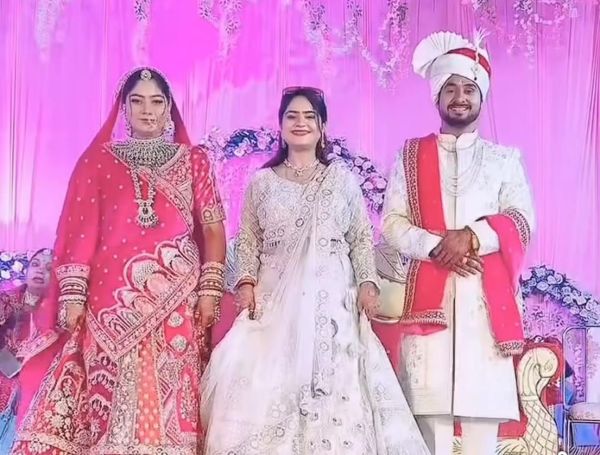
With every piece of the jigsaw puzzle that the investigating team found, the case kept changing at different levels. The one thing that did not change was people’s perception of the prime accused — Sonam Raghuvanshi.
Sonam became a sensation, albeit for the wrong reasons. She became the reason men started suspecting their girlfriends, fiancées and wives. She became the worst nightmare of in-laws and a curse for ‘good girls’ whose prospects of getting perfect grooms seemed bleak now. She became synonymous with betrayal and diabolical.
“It has made the image of women more complicated… I can no longer blindly trust a girl… Even my parents are affected. Whenever the topic of my marriage comes up, their faces reflect fear and worry,” says 23-year-old footballer and coach Karan Dixit.
People have this mindset that marriage is a lifelong bond and a woman’s role is predetermined
~ Dr Satyakant Trivedi, Psychiatrist
The irony of patriarchy, one must conclude. More than 80 rape cases were reported in our country every day in 2023, according to the statistics of the National Crime Records Bureau. According to another report, 4-5 women become victims of rape every hour in India — and in over 90% of these cases, the perpetrators are men known to the victims. Beyond this, countless girls across cities, towns and villages face harassment, stalking, online abuse, or blackmail daily — most of which never even get reported.
However, these statistics were lost on our citizens. This information was not terrifying enough to make women suspicious of their boyfriends, fiancés or husbands. The crime numbers did not alert parents who have daughters. It was life as usual, because rape is a usual phenomenon. But a woman killing her husband? Unprecedented, maybe.
“People have this mindset that marriage is a lifelong bond and a woman’s role is predetermined. There are rituals like Karva Chauth for the husband’s long life, but none for the wife’s longevity. So, when a woman deviates from these prescribed norms, people don’t try to understand her circumstances — they harbour negativity and anger toward her. That’s what happened with Sonam,” senior consultant psychiatrist Dr Satyakant Trivedi explained why the prime accused in the Raja murder case became the centre of hatred on social media as well as in the real world.
Taking someone’s life shows a disturbed mindset — and that has nothing to do with gender. But the way Sonam’s name spread reflects the powerful role of social and mainstream media.
~ Satanand Chaubey, HC Advocate
What’s more surprising is how society views the four men accused of helping Sonam. They are “helpless victims”, who were victims of manipulation by Sonam. Social media and the mainstream media sensationalised the case to an extent that it created an ersatz sense of trepidation even among children.
There is a deeper psychological explanation to the Sonam case. Elucidating this, Trivedi says neither Sonam nor the other four accused were habitual criminals. And, it was probably family pressure and a lack of communication that forced her to do what she did.
The District and Sessions Court in Shillong has just started hearing the case, and the court has not yet convicted her. However, considering the police statements so far, we assume that Sonam masterminded the crime, which is unpardonable. But will this crime be viewed through the lens of gender? “In a patriarchal society, men have long held the monopoly on extramarital affairs, domestic violence, murder, or multiple partners,” says Trivedi.
So, when a woman exhibits the same behaviour, she is considered ominous, and the vilification campaign begins. But “it’s a fact that human behaviour is similar in similar situations, regardless of gender”, clarifies Trivedi.
Changing fabric of relationships
A major twist in the case came when Ujala Yadav, a college student from Uttar Pradesh, claimed that Sonam was her co-passenger on a bus from Varanasi. Even without the slightest inkling about Raja or Sonam’s families, a garrulous Yadav did not waste a moment to share her views with the media.
“Raja was such a good man, and she destroyed everything — his family, his future. She could have given Raja to me instead! I would have married him and kept everyone happy,” she told the media on more than one occasion.
Sonam’s parents were also not spared in this vilification campaign. Indore’s Cabinet minister Kailash Vijayvargiya said, “Sonam lacked values. If her parents had instilled good values in her, such an incident would not have happened.”
Ketan Vishnar, a High Court advocate, explains the situation on a broader canvas. “… we can’t blame family upbringing alone. In the Sonam Raghuvanshi case, too, that’s true. Divorce and alimony cases have rapidly increased in recent years. There isn’t just one reason — expectations and ambitions in relationships have grown so high that people no longer think about staying together. Many of the cases I have handled involve women whose demands are excessive, causing conflict. Some even file false complaints or misuse laws, which are meant to protect women. This creates problems for women who are genuine victims of abuse,” he says.
The biggest problem lies in the imbalance between communication and freedom. In families where children’s mistakes are either ignored or where there is excessive strictness, problems are more likely to arise. From what I have read and seen about Sonam, it seems clear that she lacked communication with her mother … Transparency in relationships is essential, and its absence is visible at every level in this case.
~ Dr Neelam Hingorani, Sociologist
“The misuse of women’s protection laws — many of which are non-bailable — is increasing… With 30–40% of cases already pending in Indian courts, this rising trend raises serious questions about human thinking and the fabric of relationships,” he adds.
Riya Jain, a 24-year-old professional, echoes Vishnar’s views. According to her, relationships in today’s world are more like “situationships”. “Things have worsened. As a girl, I always felt it was hard to trust men — but now, after Sonam’s case, it’s not easy to trust women either… I just don’t know what’s right anymore,” says Riya.
Dr Neelam Hingorani, a retired professor of Sociology, blames the communication gap and transparency in relationships for an increase in divorce cases, fraudulent court cases and commitment phobia.
Moral policing on social media
Social media became a platform for ‘convicting’ Sonam even before the case reached court. Posts, memes and outrageous comments not only disparaged Sonam as a woman but also belittled the legal system of the country by blatantly giving a verdict in a case that is still in the lower court.
“Taking someone’s life shows a disturbed mindset — and that has nothing to do with gender. But the way Sonam’s name spread reflects the powerful role of social and mainstream media. Before courts even reach a verdict, the media and public often form strong opinions about the accused. Later, when the actual judgment comes, the public finds it hard to accept. The Supreme Court has repeatedly warned that media trials are a bad practice, yet the trend continues. Sonam Raghuvanshi, too, became a victim of it,” says High Court advocate Satanand Chaubey.
According to the Indian legal system, any person is innocent unless proven guilty. Even in the most heinous crimes, such as the rape and murder of children or women, an accused is given a chance to defend himself. In this case, not only were Sonam and her family humiliated on social media, but smear campaigners took the opportunity to run gender-specific castigation, making the situation worse for women.
Chaubey rightly points out that, statistically, crimes by men against women are still far higher. However, “women too are now becoming participants in heinous crimes, which poses a challenge for both society and justice,” he adds.
All that glitters can spell doom
The influence of the virtual world has a deep impact on youths and the way relationships are perceived. People are blinded by the razzmatazz of the glitzy world of the internet, which in many ways has replaced Bollywood dreams.
“The middle class — once known for its principles, restraint, balance and contentment — has especially fallen prey to it. As a result, a race has begun to buy expensive clothes, dine in costly restaurants and hotels, and purchase luxurious goods. This trend has completely captured the younger generation,” points out Hingorani.
She observes that a skewed system of communication and modernity in a family can adversely affect children’s mental growth.
“The biggest problem lies in the imbalance between communication and freedom. In families where children’s mistakes are either ignored or where there is excessive strictness, problems are more likely to arise. From what I have read and seen about Sonam, it seems clear that she lacked communication with her mother … Transparency in relationships is essential, and its absence is visible at every level in this case,” she says.
The jury is still out on whether a lack of communication led to mental distress for Sonam and ultimately compelled her to commit the crime. But the Sonam Raghuvanshi case has established a few points.
First, we need to look at crime objectively without caste, creed or gender bias. Second, there is an urgent need to vet social media communications to stop virtual trials of any accused. Last, though there is no way to stop or eradicate crime but conversations may help stop a potential crime. And that conversation must start at home.
Apart from that, times are changing, and we need to embrace the fact and change our mindset. As Tanmay Neema, a chartered accountant, says, “Every generation brings social change. In my parents’ time, women were groomed to adjust. In my generation, we’ve realised that both partners must compromise and maintain balance. If either side clings to ego, the relationship won’t last. Balance is crucial — and I try to maintain it.”
(Swati Shaiwal is an Indore-based independent journalist)