

‘Teaching Pnar is crucial’
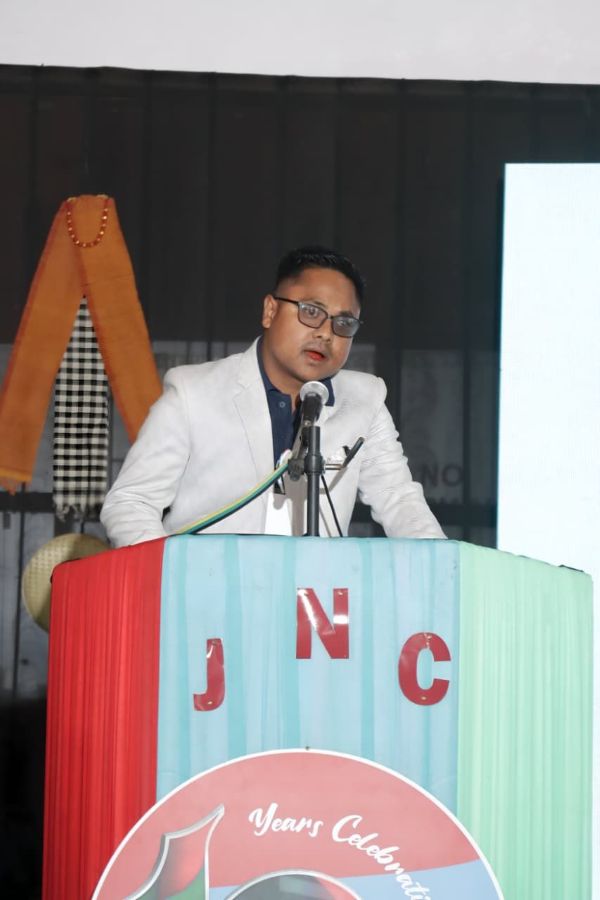
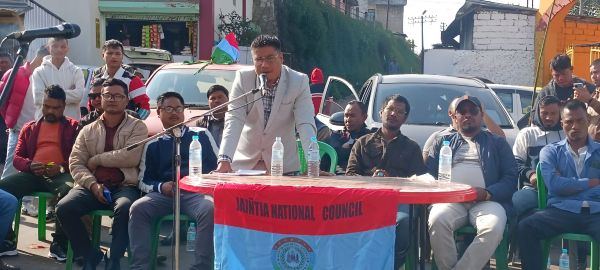
The Jaintia National Council’s central body Publicity and Information Secretary, MEBANTEILANG SUKHLAIN, tells Nabamita Mitra why Pnar should not be eclipsed by the dominant Khasi language.

Why was Pnar not given the status it deserves?
The Pnars, also known as Jaintias, faced several issues in Meghalaya that hindered their recognition, especially compared to the dominant Khasi tribe. Ethnic tensions, linguistic differences and alleged marginalisation of traditional governance institutions have led to the marginalisation of the Jaintias. The Jaintias’ traditional governance institutions, such as the Dolois, have been replaced by centralised state laws, weakening their customary authority.
Economically, industrial projects have often failed to benefit the local population, leading to environmental degradation and land alienation. Pnar identity movements aim to reclaim their unique historical kingdom and cultural heritage. Religious and cultural erosion has also occurred, with efforts to maintain the traditional Niamtre religion. The feeling of not receiving the deserved status stems from internal power struggles in the state and the perceived neglect of Pnar-specific cultural, linguistic and economic concerns.
What damage has it caused to the language so far?
The Pnar language is under threat due to the dominance of languages like Khasi, English and Hindi, along with a historical lack of official recognition and a written script. This has resulted in the language being marginalised in education, government and the media, leading to a decline in its usage among younger generations.
Educational and administrative marginalisation
- For many years, Pnar children were taught Khasi, as there was no standardised written script for Pnar. This has undermined the intergenerational transmission of Pnar.
- The Pnar language is not listed in the Eighth Schedule to the Constitution, which means it is denied the benefits and support given to recognised languages. In January 2024, the non-inclusion of Pnar in Meghalaya’s new state anthem sparked widespread criticism and was seen as an invalidation of the language and its speakers.
- The lack of official recognition has historically relegated the Pnar language to a secondary status within state government and administrative functions, which are conducted primarily in English, Khasi and Garo.
Language erosion and assimilation
- With English and Khasi acting as the main languages for instruction and official communication, the Pnar language has been largely restricted to the home and other informal settings. This can cause speakers to view their language as less important than the dominant languages.
- Like many endangered languages, Pnar is at risk as younger generations increasingly adopt dominant languages for education, employment and social mobility. This shift can eventually break the chain of language transmission from elders to youth.
- While linguistically distinct, Pnar is often grouped with the closely related Khasi language. Historically, this has led to a lack of individual attention and support for Pnar, contributing to its endangerment.
- The JHADC approved the A-B Jaiñtia alphabet in 2021, and the Jaintia National Council (JNC) is advocating for its use in schools and official documents.
- The JNC is pressuring the JHADC and the state government to pass a resolution to include Pnar in the Meghalaya State Language Act and recognise it as an official language.
- The Scheme for Protection and Preservation of Endangered Languages of India (SPPEL), a central government initiative, documents threatened languages and could support Pnar preservation efforts.
Why was the JHADC so late to pass the resolution?
Mebanteilang Sukhlain. Photo sourced As of late September 2025, the JHADC has yet to pass a resolution to include the Pnar language in the Meghalaya State Language Act. This delay is attributed to a complex, multi-year process involving advocacy efforts, governmental actions and organisational pressures rather than a single recent event.
One significant factor contributing to the delay is the focus on the recognition of the Khasi and Garo languages, which has overshadowed the Pnar language. Community advocates argue that the Pnar language has not received adequate attention as the state government prioritises the inclusion of Khasi and Garo in the Eighth Schedule of the Indian Constitution.
Additionally, while the JHADC approved the A-B Jaiñtia alphabet in 2021, a formal resolution is still required to prompt the state government to incorporate Pnar into the Meghalaya State Language Act, a process that involves navigating multiple bureaucratic levels.
Financial constraints have also hindered the JHADC’s operations, as the council faces a budget deficit and pending mineral revenue from the state government. These financial difficulties impact its ability to prioritise legislative matters, including the resolution of the Pnar language.
Furthermore, the general legislative and administrative processes within the JHADC can lead to delays, influenced by scheduling conflicts, competing priorities and the need to adhere to proper procedures.
Political dynamics play a crucial role, with community organisations like JNC actively advocating for the resolution. Their efforts highlight the necessity of ongoing pressure to keep the Pnar language issue at the forefront of the JHADC’s agenda. Although the Pnar language was included in the amended Meghalaya State Anthem earlier in 2025, this action was taken by the state government and does not confer the full protections of an official language under state law.
Is JNC working with Pnar intellectuals/writers to push for the cause?
The JNC is actively pushing for the Pnar language cause, its actions reflect an engagement with the cultural and historical framework that Pnar intellectuals have long established.
Direct actions linked to Pnar intellectual work
- The JNC has called on the JHADC to begin using the A-B Jaiñtia script in its official documents, especially for legislative matters and notifications. The recognition of this script was announced in the Meghalaya gazette in 2021, and its promotion by the JNC directly follows the efforts of local linguistic scholars and writers who worked to develop and formalise the Pnar script.
- During the formation of a new unit in West Jaintia Hills in April 2025, JNC President Sambormi Lyngdoh invoked the sentiments of the late Professor Barrister Pakem (founder of the Association of Jaiñtia writers called Ka Sein I Ktien Wei Thoh Jaintia in 1975, a key figure in the Pnar language movement) by quoting Pakem’s mission — “Im i ktieñ-Im ka Jaidbru” (a living language ensures the survival of our tribes).
Advocating for Pnar cultural rights
- The JNC is prominently advocating for the inclusion of the Pnar language in the Meghalaya State Language Act. This demand is backed by the historical and cultural legitimacy of the language, an argument that relies on the body of work and research by Pnar intellectuals and linguists.
- In early 2024, the JNC strongly criticised the exclusion of the Pnar language from the new Meghalaya state anthem, describing it as a “snub” to the Jaintia community. The group’s vocal opposition, echoing sentiments from other intellectuals, underscored the importance of recognising the Pnar identity in state-level representation.
- In addition to language, the JNC is pushing for special laws to safeguard Jaintia customs and traditions, including the unique matronymic naming conventions. This effort to protect the Pnar identity from attempts to “mislead” or alter it is driven by an intellectual understanding of its cultural significance.
Will JNC, in the future, ask for its inclusion in the 8th Schedule?
The JNC is actively advocating for the inclusion of the Pnar language in the Meghalaya State Language Act, with future aspirations for its inclusion in the Eighth Schedule, but for now, the JNC is advocating for the inclusion of the Khasi language as it is the central language of the Hynñiewtrep (Khasi & Jaiñtia communities).
The JNC’s focus on securing state-level recognition is a strategic move that could facilitate a future campaign for the Eighth Schedule inclusion. The advocacy efforts of other linguistic groups in Meghalaya, such as the Khasi and Garo communities, highlight a supportive linguistic and political environment for such demands.
Is Pnar taught in schools in Jaiñtia Hills?
Pnar is taught in some schools within the Jaintia Hills, although English remains the official medium of instruction. The Jaintia Hills Autonomous District Council (JHADC) is being encouraged to explore ways to incorporate Pnar into the educational curriculum, reflecting a growing movement for its official recognition. Notable institutions, such as the Khasi Pnar Sec School, highlight the presence of Pnar in the region’s educational landscape.
Currently, while English is the primary language of instruction, Pnar serves as the main language for the local population in both East and West Jaintia Hills districts. The JNC is actively advocating for the inclusion of Pnar in the state education system, emphasising the need for the state government to recognise the language and integrate it into the Meghalaya State Language Act. This recognition is viewed as essential for preserving the cultural heritage of the Jaintia community.
The presence of schools named after the Pnar language, such as Tahpat Pnar LPS, underscores its significance in the local education system. Despite being a prominent language, Pnar lacks a standardised written form, although efforts are underway to promote its use and strengthen its presence in the community.
The preservation and teaching of the Pnar language are crucial for maintaining the cultural identity of the Jaintia people. Incorporating Pnar into the educational framework not only empowers the community but also fosters a sense of cultural distinctiveness, reinforcing the importance of language in cultural heritage.
Additionally, Wyrta, an online news platform established in 2015, serves as a vital resource for promoting the Pnar language, identity and culture in Meghalaya’s Jaintia Hills. The platform, which translates to “news in Pnar”, publishes content in both English and Pnar, catering to the region’s internet-savvy audience.
A key focus of Wyrta is the promotion and preservation of the Pnar language. By creating a digital space for Pnar, the platform aims to enhance its visibility in the global digital landscape, reaching both local and international Pnar speakers. Wyrta has actively reported on significant linguistic developments, such as the Jaintia Hills Autonomous District Council’s acceptance of the ‘A-B Jaiñtia’ phonetic alphabet in 2021, which supports the written form of the language.
The platform also emphasises literacy by advocating the use of the A-B Jaiñtia script, encouraging local schools and community organisations to promote it.
In addition to language preservation, Wyrta plays a crucial role in safeguarding the Jaiñtia identity and culture. The platform highlights the community’s matrilineal traditions, where children inherit their mother’s surname, and stresses the importance of maintaining this practice amidst external influences.
Wyrta also highlights significant cultural events, such as the Jaiñtia festivals, ensuring that these traditions are documented and shared widely. Further, the platform addresses historical and social issues affecting the community, including grievances related to the 1951 decision that separated certain Pnar areas, which is regarded as a pivotal moment in the community’s history.