

A spiritual journey to Manasarovar
Vijay Mantri pens an account of the journey as Liaison Officer & a traveller who experiences spiritual awakening

As Liaison Officer for Group No. 9 on the Nathu La Route, I was privileged to accompany 40 pilgrims from across India on this sacred odyssey, organised by the Ministry of External Affairs. Our group’s travel window began in late July 2025, coinciding with the monsoon mists of Sikkim and the ethereal calm of the Tibetan plateau.
Delhi: Orientation and preparation
Our journey commenced in New Delhi, where yatris (travellers) assembled from across the country. The first few days were devoted to rigorous medical examinations at the Delhi Heart and Lung Institute and the Indo-Tibetan Border Police Base Hospital, ensuring that every pilgrim was fit for the demanding altitudes ahead.
As Liaison Officer, my duties included coordinating documentation, visa formalities and group briefings at the Ministry of External Affairs, where officers sensitised the yatris about the route, terrain and protocols to be followed in India and the Tibet Autonomous Region of China. The atmosphere was charged with both excitement and reverence as each yatri collected the much-awaited Chinese visa.
Bagdogra to Gangtok: Gateway to the Himalayas
We flew from Delhi to Bagdogra, descending from the haze of the plains into the emerald folds of the Himalayas. From there, a convoy of buses carried us through the winding Teesta Valley to Gangtok, the capital of Sikkim. The ascent was breathtaking—terraced hillsides, fluttering prayer flags, and cascading waterfalls heralded the spiritual aura of the mountains.
In Gangtok, located at around 1,600 m, we began the process of acclimatisation. The hospitality extended by the Sikkim Government and the liaison staff from the Ministry of External Affairs made our stay comfortable. The yatris were briefed about high-altitude adaptation, hydration and emergency procedures.
The following days were spent at 15th Mile and Sherathang, each halt climbing higher into the rarified air. Medical check-ups by the ITBP ensured that all members were ready for the Nathu La crossing. Amid cold winds and swirling mist, we witnessed the stoic dedication of Indian soldiers stationed at these heights — a reminder that the Yatra, while spiritual, also traverses the frontiers of national service and sacrifice.
Crossing Nathu La: From India to Tibet
The morning of the Nathu La crossing was surreal. The air was crisp, and the tricolour fluttered proudly beside rows of prayer flags. At 4,176 m, Nathu La — the ‘Listening Pass’ — has long been a historical trade route and now serves as the corridor linking Indian and Tibetan pilgrims.
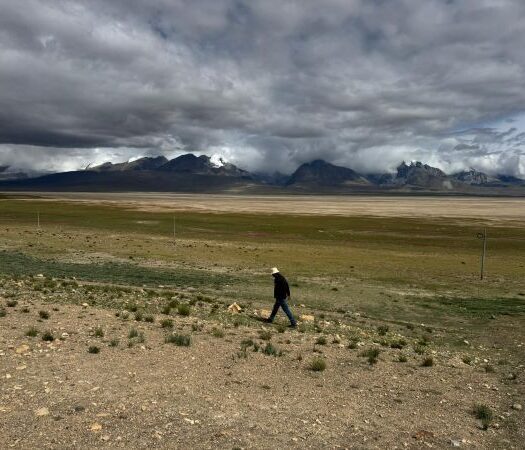
After completing immigration and customs formalities on the Indian side, we walked a short distance across the border fence to the Chinese checkpoint. Here, officials of the Tibet Autonomous Region received us with courtesy, assisted by interpreters. The sudden shift in landscape and language was striking — the terrain turned starker, with undulating brown hills stretching endlessly under a vast blue sky.
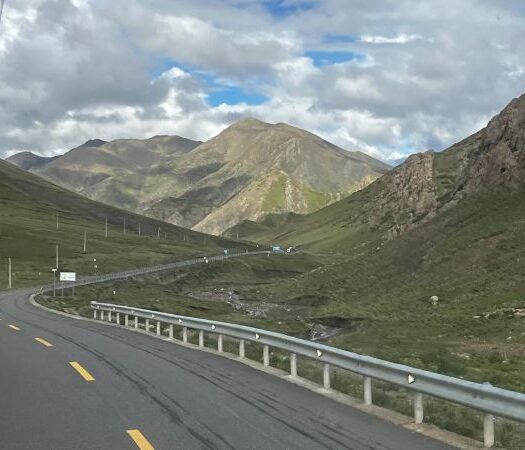
Our Chinese-operated buses awaited us at Kangma, marking the start of the trans-Himalayan journey. The convoy moved westward through Lazi and Zhongba, gradually gaining altitude and revealing the majestic emptiness of the Tibetan plateau. At each stop, we were greeted with bowls of yak-butter tea and warm smiles from the Tibetan support staff.
Manasarovar: The Lake of Tranquillity
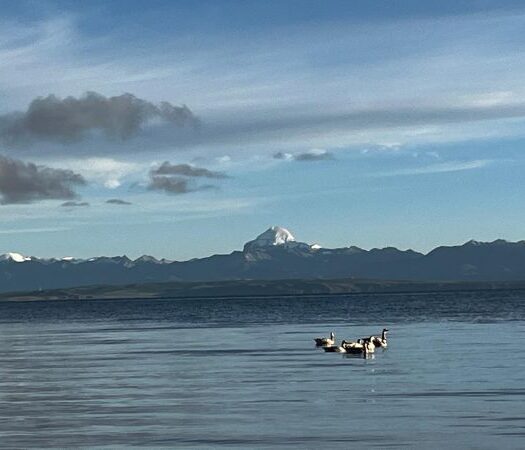
Days later, as the road curved past mountain passes, the first glimpse of Lake Manasarovar emerged like a mirage — an expanse of turquoise water encircled by snow-clad peaks. For every pilgrim, this was the moment of spiritual culmination. Situated at about 4,620 m, the lake is revered in Hindu, Buddhist and Jain traditions as the abode of purity and divine energy.
We performed the Manasarovar Parikrama by bus, covering the 80-km circuit that offers panoramic views of Mount Kailash, rising serenely in the distance.
As Liaison Officer, my role extended beyond logistics — I found myself a bridge between cultures, faiths and languages, ensuring coordination among the Indian and Chinese guides, medical personnel and pilgrims. The shared faith and mutual respect within the group were humbling. Many yatris broke down in tears, overwhelmed by the realisation of their lifelong dream.
Kailash Parikrama: The ultimate test
From Manasarovar, we drove to Darchen, the base camp for the sacred Kailash Parikrama. The trek, spanning three days, is considered one of the most arduous spiritual circuits in the world.
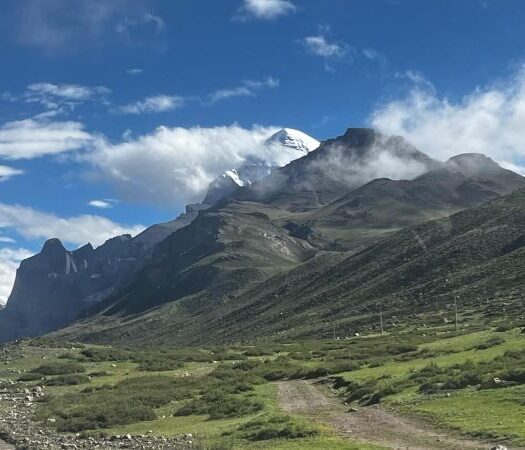
The first leg to Deraphuk (5,060 m) offered a majestic view of the north face of Mount Kailash, a sight that defies description. Pilgrims walked in silence, each step a prayer.
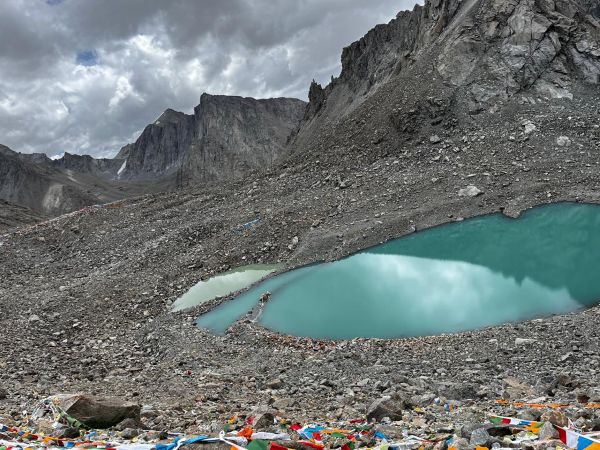
The second day — the crossing of the Dolma La Pass (5,590 m) — was the true test of endurance. Oxygen levels were barely half of what we breathe at sea level, yet the human spirit triumphed. As yatris crossed the pass, they offered scarves and prayers at Gauri Kund, symbolising renewal and surrender.
The descent to Zunzhui Pu and return to Darchen completed the circuit. Despite exhaustion, every pilgrim’s face radiated fulfilment— a rare glow that comes only from the confluence of physical struggle and divine grace.
Return journey and reflection
The return route retraced our path through Zhongba, Lazi and Kangma, culminating once again at Nathu La. Crossing back into India, we were greeted by the familiar sight of the tricolour and the warmth of Indian soldiers — a homecoming that stirred deep emotion.
In Gangtok, the yatris gathered for a thanksgiving ceremony. The group shared stories, laughter, and tears, realising how the journey had transformed us. It was not merely a pilgrimage to a distant mountain but an inward voyage — toward humility, tolerance and unity.
As Liaison Officer, accompanying this diverse group of men and women — young professionals, retirees, homemakers and ascetics — was a lesson in leadership and compassion. The experience reaffirmed that faith transcends language and that shared hardship forges unbreakable bonds.
Epilogue
When we finally flew back from Bagdogra to Delhi, each pilgrim carried a piece of Kailash within — the serenity of Manasarovar, the resilience of Dolma La, and the fellowship that blossomed amidst adversity.
For me, the Yatra was both a professional responsibility and a spiritual awakening. Standing on the windswept heights of Nathu La, watching clouds drift between two nations, I felt the essence of pilgrimage: to walk the path of devotion with humility, to serve others selflessly and to return transformed.
The 2025 Kailash Manasarovar Yatra via Nathu La will remain etched in memory—not as a mere itinerary of dates and places, but as a living testament to human faith, endurance and the timeless call of the Himalayas.
(Vijay Mantri is the Commissioner Secretary of the Department of Education, Government of Meghalaya)