
Style over substance
Can Meghalaya go from attractive venue to sporting powerhouse? The Twelfth Man introspects

Meghalaya has developed a reputation for being a fun place that is good at putting on a decent show. The festival economy is key to this government’s vision for Meghalaya — a place for big music concerts, socio-cultural events, traditional festivals and lots of MICE (that’s meetings, incentives, conferences and exhibitions).
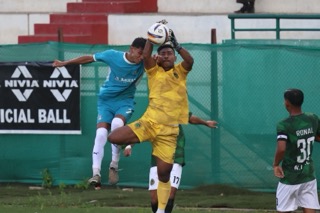
Sports is a developing area in the same field. In the last two years, Meghalaya has held important football spectacles — two editions of the Durand Cup, Indian Super League matches for NorthEast United and international men’s and women’s fixtures.
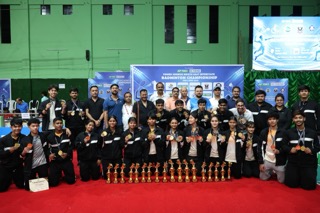
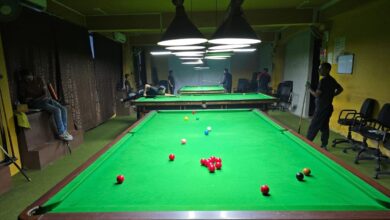
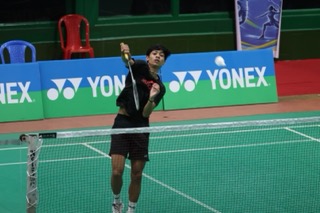
Apart from this, the state has hosted other national-level sporting events in more niche disciplines — like archery and table tennis. Shillong also co-hosted the South Asian Games in 2016. The latter was under the previous government, which had also initiated Meghalaya’s move to host the 39th National Games, which are now set to take place in 2027.
It is this current government that has taken several steps, indicating that it is serious about sports. Scholarships for deserving athletes and a standardised financial incentive programme have been launched to reward top-performing athletes. The government has also gotten behind the Meghalaya State Olympic Association’s (MSOA’s) use of a private company to systematically and scientifically test youngsters for innate athletic ability. Sports infrastructure projects dot the state, and the government has invested in individual sports associations for their National Games preparations.
And yet, Meghalaya still underperforms in sports, even in its favourite discipline, football, where it has managed to send precious few players into the Indian Super League or the senior national team, especially when compared to Mizoram and Manipur, which drive much of Indian football. In other disciplines, too, Meghalaya typically fails to shine, and the state is usually towards the bottom of multi-disciplinary competitions, like the National Games, Khelo India Youth Games, etc.
Even when we do well, it comes as a surprise to our MSOA officials. During the National Games earlier this year, a local journalist asked the MSOA General Secretary if Meghalaya had won any medals, only for the latter to retort that the seeds were only planted in 2022, so it was too early to expect success. The very next day, Meghalaya won the first of five medals in canoeing, kayaking and rowing.
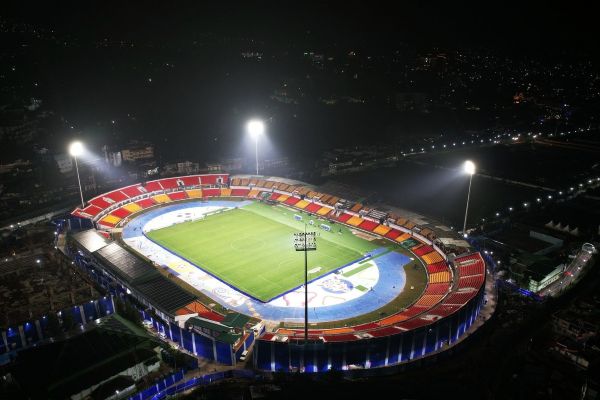
While investment in infrastructure is welcome, questions dog some of the government’s choices. For example, do we really need to spend Rs 700 crore on a football-only stadium in Mawkhanu? Granted, the JN Stadium is a bit of a mess, but it was redeveloped since 2020, so why were its failings not rectified?
The stadium has several shortcomings, including supports that obstruct the view of spectators. The stadium was also not originally designed for football alone, and it used to have an athletic track around the perimeter. However, this was not redone when the stadium was renovated, and the space is just a vacant stretch now.
Thousands of seats have been newly installed, but the front rows are too low and are, therefore, kept empty during matches, which makes it an odd sight, especially when the government claims that the games are sold out. The renovation also did not fix the player entrance — modern stadiums have a central tunnel for footballers to emerge from, but the JN Stadium’s is off on the side; this is not a dealbreaker, but it isn’t ideal either.
Spending on hosting football events has also raised eyebrows. A deal the government struck with NorthEast United is set to cost the exchequer Rs 24 crore. Hosting the Durand Cup and international football matches also does not happen for free.
At least one Meghalaya Football Association vice-president is said to have resigned over disagreements with the government’s willingness to spend money on these events rather than supporting local clubs. Hosting international matches is certainly a matter of prestige for Meghalaya, but all three of the women’s fixtures were sparsely attended, while the men’s international friendly against the Maldives also saw a rather underwhelming response from the public.
Obviously, there needs to be a balance between the entertainment side and driving the success of athletes in the state. Manipur is said to have become a major sporting powerhouse after hosting the National Games in 1999, as the boost in infrastructure and spotlight on sport led to an explosion in public interest. Meghalaya had a similar opportunity in 2016 when it hosted 12 disciplines at the South Asian Games, but the state did not take advantage of it. It needs to make 2027 and the National Games count for more, or else the investment over the last few years will have been wasted.