


Why India’s labour reforms debate needs a reset
The real question is whether we can design a labour regime that shares risks more, builds workers’ capabilities & and gives them a real voice

Annapoorna Ravichander & Samar Verma
For the last decade, India’s conversation on labour reform has been stuck in a narrow frame: flexibility versus protection. Employers ask for simpler, more flexible rules; workers demand security and rights. Parliament amends codes. State governments tweak thresholds. Commentators count how many laws have been merged into how many codes, as if codification itself is a reform.
Meanwhile, the world of work in India is changing in far more fundamental ways.
Technology, climate transitions, a services-led growth model and deep, persistent informality are reshaping how Indians work, earn and survive. If we continue to treat labour reform as a legal clean-up exercise rather than as a project to govern this transformation, we will miss a historic opportunity, and this may deepen the fault lines we already see in our labour market.
The barbell world of Indian work
Despite decades of high growth, India continues to live with “growth without sufficient good jobs”. Output has risen; employment has barely kept up. In the pre-pandemic years, employment growth was close to zero even as Gross Value Added (GVA) grew at robust rates. Since the pandemic, some employment has returned, but much of it in low-productivity agriculture, small construction sites and petty services.
At the same time, modern services — IT, business services, finance, logistics, health, education and tourism — have become the main drivers of value addition and higher wages, as various NITI Aayog and RBI analyses underline. Yet they employ a minority of workers. The bulk of India’s labour force remains in informal, low-productivity work.
Internationally, the World Economic Forum’s (WEF’s) ‘Future of Jobs’ reports and International Labour Organisation (ILO) assessments describe a “barbell” labour market: at one end, high-skill, formal jobs in tech, data, clean energy and advanced services; at the other, low-wage, insecure, often platform-mediated work with very little social protection. India is moving along exactly that trajectory.
We do not have a shortage of work but have a shortage of productive, protected and dignified work, and of credible pathways for young people, especially young women, to reach it.
Who carries the risk?
Seen this way, labour reform is not primarily about how many inspectors we have, or how quickly firms can hire and fire. It is about who carries the risk in a shock-prone economy.
Today, that risk sits disproportionately on the worker. A construction worker injured at a site, a food-delivery rider de-listed by an opaque algorithm, a contract teacher whose service is abruptly terminated, a young graduate who cannot find a job despite years of education — all of them absorb the full shock in their own lives. The firm’s risk is hedged; the state’s risk is diffused across schemes and budgets. The worker’s risk is immediate, personal and often invisible.
Global evidence on the deployment of AI is sobering in this respect. It shows firms using AI first to automate entry-level tasks and reduce headcount, while often under-investing in reskilling. Without strong institutions of social protection and voice, technology becomes not an enabler of better work, but a tool for shifting more risk and insecurity onto workers.
In India, this plays out against a backdrop of extreme informality. Over four-fifths of workers are in informal work by status or by enterprise. Most do not receive even the statutory minimum wage. A large share of women’s work is unpaid or underpaid family labour. Youth unemployment remains stubbornly high, especially among graduates. To speak about “future of work” here without placing informality at the centre is to miss the point.
Four shifts we need
So, what would it mean to reframe the narrative on labour reforms in India in light of the future of work?
We would argue for four big shifts.
First, from job counts to quality of work.
We still celebrate how many jobs are “created”, even if they are low-wage, precarious and unsafe. ILO’s work on employment conditions in Indian states offers a more useful lens: look at earnings relative to minimum wages, stability of employment, social security coverage, working hours and the presence of grievance redress and voice.
Imagine if Union and State governments published regular “quality of work dashboards”, not just unemployment rates. Labour reform would then be judged not merely by ease of doing business, but by ease of working with dignity.
Second, from narrow employee benefits to universal, portable social protection.
Our existing legal architecture assumes a clear, stable employer-employee relationship in a factory or office. But today’s worker may be self-employed, casually employed, working through a platform, or in a complex supply chain with multiple layers of contracting.
The JustJobs Network, the ILO, and even India’s own gig-economy policy discussions converge on one idea: social protection must become a universal floor linked to citizenship or residency, with contributions from workers, firms and the state, and with portability across jobs, sectors and states.
Instead of endless debates on who is an “employee”, we should be asking: does every worker, regardless of contract, have access to health cover, old-age security and basic income protection in times of shock?
Third, from a binary view of “formal vs informal” to a continuum of work arrangements.
CUTS and others have emphasised how law still struggles to see the real locus of control in triangular arrangements — platforms, aggregators and lead firms in supply chains. Recognising intermediate categories such as “dependent contractors” or “platform workers” is not a technical exercise; it is a way of bringing these relationships into the realm of minimum wages, occupational safety and collective bargaining.
The goal should not be to push every tiny enterprise into full formalisation overnight. It should be to raise the floor of rights and protections along the entire continuum, while supporting productivity growth — especially for the “missing middle” of small and medium firms.
Fourth, from episodic skilling schemes to a right to lifelong learning.
WEF estimates that a large proportion of today’s workers will need significant reskilling by 2030, and Indian data tell us our young labour force is underprepared for a digital and green economy. Yet our approach to skills remains project-based: a training batch here, a CSR programme there, an upgraded ITI elsewhere.
If we are serious about the future of work, labour reform must include institutionalised rights and obligations around learning — individual learning accounts, training leave, sectoral skill funds and clear responsibilities for employers and the state to co-finance upgrading of capabilities. NITI Aayog’s work on the services economy could be a useful anchor here, pointing to job-rich services where such investments would have the greatest payoff.
States, gender and voice
Three cross-cutting themes deserve special emphasis in the Indian context. In fact, the Government of India has introduced four new labour codes, effective from November 21, 2025. One of the advantages is that it has simplified by streamlining the 29 codes into four laws. On the flip side, bad implementation may affect gig workers and job security.
One, federalism, where the Code on Wages, 2019 and Code on Social Security, 2020 play an important role. Employment conditions vary enormously across states, and the poorest performers have remained so for nearly two decades. National-level labour codes need to be complemented by state-level compacts that link industrial strategy, skills and social protection to local realities — in Bihar as much as in Gujarat.
Two, gender and care, where the Occupational Safety, Health and Working Conditions (OSHWC) Code, 2020 is applicable. Any future-of-work debate that does not confront women’s low and fragile labour force participation, unpaid care burdens and vulnerability in both informal and platform work is incomplete. Labour reforms must embed childcare, safe transport, flexible but secure work arrangements and robust anti-discrimination norms into their core, not treat them as add-ons.
Three, voice and participation. As work becomes more fragmented and digitally mediated, the traditional factory-floor union model is under strain. Yet the need for collective representation is greater, not lesser-whether on algorithmic transparency in gig work, on health and safety in climate-exposed sectors, or on how AI is introduced in offices. Modernising collective bargaining–including exploring sectoral and platform-wide mechanisms–is crucial. The Industrial Relations Code, 2020 addresses some of the above.
The real question
The labour reforms in India have challenges, which arise from the need to balance employer flexibility to include protection for workers, weak enforcement capacity and the power of the informal sector. Successful implementation and building consensus with stakeholders are challenges with reference to labour issues.
In the end, the future of work in India will be shaped less by technology itself and more by the institutions and rules we build around it. Labour reforms that focus only on making it easier to hire and fire are, frankly, behind the curve.
The real question for India is this: can we design a labour regime that shares risks more fairly, builds workers’ capabilities continuously, and gives them a real voice in how AI, climate policies and services-led growth reshape their lives?
If we can, labour reform will cease to be a technocratic battle over codes and thresholds, and become what it ought to be: a democratic conversation about the kind of society — and future of work — we want to build.
Dr Annapoorna Ravichander is a Bengaluru-based communication specialist and trainer.
Dr Samar Verma is an economist and policy professional who has led global programmes with international funding agencies for over two decades.
(Views are personal)
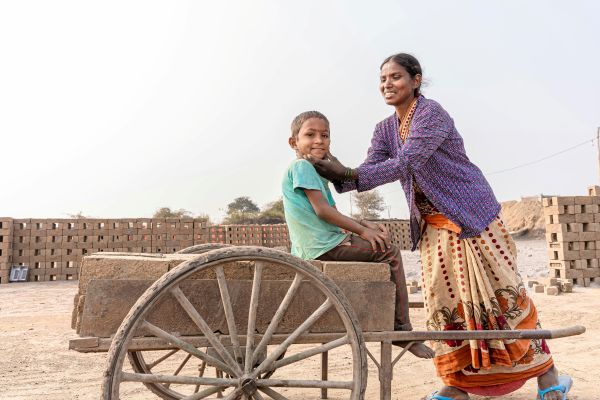
Banner image by EqualStock IN: https://www.pexels.com/photo/farmers-in-india-20445226/