

The downgrade of India’s NHRC
A reflection on persistent human rights challenges in North East India and the tragic case of Angel Chakma

 In a significant blow to India’s standing on the global human rights stage, the Global Alliance of National Human Rights Institutions (GANHRI) has recommended downgrading the accreditation status of the National Human Rights Commission of India (NHRCI) from ‘A’ to ‘B’.
This recommendation, issued by GANHRI’s Sub-committee on Accreditation (SCA) in April 2025, follows repeated deferrals in 2023 and 2024, citing concerns over political interference, lack of diversity in appointments, reliance on police-led investigations and failures to adequately address issues like torture and restrictions on civic space.
Although the downgrade is deferred until March 2026 to allow for reforms, it underscores a broader erosion of institutional independence and effectiveness in safeguarding human rights within the country.
This development is particularly alarming when viewed against the backdrop of ongoing human rights violations in Northeast India, a region plagued by ethnic conflicts, security force excesses, and systemic discrimination — issues exemplified by the recent tragic murder of Angel Chakma.
Human rights in Northeast India: A region in turmoil
Northeast India, comprising eight states including Assam, Manipur, and Tripura, has long been a hotspot for human rights concerns, rooted in ethnic tensions, insurgency and the heavy-handed application of laws like the Armed Forces (Special Powers) Act (AFSPA).
AFSPA, which grants security forces broad powers including immunity from prosecution, remains in effect in several northeastern states, enabling extrajudicial killings, torture and arbitrary detentions.
In 2025, reports highlighted persistent abuses, with police and security forces implicated in rape, deaths in custody and excessive force.
The situation in Manipur exemplifies the crisis, where ethnic violence between the Meitei and Kuki communities has raged since 2023, resulting in hundreds of deaths, widespread displacement and destruction of property.
This conflict has drawn international attention as a “silent crisis”, with allegations of state complicity and failure to protect minorities.
Indigenous communities in the region, such as those in the tribal belt, continue to face violations amid Naxalite-affected areas and aggressive mining expansions, which threaten land rights and environmental security.
The Indian government’s efforts, including peace accords touted by Prime Minister Narendra Modi, have been praised in some quarters for addressing historical grievances, but critics argue they fall short in curbing ongoing atrocities.
Moreover, discrimination against people from the Northeast extends beyond the region, manifesting as racial bias in mainland India. Individuals from these states often face slurs, harassment and violence due to their distinct ethnic features and cultural differences, highlighting a national issue of prejudice that undermines India’s constitutional commitment to equality.
The NHRC has attempted interventions, such as hearing 56 cases of violations in the North East during a camp sitting in Guwahati, but its capacity is increasingly questioned amid the accreditation downgrade.
Angel Chakma Case: Stark example of systemic failures
The murder of 24-year-old Angel Chakma, a student from Tripura, in Dehradun in December 2025, brings these issues into sharp focus.
Chakma, belonging to the Chakma indigenous community, was allegedly attacked after protesting a racial slur directed at him and his brother.
The assault, carried out by a group, including Avinash Negi and Suraj Khawas, led to severe injuries from which he succumbed days later.
While police have arrested three suspects and described the incident as arising from “remarks in jest” rather than racial animus, activists and civil society groups have condemned it as a hate crime, pointing to the normalisation of racism against northeasterners.
The case has sparked widespread outrage, with the youth’s forum for Protection of Human Rights issuing strong condemnations and a Public Interest Litigation (PIL) filed in the Supreme Court seeking guidelines on hate crimes.
The NHRC has taken cognizance, demanding a report on the killing, but this response is seen by many as inadequate in the face of systemic bias.
Chakma’s death not only underscores the vulnerability of Northeastern minorities outside their home region but also exposes selective outrage in India, where violence against certain groups garners less national attention.
Linking the dots: NHRC’s downgrade and its NE implications
The proposed downgrade of the NHRCI is not an isolated event but a symptom of deeper institutional weaknesses that directly impact regions like the North East.
Critics argue that the commission’s reliance on police for investigations — often the perpetrators in cases involving security forces under AFSPA — compromises its impartiality.
In the context of Manipur’s ethnic strife or the racial violence faced by individuals like Angel Chakma, a weakened NHRC struggles to enforce accountability, allowing impunity to persist.
The downgrade could further diminish India’s international credibility, limiting the NHRC’s participation in global forums and access to funding, at a time when human rights defenders in the Northeast face weaponisation of investigative agencies.
As of early 2026, with the deferral period nearing its end, the Indian government has an opportunity to implement reforms, such as ensuring transparent appointments and diversifying the commission’s composition.
However, without urgent action, cases like Angel Chakma’s will continue to highlight the gap between India’s human rights rhetoric and reality, particularly in marginalised regions like the North East.
In conclusion, the NHRC’s accreditation crisis serves as a wake-up call, urging a recommitment to protecting the rights of all citizens, including those in India’s peripheries. Only through strengthened institutions can tragedies like the loss of Angel Chakma be prevented, and the cycle of violence in the Northeast broken.
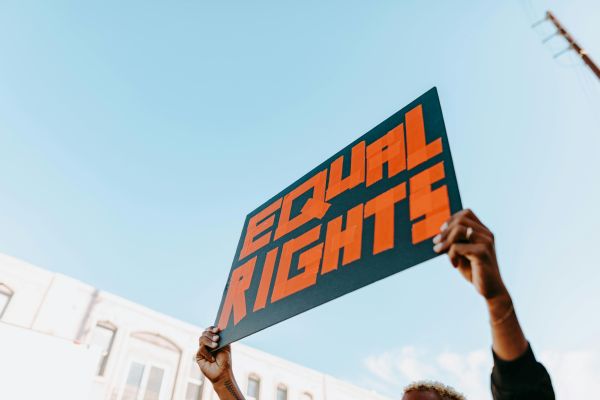
Banner image by RDNE Stock project: https://www.pexels.com/photo/a-person-holding-poster-with-equal-rights-6257080/