

TRAVELOGUE: Between mountains and moments
Our trip to New Zealand was not only excellent, but we had the pleasure of witnessing breathtaking visuals and inhaling clean air

 A social event in Brisbane made us take a trip to New Zealand with a group of friends. The trip was not only excellent, but we had the pleasure of witnessing breathtaking visuals and inhaling fresh and clean air.
Abel Janszoon Tasman, a Dutch explorer, sighted the islands way back in 1642. His cartographers who accompanied him called the land “Nieuw Zeeland”, where the latter means “sea land”. It was Captain James Cook who later rechristened it as New Zealand. The Māoris called it “Aoterarao”, which is translated as “Land of the Long White Cloud”. The ancient Polynesian navigators named it Aoterarao after seeing white clouds above the islands.
Our journey
Our first halt was at Auckland, which is also known as ‘City of Sails’. It has a blend of nature and urban life with skyscrapers. The Auckland Bridge was inaugurated in 1959, and apparently, it took over 200 labourers who worked for four years to build it. It has six lanes, which allow people to move around comfortably. At night, it is lit up and displays a kaleidoscope of lights.
The Sky Tower is a free-standing structure in the Southern Hemisphere and is 328 m tall. As an iconic landmark, it represents the modern city and has a breathtaking panoramic view of the city. For tourists, it has a fine dining revolving restaurant, bungee jumping and also the Skywalk, which is very invigorating. Apart from being a tourist attraction, it serves as a telecommunications and broadcasting centre.
We then moved on to Rotorua. I have never read or seen Hobbit, but it was mesmerising to see the location and the cute little houses which were used in the film.
The farm belongs to the Alexander family, and Peter Jackson, the director of the film, had sought permission to shoot The Hobbit series in 1998. The film set was built in March 1999. Thirty-nine Hobbit Holes were created using untreated timber, ply and polystyrene. It was again rebuilt in 2009 for The Hobbit Trilogy, using permanent materials to use artificial trees made of steel and silicon. This was built over two years, and today, it stands as a magic land where one can see a bakery, clothesline and little hobbit holes.
It also has two structures, and when one walks through it, you can see a living room, library niche, pantry, bedroom, fireplace and other trivia. To me, it was like walking into fairyland, and now I am determined to watch the movie.
As mentioned by our guide, economically New Zealand thrives on the 3 Fs and 1 T for its economic survival, and those are Farming, Forestry, Films and Tourism.
The Redwoods Treewalk in Rotorua was another great experience. Unfortunately, we could not do the night walk since there were some power problems. But what is important is the display of lanterns, which are designed by David Trubridge. The wooden sculptural lights reflect the pattern and rhythm of nature. It is set within the Whakarewarewa Forest and combines both natural beauty and sustainable design with eco-friendly platforms and bridges.
The Treewalk was not only awesome, but we also experienced a calm and serene environment showcasing the synchronisation between nature, art and innovation.
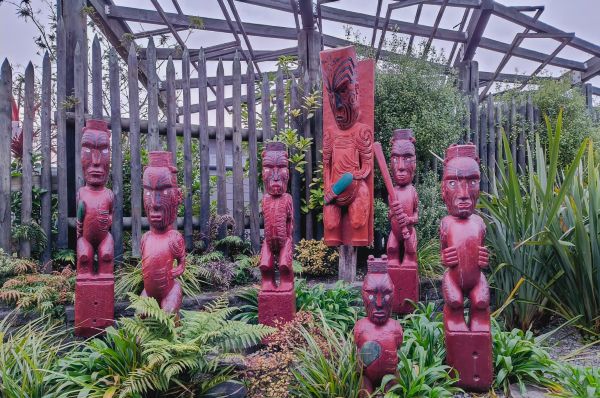
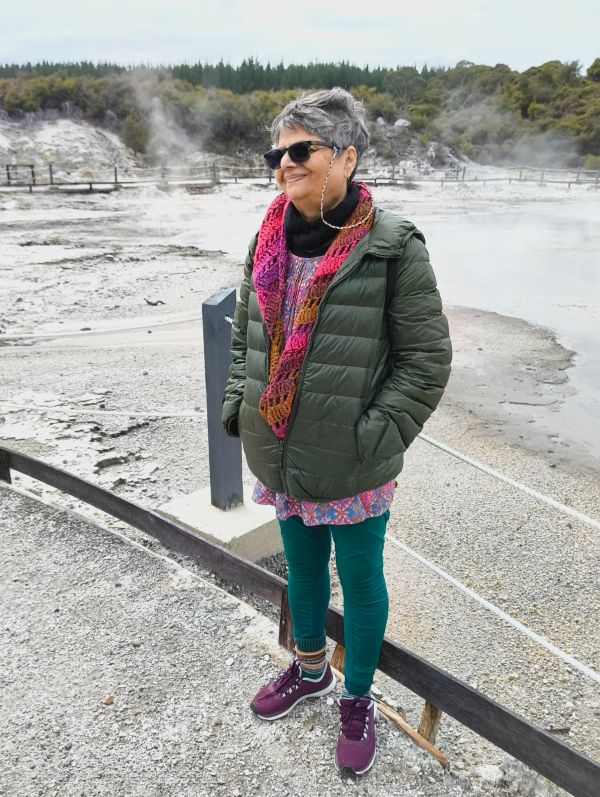
The next spot was the geothermal valley of Wakarewarewa Thermal Reserve and Pohutu geyser. This “Living Māori Village” provides a unique experience where we witnessed how the local Tūhourangi Ngāti Wāhiao people lived for generations amidst the bubbling mud pools and natural hot springs. We then experienced the mud bath and sulphur dip, which was rejuvenating, and we felt much energised. The Pōhutu Geyser is the largest active geyser and erupts up to 30 m high.
While walking us through the place, our guide explained that the silver fern tree and leaves were historically significant. During ancient times, the warriors placed them on the trail, and the leaves would show the path to other members. But they would turn the leaves to the other side to misguide the enemies.
We then visited the New Zealand Māori Arts and Crafts Institute (NZMACI), which houses different departments to promote and preserve traditional Māori arts and culture. Students were working at their benches, carving, designing, weaving and doing carpentry. The institute encourages passing down traditional knowledge and helps the Māori youth connect to traditions and a rich heritage.
The cultural display in the evening was subtle, with strong young students showcasing their tradition with songs and dance. What I noticed was that the Māori youth were not only passionate about their traditions and culture but also proud to represent it.
The next place was Queenstown, a beautiful and scenic place and also called the Adventure Capital of New Zealand. It lies beside Lake Wakatipu and is surrounded by the Southern Alps. While we took the Gondola to see the scenic beauty, I did not attempt the luge, which is a gravity-powered cart ride and is controlled by the drivers at their own pace.
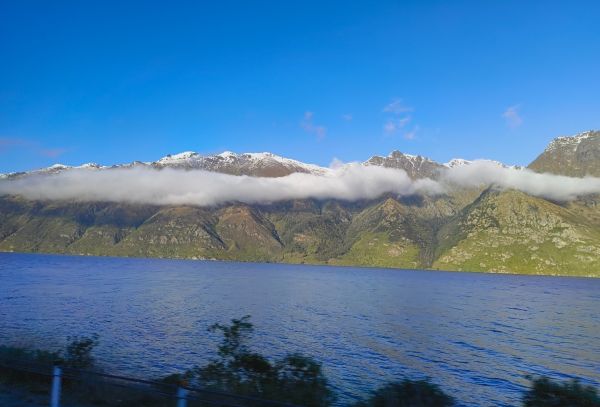
The Lake Wakatipu, the third-largest lake in New Zealand, was our next stop. It is stunning and is located in the Otago region on the South Island. It is situated against the Remarkables mountain range. It extends to 380 m and is famous for its natural “heartbeat” where there is a rhythmic rise and fall of water level, which occurs about every 25 minutes. Apparently, this is caused by a unique seiche (a standing wave phenomenon).
Our next stop was Te Anau, a cute little town located in the Fiordland region. It is also known as the Gateway to Fiordland National Park. Apparently, there were no other species except for some local breeds. But travellers started bringing in endangered species, like bats, rats and dogs.
Milford Sound, located in Fiordland National Park, is home to some natural wonders. It is often called the Eighth Wonder of the World and recognised by UNESCO for its pristine wilderness. It was founded by Tu Te Raki Owhanoa, who was considered a demigod. It has around 13 types of penguins out of 18.
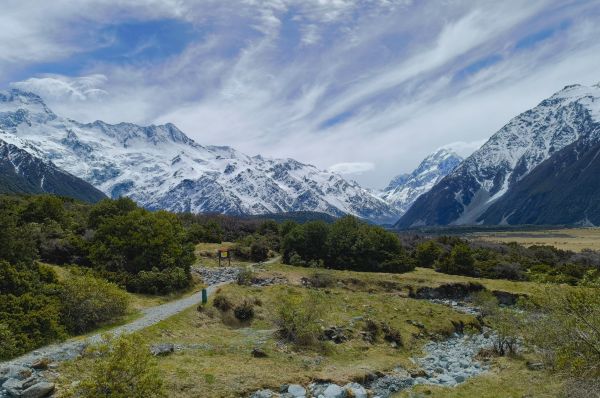
We moved on to visit Mount Cook (Aoraki), the highest mountain (3,724 m above sea level), which shows off its alpine landscapes with glaciers, snow-capped peaks and most importantly, blue skies. History claims that the name Aoraki in the Māori language means “cloud piercers” and it symbolises purity and strength for the Ngāi Tahu people. Lake Tekapo, which is set against the backdrop of mountains, is one of the best places for stargazing. It has a bronze statue of a collie dog to appreciate the help they provided as sheep dogs.
The last city we visited was Christ Church, which is also called Garden City, like our hometown, Bengaluru. The name comes from its famous landmark, the Christ Church Cathedral, and the city is known for its cultural, economic and historical aspects. In 2011, an earthquake damaged the city, but there have been huge attempts to rebuild the city and its monuments.