


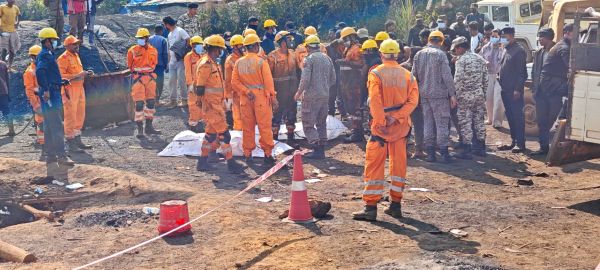
 Twenty-seven lives were lost in dynamite blasts at an illegal coal mine in East Jaintia Hills on February 5. This was the third mine mishap in the state in 2026, and all three accidents took place at illegal mines. And these accidents occur despite the state government’s repeated denial of the presence of any illegal mines in the state.
As we had earlier spoken about in Insights, the state government introduced scientific mining last year, but there was no clear picture about how the processes were being monitored and who would do that. Last year, we said that we would talk about illegal mining some other time. Now is the time that we raise this issue.
The state government, led by the National People’s Party and headed by Conrad Sangma, has always maintained that there are no illegal mining activities in Meghalaya and that it is committed to promoting scientific mining in line with central guidelines.
Nonetheless, repeated mine mishaps have proved the chief minister wrong and exposed the government.
In January this year, two workers died in separate incidents in East Jaintia Hills. In August 2022, Meghalaya Monitor reported that about 8 tonnes of coal were seized and the mine owner was arrested in Shallang in West Khasi Hills following the death of a worker. This was proof that illegal coal mining was thriving in Meghalaya.
Earlier in 2022, two mine workers from Boko were killed in West Khasi Hills. The mine owner surrendered but was released on bail soon after. Seven more were released on bail in connection with another illegal mining case.
And who could forget the 2018 Ksan tragedy? It was the first major such mine accident after the NPP came to power in the same year. The accident occurred right after activists Amita Sangma and Agnes Kharshiing were attacked in East Jaintia Hills when they were investigating illegal coal mining.
The state government continued its narrative that there was no illegal mining in the state, and every time the media raised this issue, government agents threw up a red herring about scientific mining and how it would change the state’s economy.
In January 2023, BP Katakey, who heads the committee on coal formed by the High Court, categorically asked the state government to shut down all coal mines because till that time, none had received licences for scientific mining. In one of his reports, he mentioned that 33,000 rat-hole mines were operating in East Jaintia Hills.
The chief minister has admitted that closing abandoned mines is a challenging task. But there is supposed to be an oversight committee appointed by the National Green Tribunal that would ensure the closure of these illegal mines. Did the state government not coordinate with the committee? Or, is it that the state government does not have the will to shut down the mines?
It is surprising to think that so many illegal coal mines are operating in different districts, and so many mine workers are coming from neighbouring states to work here without the knowledge of the district administration and the police.
Coal mining in Meghalaya is a murky terrain that nobody wants to talk about. The nexus runs so deep that none dare speak about it. While there are frequent hue and cries over migrant workers, alleged Bangladeshis and the proposed railway project, barely a word is spoken about the illegal mines. It is the same state that saw a movement of sorts against the Centre’s proposal to mine uranium in West Khasi Hills. Why then are there no protests or demands from NGOs and pressure groups to take stringent action against illegal miners? The promise of strict action remains only in words.
Illegal mining thrives not because of ignorance, but because of inaction. Until accountability is fixed and enforcement is made, Meghalaya’s mines will continue to bury workers—and the truth—underground.