

Politics, peace & call of the mountains in Nepal
Mardi Himal Trek: We are amazed to see how the country recuperated from the violent protests to welcome its tourists

 Our plan to go on a trek in Nepal was made with much deliberation. It was just three months after the GenZ protests that shook the country, and the violent images on television made us consider our decision several times until a few friends in the Himalayan country assured us that it was safe to travel in Nepal.
The GenZ protests started against the deep-rooted corruption in the system as well as among the leaders of democracy, a dream that the country achieved after years of tribulations. However, the demonstrations in different parts of the country turned violent after police killed about 17 protesters, who were all teenage students. Protesters targeted every establishment that was remotely connected to a politician.
“We saw protesters running on the streets. A hotel just a few yards away from our restaurant was burning one night. A politician was the owner. But the youths did nothing to us or any small-time business people. True, we could not open our restaurant, but a few young protesters apologised for that,” Alok Pahari, co-owner of Ginger, a humble eatery on Street 17 in Pokhara, recollected the events during the sizzling September days.
The beginning in Pokhara
Our trek began from Pokhara. We reached the lake city (Lake Phewa) from Kakarbhitta on December 12. The plan was to start walking from Kande village, about 25 km from Pokhara, on December 14.
The first halt was Thulakharka, or popularly called the Australian Camp. We were told that the place got its name after a generous Austrian trekker whom the locals loved dearly. ‘Australian’ is probably the mispronunciation of the Austrian Camp.
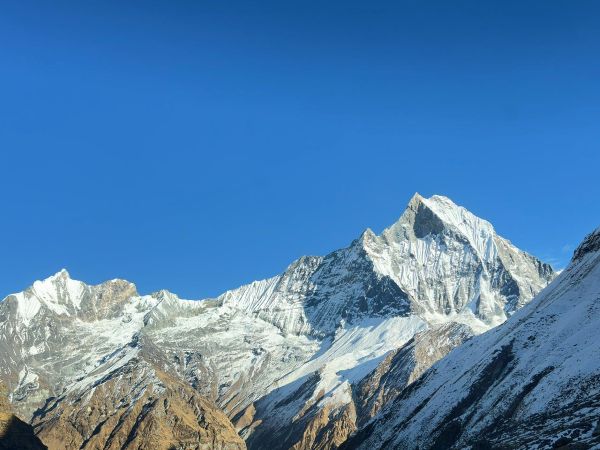
The nomenclature aside, we loved the ethereal beauty of the camp, from where one could have a panoramic view of the Annapurna range and the Machhapuchhre (Fishtail) peak. We decided to enjoy the sunset view there and spend the night. The homestay owner’s dog, a local breed, kept me company.
The sunrise was equally magnificent. One could see the golden reflection of the mountains on the Phewa Lake, which could be seen from the camp. The majestic sun casting a golden shade on the snow-clad mountains was a humbling sight. However, we barely had time to bask in the beauty or the sunlight as we had to start walking to the next destination for the day.
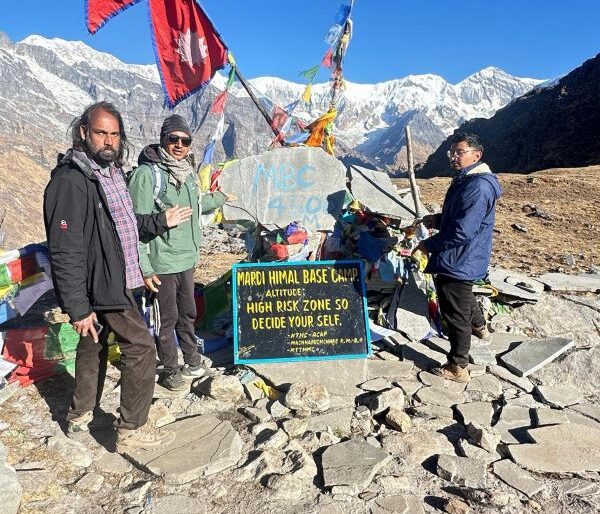 The Mardi Himal Base camp. Photo by MM
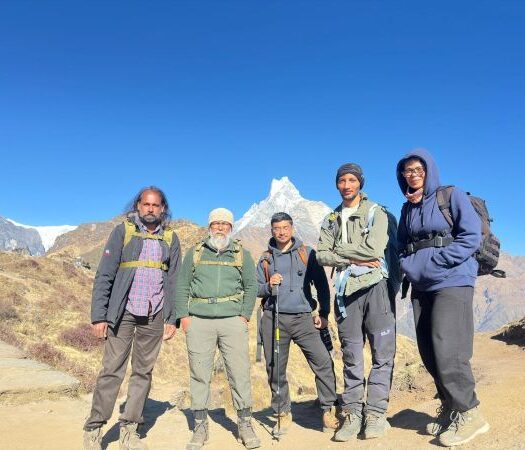
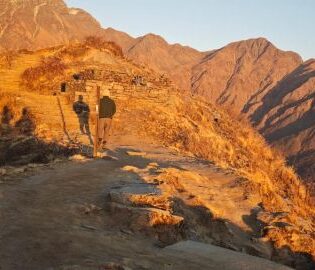
Destination Mardi Himal Base Camp
No, I could not make it to the base camp. And no, I do not regret it, for I was already awash with the beauty of Mardi Himal and the Macchapuchhre; not to mention my exhaustion from four days of walking through forests and gravelly paths.
From the Australian Camp, we headed for Pitam Deurali. The walk was long, arduous (at least for me) and serene. The walk reminded me of our forest trek from Phalut to Gorkhey, a small village along the West Bengal-Sikkim border, in 2022.
What piqued my interest during the walk was a lone trekker from Kerala. Ashish, a 22-year-old man from Kannur, had been trekking for months now. He took shelter in the living rooms of homestays on the way and cooked his own food. From his dishevelled look and torn shoes, one could imagine the harsh times he had spent on the mountains. He spoke less and walked slowly and carefully. But he looked content and seemed to absorb every bit of the beauty. Our paths crossed several times on the way to the Mardi Himal viewpoint.
We reached Mardi Himal High Camp on Day 4. The next day was the most challenging, and our young and enthusiastic guides, Bishow Devakota and Ravi Poudel, briefed us on the dos and don’ts.
On Day 5, we started at 3 am to reach the viewpoint for the sunrise. The plan was to enjoy the sunrise, spend some time at the viewpoint and come back to the High Camp. But one of my friends wanted to go to the Mardi Himal Base Camp, and the guides readily agreed.
While four of them — Ravi, Bishow, his friend Deeptak Pradhan and my friend — started their walk, two of us decided to wait at the viewpoint. We had to descend a steep path on the same day, and it seemed logical to save our energy for that.
Political churning in the Himalayas
For Nepal, which largely depends on tourism, the GenZ protests were a setback. Bhakti Devakota, the owner of Big Sky Treks that arranged our trek, said treks were cancelled during that period.
“But things came back to normal fast. This was because the protests were against the corrupt government machinery and not tourism. So, the locals ensured that all tourists who could not leave the country were safe. Nepal is peaceful now. Our people are peace-loving, and we respect tourists. So, please visit our beautiful country,” was Devakota’s message.
While tourists barely felt the political heat, the expectations and apprehension among locals were rising. The election is on March 5. They spoke among themselves about the upcoming election in a hushed tone. When asked, many were outspoken about the country’s political scenario.
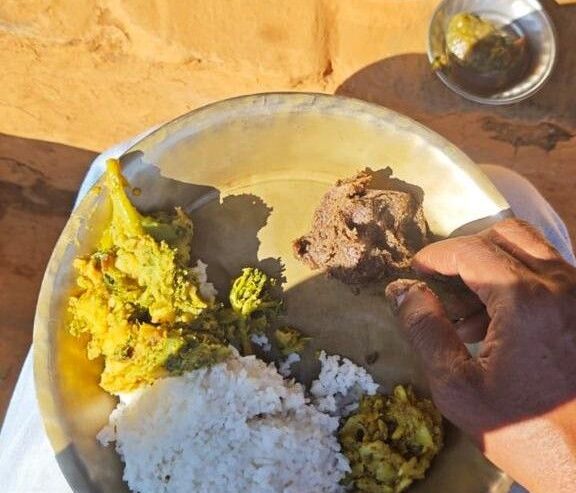
During our 10-day stay in Pokhara, we visited a village called Poudur. Ravi, our guide and porter for the Mardi Himal trek, and his family graciously welcomed us. While we enjoyed local cuisine and fresh vegetables, we also wanted to know what the elders in the village thought about the GenZ protests and what they were expecting from the election.
“Both monarchy and Maoism are bad for the country. We need a multi-party system for democracy to thrive,” said septuagenarian Indra Prasad Poudel. He was happy to share his thoughts with the strangers, and was even more excited to talk about his visit to Shillong some 60 years ago as a child worker.
The chairman of the Annapurna Nagar Palika (rural municipality), Annaprasad Poudel, was not happy with all the allegations of corruption. “It’s only the media and the YouTubers who are screaming corruption. Where is corruption? If that is so, then I am also corrupt. If it is a genuine allegation, then an inquiry must be done,” he said.
However, he appreciated the youths’ zeal and demand for a clean government, but warned that without leadership, their protests may get lost amid the political vineyard.
For the love of the mountain & its people
Whether the country will get the right leader, that time can only show. But for us, the travellers, it is the call of the Himalayas and the love of the people there that brings us to Nepal.
Every time we visit the country, we are overwhelmed by the hospitality. This time, too, we found the warmth and some new friends. Bishow and Ravi, and their friend from Kathmandu, Deeptak Pradhan, were not only our guides but friends and ‘philosophers’. Ravi’s philosophical words during our evening ‘rakshi’ (local brew) sessions were unforgettable. The bond became so strong that Ravi invited us to his village, Poudur. His family opened the doors to us and pampered us with local cuisine and fresh picks from their garden.
Back in Pokhara, we found the same love and respect in the Pahari couple, Alok and Ganga, who fed us at their restaurant, Ginger, on Street 17. It was a small but delightful eatery, and energy was always high thanks to their son Siddharth, who preferred to introduce himself as ‘the Buddha’. (If you want to explore the eatery and enjoy the hospitality of the owners, you can contact them on 9846037906. Don’t forget to put the country code.)
Politics was always among the topics of discussion wherever we went. Our friends there, and so are we, wait eagerly for the election and the outcome. For us, the wait is for the next time when we can answer the call of the Himalayas and come back to the place that offers so much peace, hospitality and humility.