
CM opens renovated state central library, House of Ryndia & Living Heritage Festival

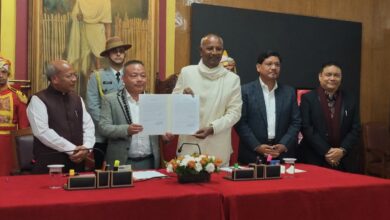
Shillong, Nov 3: Chief Minister, Conrad Sangma inaugurated renovated State Central Library, House of Ryndia in state museum and living heritage festival on library premises.
Sangma said that the event brought together 3 connected areas of Meghalaya’s development, the preservation of living heritage, wider public access to knowledge and stronger visibility and market opportunities for traditional textile producers.
Library background according to govt
The State Central Library was established on January 19, 1974 as Meghalaya’s apex State Public Library under the Directorate of Arts and Culture. For more than five decades, the library has served students, children, researchers, scholars, government employees, retired personnel and general readers. As on March 1, 2026, the State Central Library had a collection of over 2 lakh book volumes, along with magazines, government publications and newspapers dating back to the 1970s. The library has approximately 31,000 registered members and issues around 200 books daily, in addition to readers who use its reference and reading sections providing lending, reference, net-browsing, current-awareness and orientation services, children’s literature, internships, archived newspapers and online membership registration.
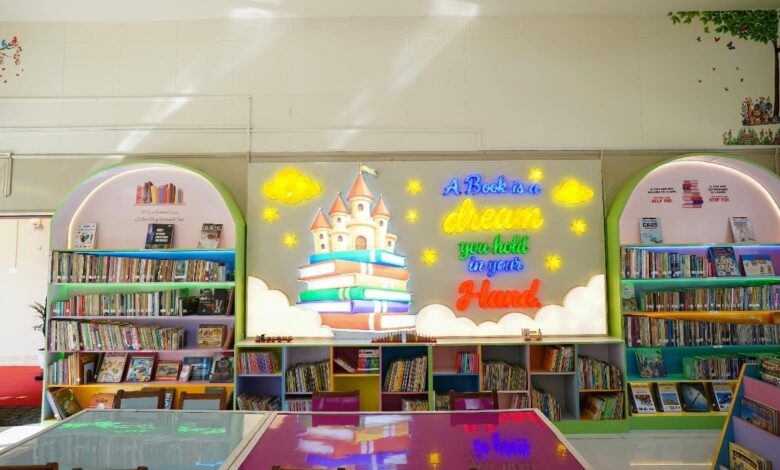
Rs 2.23 crore assistance has been extended for the State Central Library under the National Mission on Libraries. The Mission supports infrastructure upgradation, modern technology, networking, improved services and better access for different groups of library users. The renovated Library includes improved reading facilities, archive sections, a children’s reading area and a Knowledge Corner for students preparing for national-level competitive examinations. The Knowledge Corner began as an initiative during 2019–20 and has now been upgraded into a full-fledged facility dedicated to competitive-examination aspirants. The library has adopted E-Granthalaya software, Online Public Access Catalogue and Web OPAC facilities, enabling readers to locate materials and access information more efficiently.
The chief minister said the renovated library has modernised the space while promoting reading habits among the youth and the public. “There is a push to make libraries ‘cool’ and enjoyable through better amenities like local coffee, tea and snacks to encourage students to spend time reading without mobile devices,” he said and highlighted the importance of reading among the youth and called upon parents and teachers to help inculcate a consistent habit of reading in children.
Festival of unique hamlets
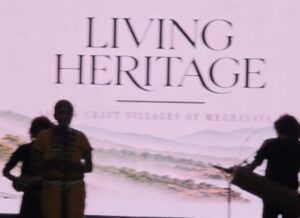
State-Level Living Heritage Arts & Craft Village Festival that was also opened recognises traditional arts, crafts, music, food practices, oral traditions and community knowledge that continue to be practised across Meghalaya.
Textile initiative
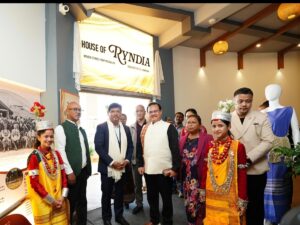
The House of Ryndia which was also inaugurated provides a dedicated platform for Meghalaya’s indigenous textiles, improving public access, visibility and market linkages.
Explore new USPs
On tourism strategy the chief minister aimed to move beyond existing USPs like Sohra, Mawlynnong, Dawki etc by creating new brands around 11 specific locations creating economic diversification converting sectors like sports, music, textiles and handicrafts into viable economies that create livelihoods and jobs. He also informed that efforts are being made to create sustainable branding of local traditions and culture more effectively by involving the community.
Development pillars
He outlined the state’s important development pillars and emphasised the importance of branding Meghalaya through sustainable tourism and cultural preservation ensuring that progress is tangible and culturally grounded.
He informed that the growth and development model focuses on (i) infrastructure development focusing on closing gaps in roads, buildings, schools, hospitals and sports facilities through significant capital investment (ii) personal development to ensure infrastructure translates into improved lives such as farmers’ increasing production or entrepreneurs accessing national markets and (iii) tradition emphasizing identity, culture and roots.