
Assam’s religious integration & Sankardev’s contributions
It was through inclusivity that Sankardev maintained the non-Hindu identity of Assam

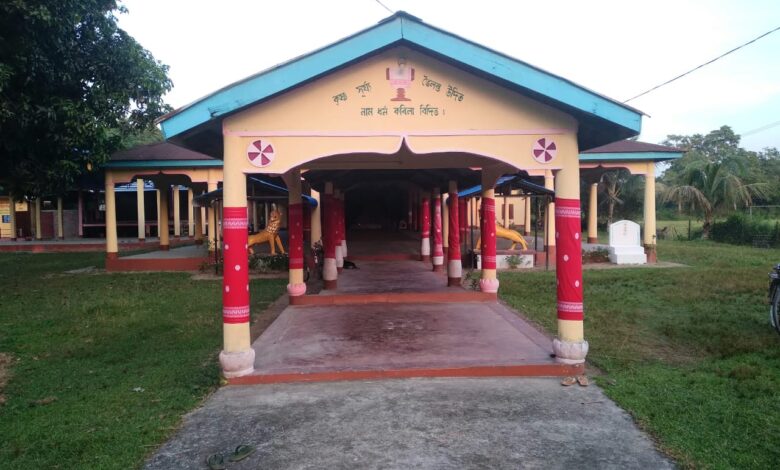
 Assam was originally a non-Hindu and non-Aryan state. The place was more likely to be penetrated by Southeast and East Asian cultures. Naturally, they were susceptible to Confucianism, Taoism or other folk religions.
Religion, casteism & race
The strict caste division was comparatively relaxed or broken in North India for other reasons besides merchandise. After the onset of Buddhism, many downtrodden Hindus converted to Buddhism. To hold their conversion, many priestly or privileged Hindus started to treat them leniently.
However, Hinduism and casteism were, and are still, correlated. So, where to induct the new converts? What would be their caste? It became difficult to offer proper caste to an individual. Buddhism was rising at that time. This rang the alarm bell among the conservative Hindu preachers.
In noted historian Romila Thapar’s words, “Brahman orthodoxy had also to come to terms with people of non-Indo-Aryan origin, such as the Greeks and the Shakas, who had political power and could not therefore be treated as outcastes. The ‘fallen kshatriya’ status conferred on them was a shrewd manoeuvre. The presence in India of foreigners who achieved positions of political and economic importance created considerable social problems and must have further challenged the theoretical structure of caste.”
As in modern times, power has a lot of influence on caste. Powerful people, by marital assimilation or other means, can upgrade anyone’s caste socially. No race in the world is pure or born out of non-assimilation. The Brahmin, Kshatriya and Shudra are born from the same parents in ancient India. The caste is actually an expression of quality.
RELATED ARTICLES
With growing numbers of people of the respective castes, this practice or system was diminished. Some members of the inferior class also availed of the opportunity to mingle with new immigrants or foreigners. This way, they hid their original identity and changed caste.
The flow of newcomers to Hinduism made it a cosmopolitan religion. This was the hidden volcano of the Bhakti movement. The receivers of Vaishnavism and the Bhakti movement were not the same. Many discerning elites also practise Vaishnavism. The Bhakti movement was like the next promotional step of Vaishnavism; genuine worship in any way.
For example, Assam first saw royal Shiva worship. The Varman dynasty was the first historically traceable dynasty (350 AD–650 AD) of Kamarupa.
The Varman monarchs were devotees of Lord Shiva. They were tolerant, and the first golden period of Assam began with their reign. The prominent monarchs of Assam were Aryanised, not born Aryans. It was not that Sankardev only worked hard to manoeuvre people for the change of faith.
The Chutiya kingdom, which existed from around 1188 AD to 1524 AD, had a division of religion between the kings and the subjects. The Chutiya kings were personally Vishnu worshippers. The subjects were worshipers of the tribal goddess Kechaikhati. This religious division of kings and subjects confirms our conclusion about the different religious and cultural backgrounds of the Chutiya kings and subjects.
This Kechaikhati goddess was later Hinduised and projected throughout Assam as Tamreshwari, the goddess of power. The traditional priests of Goddess Kechaikhati were the Chutiyas. They were called Deuris.
Age of inclusivity
The aim and objectives of Sankardev were to put religion and philosophy into an inclusive journey to advance human civilisation. The present Assamese community is based on the ideals of the great sage who awakened the thoughts and consciousness.
Religion and reformation
Sankardev has become an institution run by consciousness.
The slightest human limitation of Sankardev cannot be a barrier to his achievements. Some of his rumoured supernatural deeds overcome his limitations among the hoi polloi. Sankardev spent his life fighting against immorality and inequality and introduced the religion of heaven. Vaishnavite priests were carrying it forward. The goal and objectives of Sankardev were world civilisation and human welfare.
But the rustic situation of Assam would not create a congenial environment to demonstrate anything sans religion. So, Sankardev or Madhavdev painted all theories with divine colour. They accepted all incarnations of Lord Krishna. They recognised the significance of Hindu religious books.
The Vaishnavite religious scriptures are not the fundamental creation of Sankardev. He translated the 10th chapter of the Bhagwat Gita. The Hindu religious books unduly praise the Brahmins. But instead of starting a revolt against Brahminism, Sankardev applied the trusteeship policy. Through all his means, he called upon the Brahmins to be lenient and liberal.
It was through inclusivity that Sankardev maintained the non-Hindu identity of Assam. He assimilated all into the fold of pure spirituality that upheld Assam’s intrinsic socio-religious ethos.