

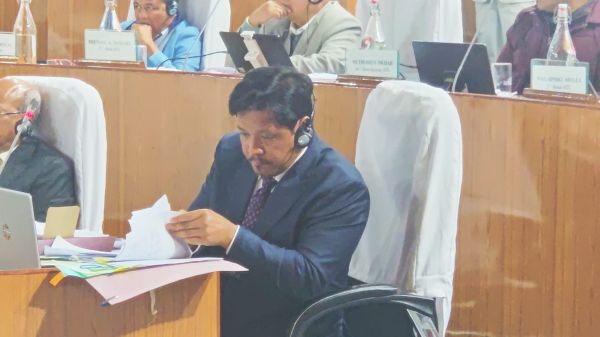
 The Budget Session 2026 is over. And on many counts, it was not impressive. It is not just about the budgetary allocations, but also about the debates that took place on the floor of the House during the budget session.
PART A: The Rule of Sub Judice
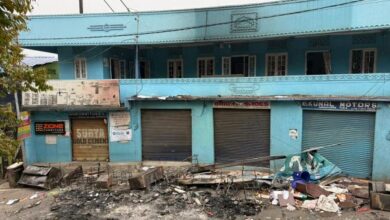
The Budget Session was thought to have been a forum for the opposition to question the state government’s policies and actions on illegal coal mining and quarrying. Just before the session, the opposition also raised the demand for the chief minister’s resignation following the mine tragedy on February 5 that killed over 30 workers.
However, the session turned out to be a damp squib. On the first day of the session, the opposition’s attempt to have a debate on the issue was rejected by the Speaker. The reason was that the matter was sub judice.
The High Court has taken suo motu cognizance of the mine accident and summoned the deputy commissioner and superintendent of police of East Jaintia Hills. In the last hearing on February 24, the High Court expressed displeasure over the fact that the state government did not fix any accountability for the illegal coal mine accident.
In this context, let us cite an instance from 2021. In 2021, the Union government disallowed questions regarding Pegasus in Parliament, stating that the matter was subjudice.
The term res subjudice is Latin for ‘under judgement’. The purpose of the rule under Section 10 of the Code of Civil Procedure is to be a safeguard against external influences that could compromise the integrity of legal proceedings.
In 2025, the Supreme Court said that courts, as open and public institutions, must remain receptive to observations, debates, and constructive criticism. The court also observed that even when a matter is sub judice, it is vital for important issues to be vigorously debated by the public and the press.
This conflict of whether to discuss a subjudice matter in the Legislative House had occurred time and again — in the late fifties, sixties and even after that. But every time, it was the freedom of speech that had prevailed over the self-imposed restriction that is the rule of sub judice.
Speaker Thomas Sangma had the power to allow the discussion, as it was done several times in the legislative history of India. But he chose not to. This leads to the public perception that the Speaker may be toeing the government line.
But what did the Opposition do? VPP’s Ardent Basaiawmoit opposed the speaker’s ruling by invoking Article 194, which allows freedom of speech in the Legislature of all states. Another VPP MLA, Brightstarwell Marbaniang, called the Speaker’s attention to the fact that legal technicalities should not be a shield for executive accountability.
While members of the treasury would burst out beating the bench at every speech of the Chief Minister, none in the opposition showed that unity when both these MLAs raised concerns. In fact, the Opposition MLAs should have staged a walkout in protest against the Speaker’s ruling and continued their protest until the issue was allowed to be discussed and debated on the floor of the House.
Any member of the opposition could have moved the High Court. This would have cleared the air and opened discussion on legislative freedom and the government’s restrictions.
But such sincerity was wanting among most of the opposition MLAs. In the process, the public who sent these representatives to the Legislative Assembly lost an opportunity to question the government on its lapses.
The Budget Session 2026 exposed a worrying gap between democratic responsibility and political will. The Assembly failed to ensure meaningful debate on an issue that has become a public concern. This only shows a lack of transparency and strong governance, as well as a complete apathy toward fixing accountability.
Part B: Allocations
The last day of the Budget Session 2026 was on February 27. Chief Minister Conrad Sangma tabled the budget 2026-27 on February 23. He was overwhelmed by the state’s past performances and enthusiastic about its future growth. But how is the financial health of the state in reality?
Going by a few numbers, it does not look too healthy, and there is no reason to be enthusiastic even for the distant future. According to the CM’s budget speech, the total central fund to Meghalaya is expected to rise to Rs 21,229 crore in 2026-27, up from the revised estimate of Rs 20,342 crore in the current year. This is not something that the state should cheer for because an increased central fund to a state only shows the state’s high level of financial dependency.
This also means that Meghalaya’s fiscal autonomy will be reduced. It may further affect the state’s freedom to tailor policies according to the local needs and increase its dependence on the central diktat on several counts. This often compromises need-based development in a particular state.
There are two more things which raise concerns. One, the state’s reduced share of central taxes and inconsistent non-tax revenue collections.
The CM pointed out that the share of central taxes is projected to decrease to Rs 9,631 crore in 2026-27 from Rs 10,684 crore in the current year, because of changes in the devolution formula recommended by the Sixteenth Finance Commission.
The chief minister said he was confident that the overall central tax pool would grow, strengthening the state’s share.
The devolution formula is for five years, which means till 2031. One of the parameters for the evaluation of any state’s performance, as per the 16th Financial Commission, is the state’s contribution to the national GDP. Meghalaya’s contribution is minuscule. The state ranks 26th in terms of 2024-25 SGDP.
Now, another important parameter is demographic performance, which is not a strong point for Meghalaya, at least by the statistics flagged by Gambegre MLA Mehtab Chandee Sangma. The state has a fertility rate of 2.7, one of the highest in the country and definitely higher than the national level.
So, here too, the chief minister does not have much to cheer about or be optimistic.
The state’s non-tax revenue collections have been inconsistent due to border trade disruptions with Bangladesh and the long transition toward scientific mining. This is another concern. How is the state government planning to make up for the loss? Being a largely consumer state, it is a difficult situation, indeed.
But the chief minister said the outlook was improving, and three mining licences have already been awarded, and 20 more are at various stages of approval. Meanwhile, we had the mine tragedy that killed over 30 workers. In this situation, the government should first clear its stand on coal mining and fix accountability and then think of going forward with other licences. The opposition, on the other hand, should make the government accountable for this.
Another thing that the chief minister mentioned was that Meghalaya has emerged as a star performer under SASCI, a 50-year interest-free facility that is effectively a grant in present value terms for the State Government.
A star performer or a star borrower? True, SASCI is a 50-year interest-free facility, but doesn’t the state have to pay back the interest after 50 years? Does it not mean that we are leaving behind a huge debt burden for the generations to come? Is that something that we should be proud of? The pride is so overpowering that the present government does not even care to accept its limitations and appeal to all to work towards overcoming those.
While growth optimism is always encouraging, it should be backed by performance. And when we say performance, it means sustainable revenue generation, reduced debt burden and stronger fiscal autonomy. Only then can we talk about stability and a better future.