
Chronicling the power of ‘No’ that Kong Spility taught Domiasiat
Tarun Bhartiya's posthumously released photobook captures moments of people's resistance in the WKH village

 A photograph is a vessel of communication, a canvas for the expression of emotions and a way of understanding the photographer’s perception of time and events. Tarun Bhartiya communicated in black and white, and his frames told stories like a seasoned raconteur. He perceived moments in their holistic forms, with their strengths and foibles that completed his frames.
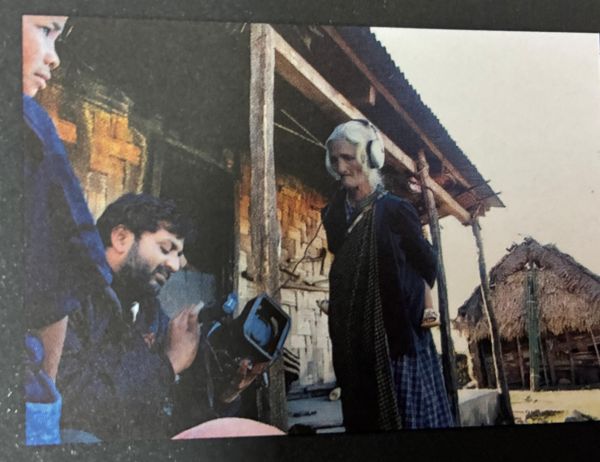
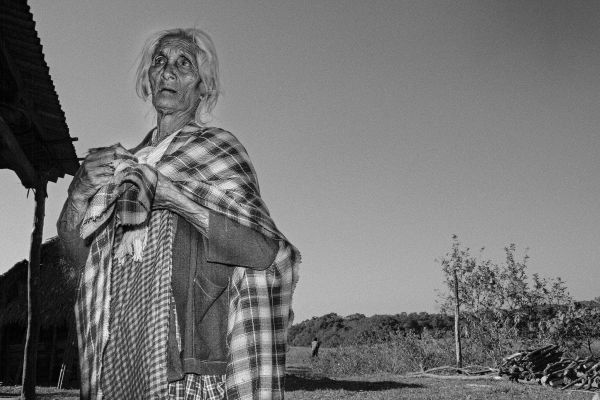
Among the many stories that Bhartiya captured with his analogue camera was that of Spility Lyngdoh Langrin, who lived in a village in Meghalaya’s West Khasi Hills.
“But what did she do that her story must be told?” One may ask. Nothing. All she did, or rather, said was “No.” And she stood by her emphatic negation of a development that proposed to stifle her freedom and impair the very existence of her tribe.
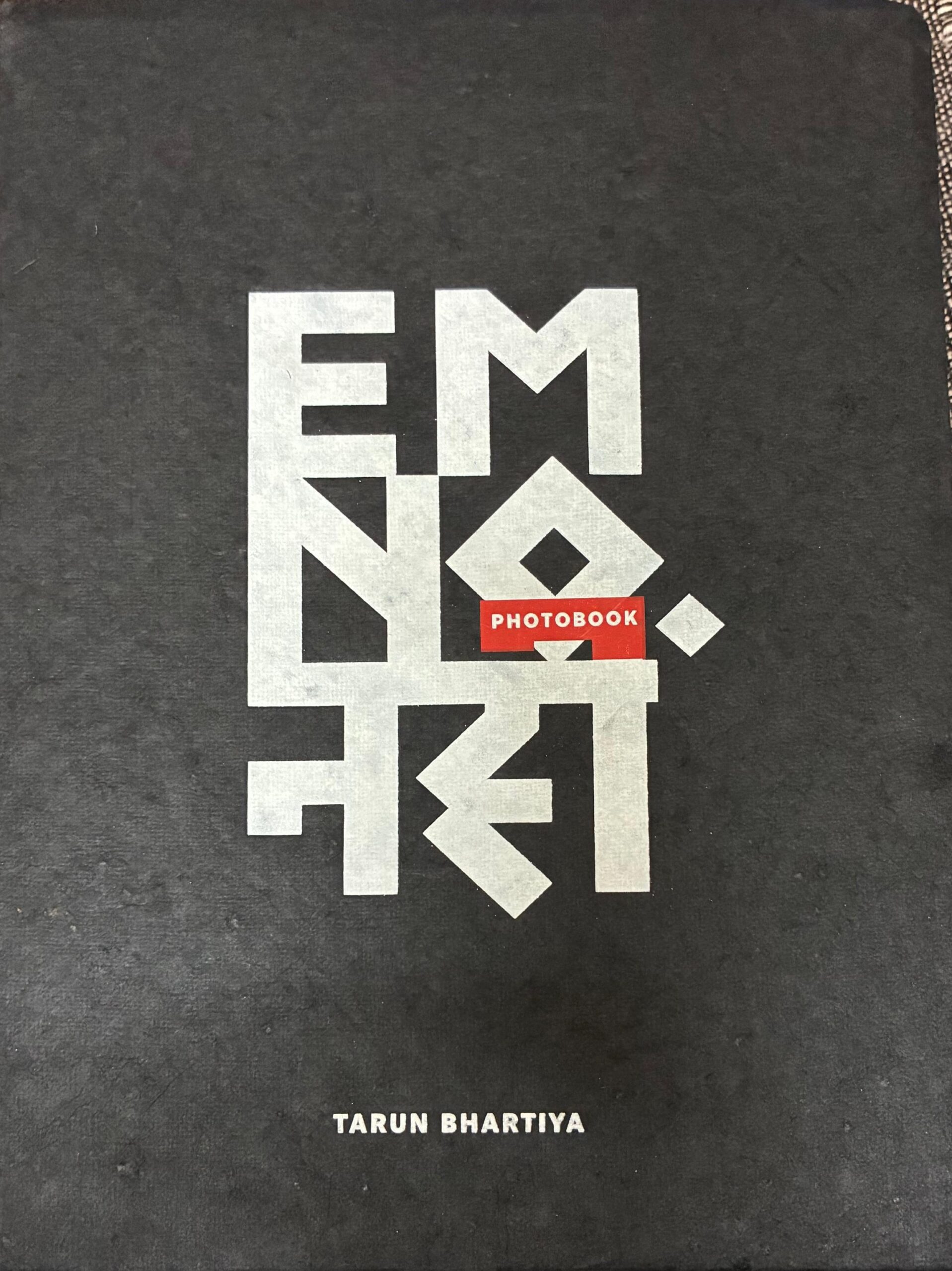
Kong Spility became the voice of resistance at a time when many were giving into the State’s ersatz promises. Bhartiya’s photobook, Em/No/Nahi, which was posthumously released last December, captures her spirit and leadership, the struggles of the hoi polloi and vignettes of life.
The book starts with the photographs of Kong Spility’s funeral and goes on to tell her story.
Dark clouds over yellow cake
 Kong Spility was the first to raise her voice against uranium extraction in the state. She steadfastly opposed every move of the State to desecrate her land in the name of a development that was skewed and degenerative. Her indomitable personality inspired many to join the fight against uranium mining at Domiasiat in West Khasi Hills. She called out the farrago of lies that the government pitched to win over simple villagers who had hitherto been denied the right to live with dignity.
Mining, whether it is uranium, coal or limestone, has remained a contentious issue not only in Meghalaya but across the country. Despite protests and sacrifices, it is always the State’s high-handedness that has crushed the protectors’ spirit. In Meghalaya, too, decades of illegal coal mining led to irreversible destruction of the ecology in the Jaintia Hills. Rampant limestone mining has scarred the lush green hills in the state. Stone quarries are not only wiping out forests but also affecting lives in several villages in Ri Bhoi and Garo Hills. In all these, the consent of a few wily locals and the constant political provocation have worked as catalysts.
MORE REPORTS ON URANIUM
And amid such environmental crimes and greed, Kong Spility’s ‘No’ invoked a sense of belonging to the tribal land and kindled a revolutionary spirit among common people in Domiasiat and other villages sitting on rich deposits of uranium that did not die even after her death. Her rejection of the lure of lucre, her farsightedness and her love for the ancestral land inspired many to join hands against the State’s move to extract the mineral.
The perseverance that Kong Spility showed became her legacy, and people took it forward. They vehemently opposed the government’s move to build a dam on the Umngot that would have submerged several villages and destroyed the livelihood of hundreds. They refused to accept a developmental proposal that would have doomed the future of their children.
In all this, Bhartiya, who passed away last January, became a witness to the history of a revolution that was gradually being scripted in a nondescript part of the country. He lived in the village to listen to their stories and understand the roots of the protest. The moments that he captured are a documentation of an important phase in the history of Meghalaya. The landscape, people and places photographed by Bhartiya weaved a tale of resistance that has become a lesson for posterity. It was his ideology and benignant understanding of workers’ struggles that made him look at time and events through a different prism, which, in turn, made his photographs humane.
The book is relevant to the time and beyond. Bhartiya’s notes, along with the photographs, provide further insights into the anti-uranium protest and the role of Kong Spility in inspiring a generation to fight for its rights. Angela Rangad’s notes about Bhartiya help readers, who did not know the photographer personally, understand the person behind the lens. The chronology of events at Domiasiat at the end of the book gives a clear picture of the people’s movement there. Readers can also explore the additional resources by scanning the QR codes provided.
The title of the book is not only symbolic of resistance, but also a statement of change ushered in by Kong Spility.
Photobook: Em/No/Nahi; Photographer: Tarun Bhartiya; Publisher: Yaarbal; Pages: 199; Price Rs 1200