
Illegal migrants: Political rhetoric, fear and the truth
The scepticism about illegal immigrants in a small tribal state such as Meghalaya cannot be downplayed for several reasons

 Illegal immigrants, especially Muslim Bangladeshis, are flooding our country and posing a grave threat to the population of Bharat. This is a common rhetoric that our political leaders keep repeating, creating a sense of fear among citizens.
About 2 years back, Ashwini Upadhyay, a politician from the country’s ruling party, put a figure to the illegal immigrants. 5 crore, his PIL in the Supreme Court had mentioned. The number varied from one politician to the other, sometimes 1.2 crore, sometimes 2 crore, sometimes 40 lakh.
Now, who is an illegal migrant? A person entering a country, in this case India, without valid identification documents, or an individual from another country who has all documents but has overstayed in the country. The concern is about the former kind.
It is difficult to have specific data about the illegal migrants when there is no documentation. So, what were the sources of the figures cited by different politicians at different points in time in the past few years?
Trepidation about illegal migrants has its roots in the colonial history of the country, and this has turned into political misinformation over the decades, the frequency of which has increased in the last few years.
Having said that, the fear of illegal immigrants in a small tribal state such as Meghalaya cannot be downplayed for several reasons.
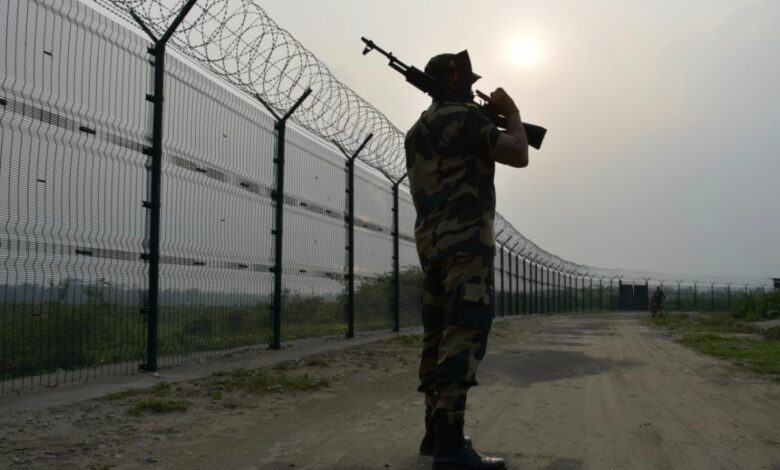
Meghalaya shares 443km of border with Bangladesh. Of this long stretch of international border, 40 km is still unfenced. This remains a cause for concern among the state’s citizens. So, when concerned NGOs talk about illegal migrants, it primarily means Bangladeshis.
The recent arrests of Bangladeshi intruders in Ranikor in South West Khasi Hills have further fanned the fear of increased illegal migration. In April this year, the Meghalaya police arrested three persons for facilitating the entry of Bangladeshis by providing fake documents. In the same month, the BSF said it apprehended 78 Bangladeshis just in the first quarter of 2025.
All these reports and numbers are enough to create panic among citizens here, especially in the Khasi and Jaintia Hills and not so much in the Garo Hills. The number of arrests along the porous border also indicates a trend of infiltration from the neighbouring country. With the political volatility in Bangladesh and the pushback of illegal migrants in Assam, the fear of an influx of illegal migrants in Meghalaya is only getting intense.
The state government has already approached the Centre to convince Bangladesh to build fences. If fencing is done following international rules, then several Meghalayan villages will turn into no-man’s land. To solve this conundrum, the Meghalaya government wants the neighbouring country to build the fence.
Till that happens, the state government must tighten its check gates. It should put in place a proper system to scrutinise every person entering the state from all entry points. It should also take measures, such as regular meetings with concerned NGOs to update them about the evolving situation, and brief the media about police action in the border districts. These steps will go a long way to allay fears and prevent citizens from taking the law into their hands.
The government measures will also help in checking the cases of harassment of genuine migrant workers. Many a time, migrant workers, who are non-tribals from other states, have to face harassment and even assault. It is the government that has to ensure the safety of genuine migrant workers and prevent such incidents.
Amid this tension, one report that may bring some comfort is that the number of illegal migrants apprehended by the border security force while they were voluntarily leaving India through the eastern border so far in 2025 has tripled compared to 2024.
The fear of illegal migrants taking over the minuscule tribal population is valid, but is often misused. It has taken such a form that the term ‘Bangladeshi’ has attained a derogatory status here, much like the Miyas in Assam. This shows a lack of sensibility and information among us, the Indian citizens. Unlike vote-seeking politicians, our weapon to fight the problem should be the right information and correct data and not empty rhetoric.