


 I had the opportunity to go to Australia for a social event and also as a tourist. I did some research before going on the trip. I found that the name Australia is coined from the Latin word Australis, which means Southern.
Apparently, it is believed that there was a huge landmass in the southern hemisphere that balanced the lands in the north. Hence, this region was called Terra Australis Incognita — the unknown southern land.
History mentions that Dutch explorers named these parts New Holland in the 1600s. In 1770, Captain Cook from Britain claimed it as New South Wales. It was in the early 1800s that Matthew Flinders, a British voyager, used the word Australia, since he found it was more appropriate. In 1824, the British government officially adopted the name Australia, which includes the entire continent and the nation that was later formed.
My holiday to Sydney was brief, so I tried to make the best use of the short span. Apart from spending time with my nieces, celebrating my birthday and Deepavali and meeting some old friends, I managed to be a tourist and availed the Hop-on Hop-off services to discover and explore Sydney.
The Circular Quay signifies the landing of the First Fleet, which landed in 1788, and it represents the evolution of Sydney in a circular form, which started as a colonial port to a global entity. Today, it is a city that has a cosmopolitan crowd. Today, it serves as a centre for art and music, has plenty of restaurants and houses ferries, trains and buses that attract plenty of tourists.
Tales from the past
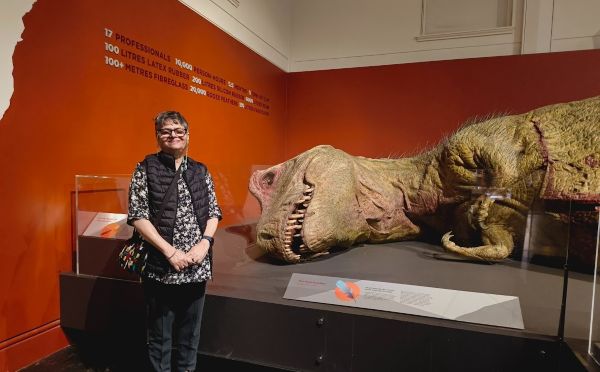
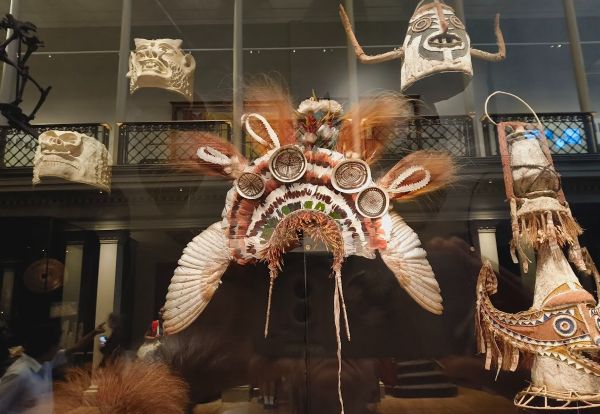
The bus then took us to the Australian Museum, established in 1827. It signifies cultural, scientific and historic representation of natural history and anthropology. It is one of the oldest museums in Australia and is well appreciated internationally. Historically, it has evolved as a colonial-era curiosity that has a vast collection of mementoes and relics from all over the world. In fact, it embodies the useful documentation to include the indigenous cultures, biodiversity and geology of Australia.
It has over 21 million specimens and cultural curios and has a huge role in researching biodiversity to include conservation, environmental science and taxonomy. The Australian Museum Research Institute, which is housed in the centre, serves as a platform to conduct studies on climate change, conservation of species and genetics.
Personally, I was fascinated by the Dinosaur Gallery, where different types of dinosaurs were exhibited. It also formed as an educational platform to study the origin, understand the life of these species.
Another interesting aspect was the collection of artefacts, birds and other trivia from across the world. This clearly showed the global connections that Australia has with other nations, even in the early times.
In short, the museum is an amalgamation of cultural and indigenous heritage which promotes, conducts research and shares indigenous knowledge to present cultural understanding. It also houses important collections of the Aboriginal and Torres Strait Islanders’ cultural materials.
A masterpiece
The Opera House, which depicts a sail-like white shells, is another significant monument and an iconic symbol of Australia’s architectural achievement. This monument was planned to host as a performing arts venue in the 1940s. To do this, an international design competition was launched in 1956, where 233 entries were received. The architectural marvel submitted by Jorn Utzon, a Danish architect, won the competition and was selected in 1957.
Though the construction began in 1959, it had to be halted due to financial constraints and lack of technical knowhow and political challenges. It was then inaugurated by Queen Elizabeth 11 on October 20, 1973. UNESCO declared it a World Heritage site in 2007 by recognising it as a “masterpiece of 20th century architecture”. Today, the magnificent structure has become a global landmark and symbolises creativity and innovation.
As an educational hub, it conducts outreach programmes for students to come and explore history, discuss arts and innovations and hosts talks, workshops to promote culture. The Opera House is lauded for its commendable initiatives in ensuring and maintaining environmental sustainability to include energy efficiency and heritage preservation. It symbolises the meeting of technology, environment and history.
The heartbeat of the city
The next place I visited was the Darling Harbour, which is a vibrant waterfront area. It is named after Governor Ralph Darling, who played an important role in the economy and trade aspects of Sydney. In 1988, it was reopened to signify Australia’s Bicentenary celebration, which symbolised Sydney’s transformation from an industrial hub to a people-oriented space. Apart from being a tourist attraction, it represents Sydney’s economy and identity by being a model of popular waterfront redevelopment.
The Haymarket was established in the early 19th century to encourage trade for products like hay, grains and other produce. It helped farmers and merchants trade their goods and produce. Soon, Chinese immigrants settled in the area, and today, it is known for its food stalls and cultural festivals. This symbolises Sydney’s transformation and inclusive multicultural spirit.
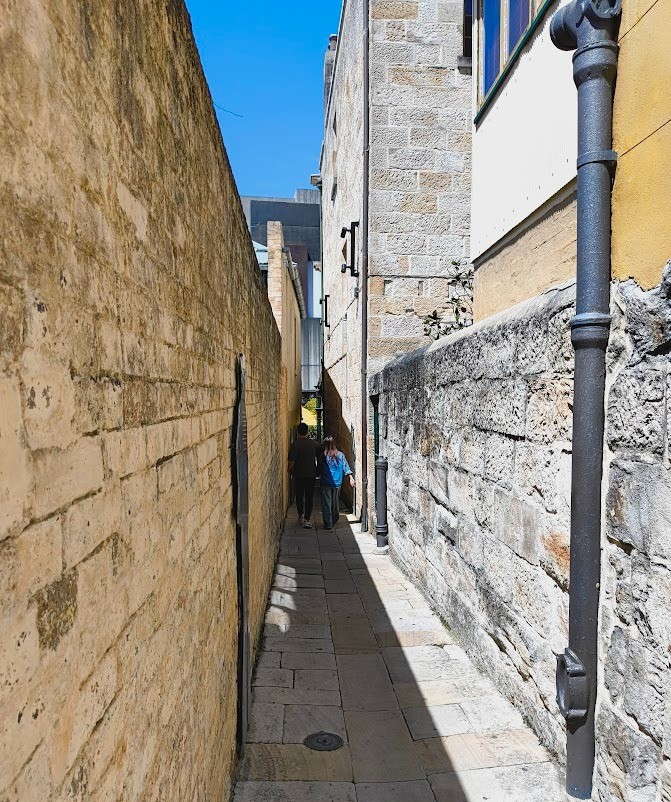
The Rocks, which is built from local sandstone, has narrow lanes and old buildings, which reflect the colonial past of Sydney and early urban life. It is located near the Circular Quay, beneath the Sydney Harbour Bridge and is called the birthplace of modern Sydney. According to history, it was the first European settlement in 1788 and included residential and commercial areas.