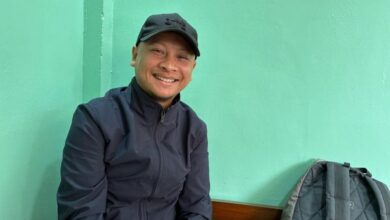



 With 58 months left to deliver on SDG goals and targets for 2030, the pledge of “leave no one behind” would become even more unfulfilled if we do not make tectonic, transformative, equitable, innovative and coordinated shifts and actions, said noted feminist leader Sai Jyothirmai Racherla while delivering the keynote address at Asia Pacific Youth Forum on Sustainable Development, ahead of the intergovernmental meeting to review progress on specific goals and targets in Asia and the Pacific region.
Asia Pacific region is not on track to deliver on any of the 17 SDGs by 2030, said Sai, who leads the Asian-Pacific Resource and Research Centre for Women (ARROW) as its Deputy Executive Director.
There are 5 SDGs under review in 2026:
- SDG-6: clean water and sanitation
- SDG-7: affordable and clean energy
- SDG-9: industry, innovation and infrastructure
- SDG-11: sustainable cities and communities
- SDG-17: partnerships and means for implementation of SDGs.
Deadly gap between promise and reality
“The summary of the Asia Pacific SDGs progress report 2026, shows poor progress, with the region missing on 103 out of 117 measurable SDG targets, with only 14 targets on track. Further to this, goals key to the SDG pledge of Leaving No One Behind (LNOB) such as SDG-5 (gender equality) and Goal-16 (peace, justice and strong institutions), are in a data scarcity web perennially,” said Sai of ARROW.
Progress on any of the SDG goals and targets is even more skewed, uneven, unstable and even negative when we look at the most marginalised communities or those who might risk slipping on the development blind-spot: such as youth, older persons, women and girls, stateless peoples, indigenous peoples, people with disabilities, among others.
“The SDGs are interconnected across the social, economic and environmental dimensions, and evidence is pointing to the environmental dimensions negatively impacting the realisation of all SDGs. Goal 13 on climate action, along with biodiversity loss, emissions and increasing frequency of disasters, is continuously on the reversal for years now in the region, negatively impacting the realisation of other social and economic dimensions of SDGs,” added Sai.
Corporate capture and its sinister link with patriarchy
If we look at SDGs overall or specific goals under review this year (SDG 5, 7, 9, 11 and 17), it is important to recognise, expose and dismantle the sinister link between patriarchy and its deadly allies like capitalism, religious fundamentalism and/or militarisation.
Be it the targets related to clean water, sanitation and hygiene; affordable and clean energy; industry, innovation and infrastructure; sustainable cities and communities; or partnerships and means for implementation of SDGs; we need to firewall SDGs from industry interference as well as broader corporate capture of public policy and SDG agenda.
Reality check
“SDG-6 on water and sanitation calls for the need to accelerate progress on all the SDG-6 targets – including access to safe drinking water, water quality, sanitation and hygiene, water use efficiency — all of which have direct impacts, especially on women and young people’s health and well-being. Access to clean water and sanitation is intrinsically linked to aspects of menstrual hygiene, and realising sexual and reproductive health and rights. Access to water and sanitation is also a key enabler for other SDGs, whether it is realising SDG-11 (industry, innovation and infrastructure) or SDG-9 (sustainable cities and communities,” said Sai.
“SDG-7 on clean energy points to the need to accelerate progress towards access to energy services, energy efficiency and energy infrastructure. Progress on the share of renewable energy is on the reversal with the region’s significantly reliant on fossil fuels, making affordable, reliable, sustainable and modern energy for all a far-fetched goal,” she added.
Think: Who is being impacted the most?
“This has impact — especially on indigenous communities, women and young people. Gender inequalities in energy access — for example lack of safe cooking fuel options — put women and girls at risk of illness due to indoor house pollution. Data suggests that women in many developing countries spend an average 1.4 hours a day collecting fuelwood and 4 hours cooking, in addition to other household tasks that could be supported by energy access. This limits their access to education and employment,” said Sai.
Gender-blind targets
Sai further pointed out that the SDG-7 targets and indicators are inherently gender-blind, resulting in poor gender-responsive energy access policies, regulations or programmes.
It is important to integrate universal access to energy with the lenses of gender equality and human rights, and enable the full participation of women, young people and indigenous communities in gender-just energy transition, contributing to the climate crisis mitigation and adaptation strategies in the region.
Firewall SDGs from corporate capture
Sai cautioned that the SDG-9 on industry, innovation and infrastructure remains off-track with accelerated progress required to achieve infrastructure development, sustainable and inclusive industrialisation and clean industries.
“For young entrepreneurs, access to finance for small and medium enterprises will serve as a great catalyst contributing to economic sustainable development. The region also needs to accelerate progress towards domestic technology development… It is urgent to also assess the extractive and environmental impacts of digital technologies, infrastructure and industry,” rightly pointed out Sai.
Innovation has become a necessity in the current turbulent times of disruption and weakening of the multilateral and political systems. This calls for reimagining our current ways of working, leading to more inclusive and equitable outcomes and interrogating entrenched political power dynamics, between and within countries.
Youth, women and gender diverse communities are leading transformations and innovations – and this holds true even more strongly if we factor in population ageing. We need to reimagine a development justice model with lifecycle approach where no one is left behind.
Banner image by David Bartus: https://www.pexels.com/photo/silhouette-of-person-standing-in-forest-1068875/