

NE artist’s works depict fear, regional isolation at KMB
Meghalaya & Arunachal artists' works at Kochi-Muziris Biennale show challenges of identity, power of nature

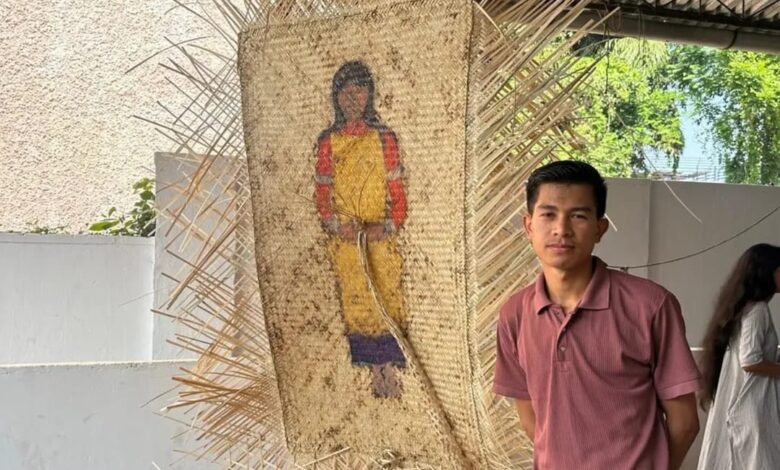
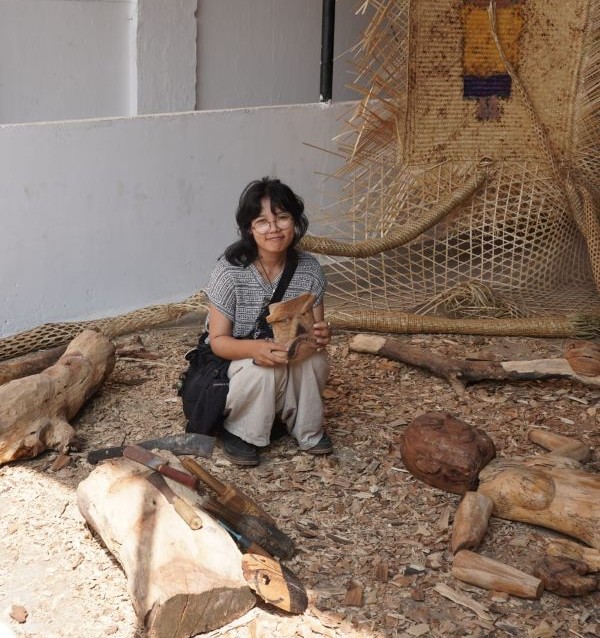
Shillong, Jan 5: Two artists from the North East, including one from Meghalaya, participated in the Kochi-Muziris Biennale (KMB) 2025-26 in the southern state of Kerala, displaying works that explore themes of gender norms and the nurturing essence of nature, reflecting personal experiences that resonate broadly.
James Alfred Rymbai, an alumnus of Martin Luther Christian University in Shillong, and Puja Lamgu, an artist from Arunachal Pradesh, represented the region at the event.
Speaking to Meghalaya Monitor, Rymbai said he displayed bamboo weavings at KMB. “I am a painter. However, I got interested in bamboo weaving during my post-graduation at MLCU, just before I thought of starting specialisation in acrylic. The patterns intrigued me. Bamboo articles are an intrinsic part of our lives in the village,” said the 25-year-old artist from Ri Bhoi who, along with Lamgu, participated in the students’ section of the biennale.
Many visitors and tourists asked me where I was from, whether I was
from Japan or Korea. Many even greeted me in Korean or Japanese. I felt
like I was not in my country.~ Puja Lamgu, artist from Arunachal Pradesh
Rymbai’s works not only involved weaving but also painting on the bamboo canvas. Before KMB, Rymbai attended a workshop organised by Anga Art Collective in Assam that further encouraged him in bamboo weaving and trained him in artistic collaborations. Both were selected for the Students Biennale, which is a separate initiative of the Kochi Biennale Foundation. It is independent of the Kochi-Muziris Biennale.
The work presents a bamboo structure extending from the earth, embodying Mother Nature’s deep connection to the environment and her role as caretaker. The heart at its centre signifies life and vitality, drawing from rich indigenous traditions.
Talking about their workshop, Rymbai said visitors at the biennale were curious when he took out the bamboo strips, which he carried from Meghalaya.
“They asked me what those were for. As I started weaving, they took an interest in the work, and they waited for what structure would come out of it,” said Rymbai, adding that KMB was an enriching experience.
Lamgu’s work reflected a more contemporary theme. One piece featured a wooden figure, crafted from various woods, symbolising the complexity of identity. The figure’s body is a woman, open and vulnerable, while its masculine face conveys a sense of intensity, mirroring the struggle to navigate societal expectations and personal fears.
“My earlier works depicted fears that I expected. This time, the fears were experienced,” said the 23-year-old artist.
Referring to incidents of racism against northeasterners, Lamgu said she was apprehensive about travelling to an unknown place, not only as a woman but also as someone from a region in India that has faced racism.
“Even at the event, many visitors and tourists asked me where I was from, whether I was from Japan or Korea. Many even greeted me in Korean or Japanese. I felt like I was not in my country,” Lamgu narrated her experience.
“Nonetheless, people were nice and welcoming there, and seeing the works of other artists was a great experience,” she added.
Discussing the message she conveys through her artworks, Lamgu said she hopes that her works will make a difference, raise awareness about the concerns of northeasterners regarding racism, and help change the mindset of people outside the Northeast.
The works of Rymbai and Lamgu foster dialogue about the challenges of identity and the power of nature as a refuge. The artists aim to illuminate the beauty in differences and the strength found in collaboration, encouraging viewers to reflect on their own experiences and the connections they share.