
Number of patients with new symptoms continues to rise in Indore
District administration declares water contamination tragedy an epidemic; multiple expert teams conducting investigations in Bhagirathpura

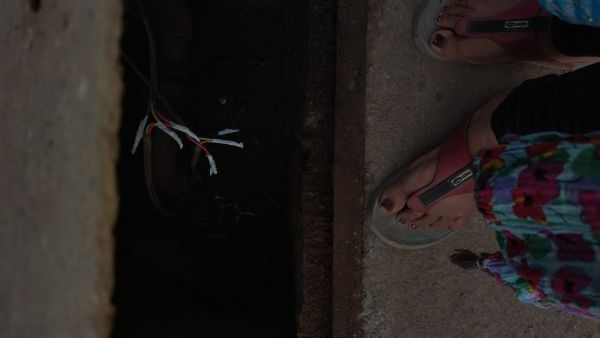
 Indore, Jan 6: For nearly a year, dirty water had been coming into Bhagirathpura, but residents had no alternative. However, from the last week of December, residents started showing serious symptoms. Before people could understand what was happening, large numbers began rushing to hospitals.
So far, hundreds have been hospitalised, including children. Even among those who did not go to hospitals, symptoms are clearly visible. Not everyone can afford an RO purifier, and trust in the municipal corporation’s tanker-supplied water has eroded. People are now buying drinking water at Rs 20 per can. The problem is that new infection cases are still emerging, and buying water daily has become a financial burden for many.
 Meanwhile, expert teams from both the central and state governments have reached Bhagirathpura to conduct investigations. The district administration has declared the situation an epidemic (an infection spreading within a specific community or area over a defined period).
The administration has also started supplying chlorinated water, but people are afraid to trust even the tanker water. There is not enough usable water in households for daily needs.
The lanes of Bhagirathpura are teeming with personnel from the health department, doctors, ANMs (Auxiliary Nurse Midwives), ASHA workers, and others. Sanitation workers are cleaning every lane, while labourers are repairing previously dug-up pipelines and laying new pipes in some places.
On January 2, the sixth floor of Indore’s largest government hospital, Maharaja Yashwantrao Hospital (MYH), where infected residents of Bhagirathpura were admitted, was filled with angry and bereaved residents of Bhagirathpura.
Kapil, who lives in a rented house in the adjacent Redwal Colony, was lying on a bed. He said the water problem had existed for about one and a half years, but people somehow managed.
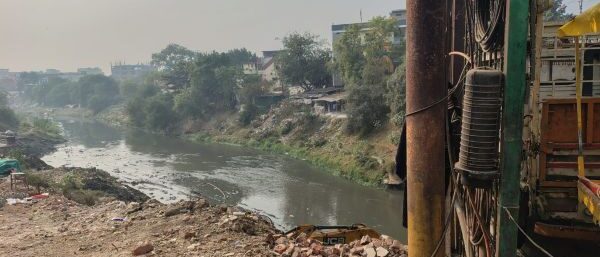
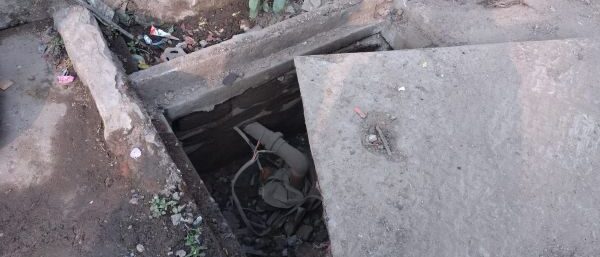
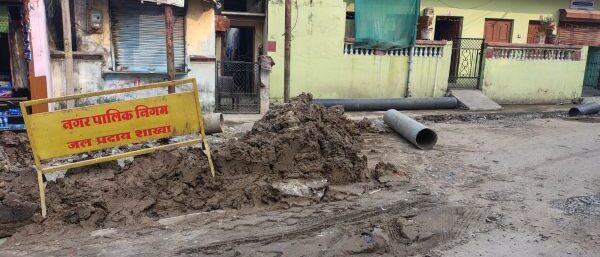 Repair of the damaged pipeline at Bhagirathpura in Indore in progress. Photo by author
The problem affects not only Bhagirathpura but also nearby colonies like his and Yadav Nagar.
The issue was everywhere, but despite complaints, there was no resolution. Patients on the adjacent beds were not even in a condition to get up, but they showed the marks on their bodies and said, “The water became extremely bad about four months ago. There has been digging across the colony for months, but without a solution. Despite repeated complaints, no one listened. It started with hair fall, which we ignored. Then these marks appeared on our bodies, and after vomiting and diarrhoea, the condition kept worsening.”
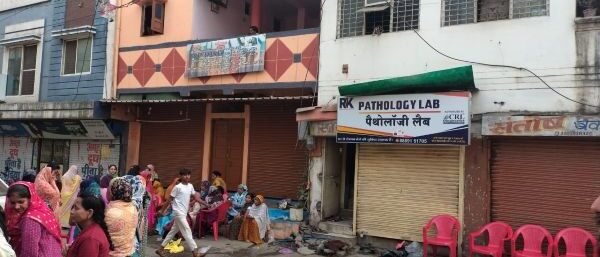
Inside Bhagirathpura’s Yadav Colony, a group of women was sitting along the street. Most of them belong to the low-income group. Most of the men from their households had already left early in the morning for daily wage labour or other small jobs. The problem was serious, but the question, “If we don’t go to work, how will we eat”, felt even bigger.
There has been no water supply in this area for the past six days (since the incident). Tankers reached other parts of the colony but did not come here. There is one borewell installed by residents. For drinking water, they are buying cans at Rs 20 each. On average, this means an additional expense of about Rs 80 per day. Some people in their vicinity are also hospitalised.
The women said that if they went to the councillor’s house to complain, they were asked to go to the office at the large water tank in the area. When they went there, they were asked to complain on the phone numbers provided. Women are not even allowed to speak. They are told, “Work will be done according to our way, not yours.”
During the monsoon, water from the drainage chamber spills onto the road, and residents have to wade through it. Whenever the drainage chambers overflow, the sewage water starts entering the borewells and homes.
As of today, January 6, water distribution has begun in this area, but people are still afraid to use tanker water.
The real challenge is that many households still have sick members, including children.
Meanwhile, official investigations and expert statements to the media have made it clear that the water here contained deadly bacteria, which made the situation worse. In many places, pipelines were broken, and sewage water was mixing with drinking water.
Even after nine days, new patients and symptoms continue to emerge.
Also read:
Are we waiting for more Bhagirathpura-like tragedy in Indore?