
SHORT STORY: Temple for the king
For the Syiem Khynnah, loyalty to the king & respect for mother’s decision trump the love of his life. PS Thangkhiew narrates the young prince’s story

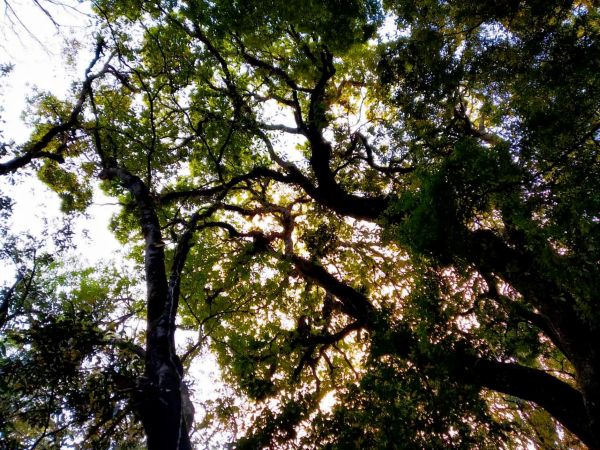
The place was also the seat of the throne of Khirot Singh, the ‘Syiem’, or the King. It was the post-harvest month (U Risaw) preceding the onset of the cold season. It was early evening, and the air already had a wintry hint about it. The monsoon rains were less intense as compared to previous years, and it was becoming increasingly evident that cultivation of rice and other crops would be adversely affected. It was indeed fortunate that the ancestors of the Khasi tribe, in their innate wisdom, had decreed certain rainforests as being ‘sacred’ to protect them for the perennial supply from major water springs located near vast settlements.
The Syiem was presiding over an emergent meeting which had begun in the early hours of the morning in the Grand Council (Dorbar Hima) of the kingdom. Normally, such meetings were not scheduled just after standing crops were harvested. But certain serious developments, which could affect the stability of the Hima, had arisen, which called for urgent deliberations by the Dorbar Hima.
The meeting was being held in a big hall located about a mile or so from the King’s palace.
The hall itself was basic in amenities and design. The round pillars were made out of roughly hewed sal logs, and the roof beams were of the local oak. The walls were made of planks of local pine timber, and the roof was woven out of a wild thatch which was impervious to even the heaviest of monsoon rain. Windows were built at regular intervals, but even so, the lighting was inadequate. With the meeting continuing in the late hours of the afternoon, lengthening shadows were slowly creeping into the meeting place, and dong musas (brush bundles soaked in animal fat) were brought in and lit to illuminate the big hall.
In attendance at the Dorbar Hima, were the myntris (Ministers) representing the major clans who, by customary tradition, accorded their approval for any major decision taken by the Syiem. For a Khasi Syiem was not an absolute monarch as per Khasi custom and convention, but could only make decisions with the consent of his subjects, who were represented by the ‘Myntris’. Consensual decisions taken at respective village councils were again articulated at the meetings of the Grand Council. Thereafter, all decisions on issues taken up at the forum were endorsed by the myntris and approved by the Syiem.

Of the two agendas for the day, the first was an arrangement for permitting the British to build a road connecting the Brahmaputra valley from Rani town to Sylhet, lying in the Surma valley.
Essentially, the route would pass through the territory of the Hima. This was the core issue which disturbed most of the chiefs in the hall because of exposure to foreigners who would journey on the road. And though the proposal sent by one Captain David Scott had come with verbal assurances that there would be no interference in the affairs of the Hima, an air of apprehension was palpable in the gathering. But for the Khasi, the spoken word was inviolable (ka ktien kaba tam), and so the motion was carried.
Little did anyone know about the insidious intent and ambition of the British Empire.
Besides, the Syiem and his myntris acknowledged the fact that for the Hima to consolidate its recent conquests of the land formerly ruled by the Ahoms, comprising the areas adjacent to the Brahmaputra River, some alliance with the white people was essential. As a result, the above proposal was endorsed by the myntris with U Khirot according to the final approval.
Directions were given to communicate the above decision to Captain David Scott. And the responsibility for this was given to U Khirot’s trusted nephew, U Da Nang, the prince (Syiem Khynnah) and the next heir to the throne, who was present at the meeting. He was ordered to leave at the crack of dawn for Sohra, the seat of the Syiem of Hima Sohra and inform Captain Scott, who maintained a camp there. Da Nang was secretly pleased with the given task because it provided him with an opportunity to meet his lady love, who resided at Mawmluh village, close to the main village of Sohra though he kept this relationship a secret from his family and friends for a reason.
Thereafter, discussion continued on to the second agenda, which was regarding the information from the myntri from the Wahlang Clan that certain white men were propagating their religious teachings and beliefs, which were seen to be contrary to the faith and values of Khasi society. In fact, U Khirot had already been made aware of this issue for quite some time; since one of his spies, whom he had embedded in the inner circle of the Syiem of Sohra had some months ago informed him that the same white people had obtained a hearing with the Syiem himself.
Equally concerning was the information that they had been able to convince a number of people there to follow the teachings laid down in some holy book and worship a ‘Son’ of God who had died a long time ago in some foreign land and which they called the Holy Land.
Overall, the religion of the Khasis of that time was based on a core belief of the existence of a Supreme Creator (U Blei) to whom all mankind owed their material and spiritual well-being. All ceremonies, birth, death and unions could not be conducted without invoking his name. In fact, the common greeting with which all interactions began and ended was the word (Khublei) and which literally translates to ‘God bless’. Even though the Khasis’ neighbours in the plains of Assam and East Bengal were all adherents to the Hindu faith, and no doubt, some of their names and practices had been adopted in Khasi society, to date, there had never been a record of their religious leaders attempting to proselytise people of the hills.
It was again widely accepted that the religious beliefs and value systems followed by the Khasi tribe were the foundation for their socioeconomic and governance structure. The clans were the fulcrum of the tribe, and every ceremony was conducted within their respective ambit. Shamans, known as ‘Lyngdohs’, with a knowledge of augury and conversant with chanting invocations to U Blei or God, conducted the rituals. The system of governance and administration rested on this balance of power and a belief in a shared faith in one God. Thistime-tested hierarchy with the Syiem at its head could be disturbed if there was another parallel hierarchy, albeit only a religious one.
These issues dominated the discussion, and with hardly any consensus emerging, the final decision was left to the king. U Khirot, after considering all the inputs, in his wisdom, suggested that a system of worship could be initiated wherein the Syiem could function as a flag bearer for the Khasi faith in addition to his other responsibilities. In fact, since hearing about the conversion of some of his tribesmen, albeit in the neighbouring kingdom, he recognised the potential threat to his people’s way of life and to the authority of the Syiemship. He realised the need to come up with some measures to neutralise such threats. For this, he had sought the advice of his trusted Ahom advisor, Bor Phukan, who was a direct descendant of Lachit Phukan, the great Ahom general.
Bor Phukan was, in fact, a royal exile from the Ahom Kingdom, driven out several years earlier by palace intrigue set in motion by another prince who was his first cousin and hence his rival as a successor to the Ahom throne. In fact, this cousin had convinced the Ahom Raja that Bor Phukan was planning to overthrow him. The Raja gave orders for his immediate execution. Bor Phukan, who was alerted about this by another royal cousin, escaped by the skin of his teeth and fled in the dead of night towards the West Khasi Hills with only one of his trusted companions, known as Bor Doloi, who was also his bodyguard. However, along the way near a village known as Jirang, they were caught by their enemies, and Bor Doloi gave up his life protecting his lord. Ultimately, Bor Phukan reached Nongkhlaw ahead of his pursuers and saved himself from their swords by pledging his fealty to U Khirot.
Over the years, he became indispensable in advising the Syiem and Council, especially in strategies in martial and business dealings with the Ahom kingdom. In the process, he also would narrate many stories to U Khirot, who had an insatiable thirst for knowledge pertaining to other lands. One of them, about the evolution of the Ahom Empire from being tribesmen ruling a small area of Upper Assam in the 12th century to dominating major portions of Eastern India, was of special interest to U Khirot as he perceived the relevance to the idea he had in mind. In short, he came to the conclusion that the Ahom rulers adopted the religion of Hinduism not primarily for spiritual but rather for imperial purposes. Through this paradigm shift, they were able to harness resources and tap synergies required to fulfil their imperial ambition.
The transition from being adherents of an animistic to an organised religion necessitated the centralisation of places of worship, which could unite the people in faith and patriotism.
For Khirot, this concept was attractive for it would be akin to killing two birds with one stone; namely transition of the existing governance system to one in which religious practices would be synergised to counter the evangelical threat posed by the white men, and at the same time serve as a springboard for expanding the power and influence of his kingdom. So, without going into much detail, the king proposed the construction of a grand temple for worshipping U Blei, the supreme creator. This temple, he went on to suggest, would also have a complex which would serve as the permanent residence for the king and his family, and some prominent Lyngdohs to be nominated by their respective clans. So, apart from the religious ceremonies being held respectively by the clans, there could also be a common forum where all citizens could pray and worship U Blei.
The assembly pondered over these suggestions, and it was entirely possible that the majority of them did not understand the long-term implications. However, the novel idea must have appealed to their sense of curiosity and perhaps the need for a change in the system, and it was approved in principle as harnessing the resources for the construction and other details was yet to be finalised. The discussion then shifted to the location and construction of the grand temple. Many sites were suggested, with each Myntri recognising the economic and strategic advantages of having such an establishment within its respective domain. Eventually, it was suggested that the temple could be constructed at the top of the majestic Kyllang Peak. This choice of the location itself entailed long and serious debate, as it was a subject in unknown territory.
In the meantime, Da Nang, who was hanging on to every word, reluctantly left the hall as the final decision had as yet not been pronounced. He was somewhat critical of the above plan as he sensed that somehow the balance between king and clans in the temporal as well as the spiritual sphere could change the Khasi way of life. To add to his concern, he was not permitted to voice his opinion as he had been invited only to observe the process of governance in the kingdom and also to assess the character and dispositions of the myntris. As he exited the hall, his eagerness for meeting his lady lover at Mawmluh was somewhat tempered by the fact that he could not partake in the grand feast being prepared for the meeting and in particular the tasty tungrymbai, a unique Khasi dish made with fermented soyabeans brought all the way from a place called Nartiang in the Pnar Hills. The strong aroma stoked his hunger pangs. In the smoky kitchen area, he could see big black iron pots in which wild boar, venison and other dishes were being cooked.

He could also smell the flavours of the steaming giant pots containing the jadoh snam (Rice cooked in the blood of boars). Buxom girls dressed in their best but protected by the jainkyrshah (apron) were gossiping and humming as they went about their tasks. His appetite was further whetted by the heady aroma of the Kiad Um, a beer made with fermented red rice and rare forest herbs. And to add to his sense of deprivation, he could hear the musicians rehearsing for the evening near the kitchen area. The deep thump of the big drums, interspersed with the tapping of the small drums and counterpointed by the wail of a tangmuri flute, was intoxicating to say the very least.
Da Nang was well above average in stature, muscular and with a light brown complexion. He had slanted dark brown eyes and a prominent jawline, which indicated a strong character. A scar above his left eyebrow made him look older than his years. But he could break into a smile, and his expression would soften depending on the situation. Such as when he was in female company. Though phlegmatic by nature, he had been frequently advised by his uncle to control his impulsive nature, which could influence his decision-making. He looked young for his age but had experienced many a battle when he accompanied General Mon Bhut and the Khasi army on raids on villages in the plains. His tunic of blue and gold, worn by him for formal occasions such as the one worn today, was short-sleeved, and his left bicep revealed a healed cut wound inflicted by an Ahom warrior who did not live to tell the tale.
But though young in age, Da Nang was already a close confidante and advisor to the king in matters concerning governance and identifying potential threats to the throne and his future. More importantly, he was a thinker. He knew that he was being groomed for the time when he would take over the reins of the kingdom. It was his assessment of the myntri from Mawyong, U Tharsingh, which further cemented his stature in his uncle’s circle. U Thar till the other day had been considered to be a close aide to the King, but his broad smile and silver tongue masked a mind and concealed plans for usurping the King in favour of his cousin from the Mawyong area. Men who concealed naked ambition and greed behind a facade of sincerity existed in every country, and indeed, the Syiem of Sohra, U Kawang Singh, had already displayed his true colours by subjecting himself to the white men’s bidding. And if Da Lang could foretell the future, he would have been shocked if he knew that even the great General Mon Bhut would one day betray his king due to his ambition.
Sitting together around campfires after a day of battle, he got to learn about the origin of the name of Mon Bhut, who revealed that his parents belonged to the Mon-pa tribe residing in a village somewhere in Eastern Bhutan in the Makashang mountains. (Himalayas). They were originally traders and travelled to the Khasi Hills to trade in mountain coral, which was prized by the Khasis for their ornamental value and yak tail which was used for ceremonial dances. Due to some unavoidable circumstances, they never returned to their home in the mountains and raised their family in the Khasi Hills. Mon Bhut would also tell stories about an uncle who was an oracle residing in the monastery at Bomdilla. Though he was a simple farmer, the uncle could transform himself into three monks who existed in previous centuries; since he possessed the ability to function as a medium for the spirits who, through him, could foretell the future and recount incidents from the past. Da Lang would shiver upon hearing these tales despite sitting next to a big log fire.
So, Da Nang made his way home to prepare for the next day’s journey and wondered what the outcome would be regarding the decision about the temple. Being preoccupied with his thoughts, he was quite unaware of his surroundings, of thick forests of cypress and oak and the sounds of the crystal-clear streams gushing in the distance.
Only when he approached his castle did he catch the odour of fresh tiger droppings and become alert. People had been informed through the system of pyrta shnong, (village news bearers) that a giant tiger (U Khla) had carried off a full-grown man from near the village and whose half-eaten body was found quite a distance away near Manai.
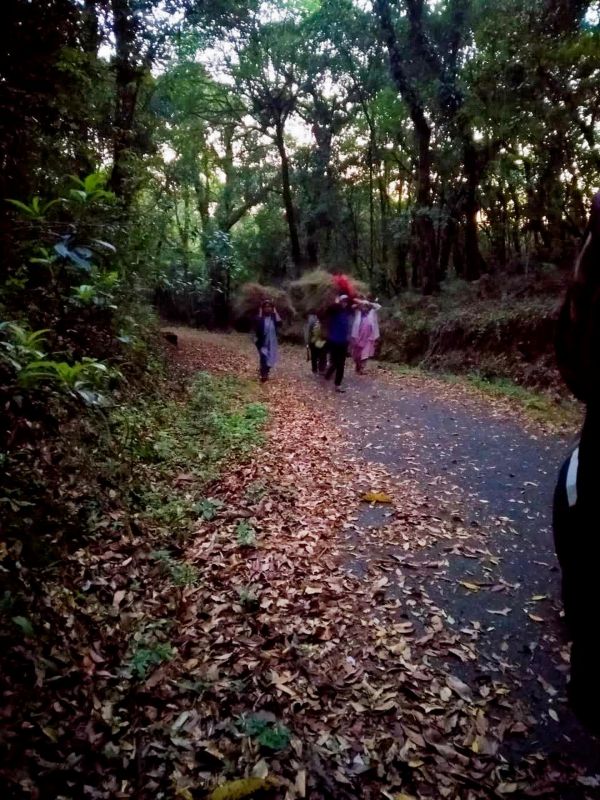
This was indeed unnatural, as the forests abounded in natural prey such as the wild boar and the sambar deer. Perhaps the tiger had been injured in a territorial fight with a fellow tiger. On the other hand, the stories of a giant dragon (U Thlen) who frequented the Pynursla area and who preyed on human flesh and who ranged far and wide were said to be factual. Hence, it could be very well possible that the tiger was not the actual culprit. These thoughts made the oak forests appear to be darker and more foreboding to Da Nang, and gripped his stabbing spear even tighter and loosened his sword in its scabbard. However, he passed through the forest without incident and started the long climb to the castle located just below the top of the ridge.
Just at the beginning of the climb was a memorial mawbynna (monolith) of about thirty feet in height and five feet in width, erected in memory of his great-granduncle, the famous U Kissor Singh, who was responsible for laying down the foundation for the prosperity of the Hima. He bent and folded his hands in deference to his ancestor, as was the habit of a tribe which followed a system of ancestor worship. He never ceased to marvel at the sheer size of the monolith. He and others had been told that after the stone had been extracted from a quarry located near the Kyllang Peak, and made ready, a giant man from Nongkrem, whose name was U Mor Nongbri, had been engaged to lift the monolith and erect it in its present location. Tales of a giant named Mar Phalangki and living in earlier times in faraway Nartiang, and performing impossible physical tasks were equally well known, and there was no reason to disbelieve them either. For it was impossible in the present day for even a dozen of the strongest men in the Hima to repeat the above feat.
As he approached his residence, he glanced at its structure covered by a separate big hull-shaped roof and constructed with the hardy dienglieng timber used by the tribe for making boats. Smaller huts of similar shape surrounded the big house. Sometimes he wondered at the origins of the design of the houses and huts which resembled that of boats which had capsized full turtle. If one were to have a bird’s-eye view of the settlement, the resemblance to a flotilla of boats with bottoms up would have immediately come to mind. But how was it possible that boats could be present so far inland?
Perhaps the answers could be found in those stories about the migration of his ancestors from somewhere in the East, by making their way over the seas. These stories were handed down by the elders as they sat in front of the ‘Tyngiers’ (hearths) in winter and they talked about some vast temple complex where the king had his court and ruled only through the pleasure of his subjects. It was said that the Khasi race was one of the major clans who had a voice in the King’s inner council. Other tales about the decline of this mighty kingdom and its eventual collapse were recounted. The elders narrated about the disconnect between king and his clans caused by his dependence on his coterie of advisers who were mainly comprised of priests residing in the temple.
So, the flight of his tribe a few hundred years ago to these hills may have really happened. It could be conjectured that they entered the Khasi foothills from the sea over a major tributary and then beached their vessels. And the Syiem at the time may have thought that after some years, they would return to their homeland and the boats would again be turned upright and launched onto the waters. But as time passed, the overturned boat design of the construction of houses may have simply served as a reminder of things past.
Dragging his mind back to the present, Da Nang realised that the subject raised at the meeting of the grand council was indeed relevant for the future development of his people. But he also realised that the durability and strength of the Khasi race was all about ‘balance’ of ruler and subjects. Spiritual matters were deliberately kept outside the domain of the king and were relevant only if brought up as an agenda at the Council meeting.
A temple would certainly upset that balance and consequences could not be foretold. The creation of a centre of worship with the Syiem as the flag bearer of faith and governance who would be advised by a coterie of priests would be a natural outcome. The fall of the above empire and the present decline of the Ahom kingdom could very well have been an outcome of earlier and similar circumstances.
As mentioned earlier, he had been secretly pleased when he was instructed to travel to Sohra, though he hid his feelings then at the meeting hall.
The reason is that he would have an opportunity to spend time with Ka Rupa Ksiar, his muse and secret lover, who resided at Mawmluh village. Translated to English, her name meant Silver Gold. She had translucent skin, and her eyes were almond-shaped. She had a frequent, shy half smile, which further accentuated her cupid-bow-shaped lips. And when she smiled, he was at a loss to comprehend her true feelings for him at that moment. Sometimes, he had the feeling of being possessed totally by her.
It was said that her ancestress had been a princess from the East and had stowed away in a ship to avoid being married off as the fifth wife of an old king. It was further told that she had escaped detection by hiding in a big cane basket known as ‘Loola’ and eventually reached a seaport on the coast of the peninsula. Thereafter, she made her way towards the Pnar Hills and married a prominent local chief. In view of her background, the clan she began was known as the Loola clan, of which Rupa was one of the descendants. Economic and other circumstances may have compelled many members of the clan to migrate to the Mawmluh region near Sohra. Looking at Rupa, it certainly supported the theory that she was descended from some other race. Her facial structure was different from other women he knew, and her slim ankles were not common in Khasi damsels who possessed sturdy legs and limbs for obvious reasons.
It was whispered by Mon Bhut, amongst others, that Rupa was also an oracle as she possessed powers similar to those of his uncle at Bomdilla. Come to think of it, she did often mention in passing about a mighty king and a great temple complex and the events which unfolded then, which were similar to the stories and legends he had heard. Perhaps these stories were handed down in her family through generation after generation. Maybe her ancestress could have been a princess in that grand temple. But he was deeply in love and did not care about all the whispers and rumours about her or her antecedents.
No matter that his mother, the domineering Risimon Syiem, had already identified a bride for him. He would tackle that problem when the right time came along. His future bride was named Lasubon Syiem, and she was the favourite niece of Kawang Singh, the Syiem of Sohra. A marriage would repair the relationship between the two kings who had recently become suspicious of each other due to recent developments. Lasubon was very attractive, and it was known that when she had participated in the recently held Nongkrem Dance for virgin damsels at Smit Village, which was the seat of the Syiem of Shillong, a record number of male dancers had turned out hoping to catch her eye.
In Khasi custom, there is no bar on marital union between royals and commoners. As is the case in the organisation of villages, where the king’s house was surrounded by the huts of his subjects. But it was equally well known that she had been chosen for Da Nang. It was indeed a dilemma for him, torn between loyalty to his king and love for his woman. He needed to shut out these problems from his mind as he began to prepare for his journey. He had sent word to his close friend and companion, U Lurshai for they would make the trip together.
The route would take them over the rolling hills of the area and then a descent into the steep slopes of the Laitrngew valley before the ascent to Sohra. He marvelled at the foresight and ingenuity of his forefathers, who had erected root bridges over previously impassable rivers and which cut his journey time almost in half. He would try to reach Sohra by late evening, provided there were no incidents on the way. He would communicate U Khirot’s decision to David Scott, which was the easier task.
Though Rupa had never stated that Da Nang should commit to her, he could recognise the subtle hints, and he realised that he would have to decide on this matter on the following day. He also realised that going against the wishes of his mother and the family would jeopardise his succession to the throne. And once he had decided, he knew that there would be no turning back for him one way or the other.
(Parmarsan S Thangkhiew is Chairman, Meghalaya Farmers’ Empowerment Commission)
Footnote: Events, situations and individuals appearing here are fictional except for a couple of characters and some events which have been depicted to provide a historical context.