


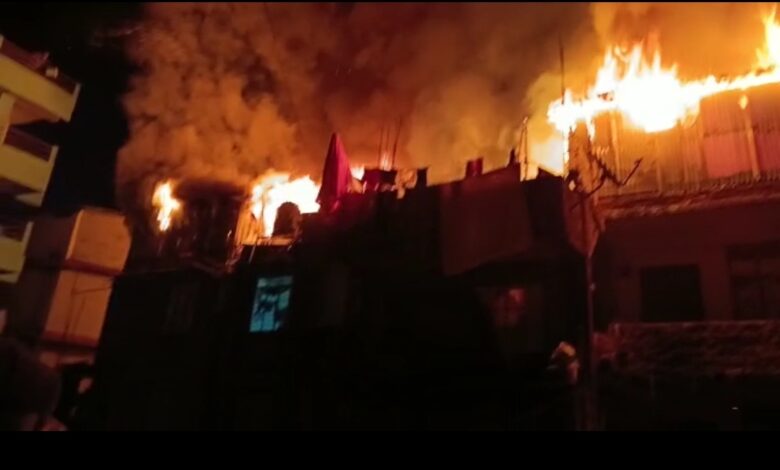
 A series of devastating fire incidents across India has once again brought the issue of fire safety to sharp focus. The recent tragedy in Lucknow, where innocent lives were lost in a massive blaze, serves as a painful reminder that disasters often strike without warning. Such incidents force us to ask a necessary question: Are schools, colleges, hospitals, commercial establishments, government offices and residential buildings in Meghalaya truly prepared to handle a fire emergency?
Meghalaya is rapidly transforming. With expanding urban centres, modern infrastructure, shopping complexes, educational institutions, hotels and the arrival of major national brands, the state is emerging as one of the fastest-growing economies in the North East. Development is undoubtedly a positive sign, but ensuring that every building meets basic fire safety standards is equally imperative.
Shillong has witnessed several significant fire incidents over the years. Fires have destroyed residential homes, commercial establishments and heritage structures. These incidents have highlighted recurring challenges such as congested localities, narrow access roads, ageing electrical infrastructure and delayed emergency response due to traffic and difficult terrain.
The concern extends beyond residential areas. Educational institutions, hostels, hospitals, shopping complexes, restaurants and office buildings accommodate hundreds of people every day. The question is whether regular fire safety audits are being conducted. Are emergency exits functional? Are fire extinguishers maintained and accessible? Are electrical systems periodically inspected? Most importantly, are occupants trained to respond calmly during emergencies?
The concerns get heightened in congested places like Bara Bazar where hundreds gather every day, and the narrow lanes and bylaws barely look safe in times of an emergency. Even in Police Bazar, the congested construction and narrow pathways make it a difficult place for any relief and rescue work during an emergency.
Time and again, major tragedies across the country have revealed common causes—electrical short circuits, poor maintenance, blocked exits, overcrowding and the absence of functional firefighting equipment. Many of these disasters could have been prevented through timely inspections, strict enforcement of safety norms and greater public awareness.
The larger question remains: Why does it often take a major tragedy before authorities and institutions act? Must lives be lost before deficiencies are identified? Prevention is always less costly than recovery, and every lesson learned from another state’s tragedy should encourage proactive action rather than reactive measures.
Meghalaya has an opportunity to become a model for fire safety in the region. Instead of waiting for a disaster, the state can adopt stronger preventive measures that protect lives while supporting sustainable development.
Some reforms that deserve immediate attention include:
• Mandatory periodic fire safety inspections of all public and private buildings.
• Strict enforcement of fire safety compliance before granting or renewing licences and occupancy certificates.
• Regular evacuation drills in schools, colleges, hospitals, hotels and commercial establishments.
• Installation and maintenance of functional fire extinguishers, smoke detectors and emergency alarms.
• Routine inspection of electrical wiring, particularly in older buildings.
• Improved access for fire tenders in densely populated urban localities.
• Public awareness campaigns on basic fire prevention and emergency response.
Community participation is equally important. Dorbar Shnongs can play a significant role by encouraging every locality to maintain basic firefighting equipment such as fire extinguishers, identify emergency assembly points and organise community awareness programmes in collaboration with the Fire and Emergency Services Department. A safety-conscious community is often the first line of defence before professional responders arrive.
Development should never come at the cost of public safety. Every new building represents progress, but every building must also represent preparedness.
As Meghalaya continues its journey towards becoming a modern and prosperous state, the challenge is not simply to build bigger structures but to build safer ones. The true measure of development lies not only in economic growth but also in how effectively we safeguard the lives of our citizens. Let us not wait for another tragedy to remind us of responsibilities we already know we have.
WATCH MORE VIDEOS: