
Columbus’ voyages accelerated homogenisation of biodiversity
His voyages set in motion an unprecedented exchange of biodiversity across geographical boundaries

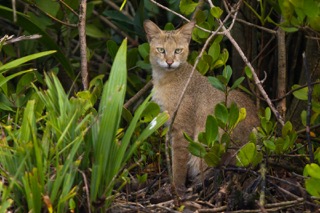
R.J. Ranjit Daniels/Mongabay India
Christopher Columbus was a legendary 15th-century Italian explorer whose “misadventures” opened the way for large-scale biogeographical homogenisation.
Over the past 500 years, since Columbus first sailed west across the Atlantic Ocean to reach the “New World”, Earth has witnessed unprecedented cross-boundary human movement and the exchange of living organisms. These movements have brought about major shifts in the geographical distribution of microorganisms, plants and animals.
While thousands of introduced plants and animals have acquired the deplorable status of “invasive alien species”, introduced pathogenic microorganisms, such as those that cause smallpox, cholera, sexually transmitted diseases and plague, have been major culprits in wiping out indigenous human populations and cultures across the world. History has also shown that introduced phytopathogenic microorganisms have devastated agriculture, causing widespread famine and human suffering.
The post-Columbus transformation of Earth’s biogeography has proved catastrophic. In 1995, when UNESCO celebrated the silver jubilee of its Man and the Biosphere Programme, the event was held in Seville, Spain, where Columbus was laid to rest. The choice of venue could have hinted at Columbus’ unintentional contribution to the ecological chaos that Earth has witnessed over the past 500 years.
Biogeographical periods shaping the biosphere
Biogeography is the science that seeks to understand the patterns of geographical distribution of organisms and the reasons behind them, as well as the ecosystems in which organisms develop and coexist.
Over its long history, Earth has witnessed at least five landmark biogeographical periods: (1) the pre-drift biogeographical period, which lasted until around the time tetrapods first appeared; (2) the period characterised by tetrapod diversification and continental drift, which ended with the extinction of the dinosaurs; (3) the post-dinosaur period, during which hominids first appeared; (4) the period between the dawn of agriculture and the arrival of Columbus; and (5) the post-Columbus period, or the era of “biosphere people”, a term used by Raymond F. Dasmann.
In terms of duration, these five biogeographical periods can be broadly categorised as follows: Period 1, from the origin of life until around 400 million years ago; Period 2, from around 400 million to 65 million years ago; Period 3, from 65 million to approximately 12,000 years ago; Period 4, from around 12,000 years ago until the 16th century CE; and Period 5, covering the past 500 years.
Across these five progressively shorter biogeographical periods, the biosphere underwent changes that gave rise to complex and sometimes intriguing patterns of biodiversity at the landscape, regional and continental scales. Nevertheless, the most rapid and irreversible changes to the biosphere have occurred during the past 500 years.
Emergence of tetrapod animals as a landmark
It is generally agreed that life on Earth first emerged between 3.5 and 4.0 billion years ago. According to available scientific evidence, life began in water, first in the form of biological molecules and later as living cells. It took millions of years for multicellular organisms to evolve and diversify in the oceans. Terrestrial life may have emerged millions of years later, with fungi, algae and primitive plants such as mosses.
An important milestone in the development of Earth’s biosphere during the pre-tetrapod period was the evolution of oxygen-based metabolism in terrestrial life. Made possible by photosynthetic organisms, this form of metabolism contributed enormously to the diversity and abundance of life that the biosphere has supported ever since.
The appearance of tetrapods, or four-limbed vertebrates, was another significant milestone in the development of the biosphere. Fossil evidence shows that many prehistoric tetrapods were large-bodied. Today, large-bodied tetrapods are recognised as ecosystem engineers because they can create, sustain and transform terrestrial ecosystems. They consume large quantities of food, helping regulate the abundance of plants and prey animals. They produce substantial quantities of dung, which fertilises the soil, disperse seeds and return tonnes of biomass and nutrients to the Earth through death and decay. Moreover, their sheer weight causes trampling, which can influence soil health and plant regeneration in different ways.
Thus, over the past 400 million years, tetrapods have played critical roles in shaping distinct biogeographical patterns across landscapes, regions and continents, and throughout the biosphere.
Important landmarks after dinosaurs perished
Biogeographically speaking, the biosphere changed significantly following continental drift. As landmasses became isolated, organisms evolved independently in response to local environmental and ecological conditions. Biodiversity became increasingly rich, with high levels of endemism emerging on islands and across regions and continents. It was during this period that another tetrapod entered the scene: humans.
The earliest hominids emerged on the African continent around 15-20 million years ago. Hominins, including the lineages that eventually gave rise to modern humans, appeared later. Modern humans began dispersing out of Africa around 120,000 years ago. This transboundary movement continued over thousands of years, resulting in the settlement and resettlement of continents.
Although migrating animals, such as birds, may also have contributed to the transboundary dispersal of biological propagules, humans are likely to have played a more deliberate role by carrying seeds and other genetic material to new lands.
Parasitic insects and commensal organisms, including ants, spiders, geckos and barn owls, may also have dispersed far and wide by hitchhiking with humans. Among mammals, dogs travelled extensively alongside people. The dingo’s arrival in Australia long before Captain James Cook’s voyage to the continent is evidence of the extent to which early humans contributed to cross-boundary species introductions, naturalisation and biogeographical homogenisation.
Maritime trade as the amplifier
The advent of maritime transport was a major milestone in the expansion of cross-boundary biodiversity exchanges and biogeographical homogenisation. Early humans contributed to this process by rafting across seas and carrying living organisms, both domesticated and wild, beyond their native territories and continents. Polynesians, for instance, transported Asian plants and animals, including red junglefowl, to the islands of Hawaii.
Agricultural commodities and wild-harvested resources, such as spices, ivory and pearls, along with live animals including peacocks, primates and a wide range of other species, were transported across vast distances by ships. As ships became larger and safer, maritime trade intensified, as did oceanic explorations in search of new sources of natural resources.
It is against this historical backdrop that Christopher Columbus assumes immense significance. In the 500 years since his voyage to the “New World”, biogeographical homogenisation has intensified, irreversibly altering the structure and functioning of the biosphere.
Shifting mosaics and the fate of the biosphere
“Shifting mosaics” is a term used in landscape ecology. In landscapes where biological communities are distributed in patches, the frequent movement or rearrangement of these patches creates dynamic biogeographical patterns, a phenomenon known as shifting mosaics.
Living organisms adapt and survive by relocating in response to environmental changes. However, shifting mosaics driven by human-centred land use and development can displace entire communities of organisms across landscapes and regions, thereby interfering with the development and functioning of the biosphere.
Multiple cropping and crop rotation, cyclical logging, the creation of monocultures using introduced plants, ranching, integrated farming, irrigation networks and aquaculture are among the common forms of land use centred around humans that contribute to shifting mosaics. Although these activities may appear harmless in isolation, their combined effects, alongside the expansion of townships, markets, industries and infrastructure for energy, communication and transport, can be formidable.
World needs a new order
Intensive land use and development have led to biodiversity loss and ecosystem collapse at varying biogeographical scales. They have encouraged the proliferation and spread of generalist and highly adaptable organisms, both native and introduced, including free-ranging domesticated animals and feral species. This has led to the emergence of novel, human-dominated ecosystems.
In these ecological melting pots, interspecific competition intensifies, contributing to multiple forms of human-animal conflict. Such conflicts, in turn, have severely jeopardised livelihoods and economies. Consequently, at global forums such as the Conferences of the Parties (COPs), nations often focus on negotiating financial support rather than discussing innovative regional and national strategies for viable alternative models of sustainable land use and development.
The biosphere has never remained static throughout the history of life on Earth. Nevertheless, the rapid biogeographical changes ushered in by Columbus have tested its resilience and exceeded its capacity to absorb disturbances in many places. Lessons learnt from these changes have informed binding international conventions and policies that call for the sustainable use of land, water and associated biodiversity. Yet, restoring the biosphere to its pre-Columbus state would require more than conventions and policies. It would require the world to embrace a new dharma.
(This article was first published in Mongabay)