



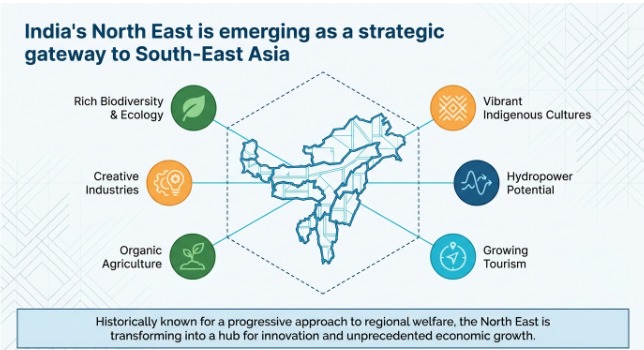
 Historically, the states in the North East have been known and identified for their progressive approach to all matters relating to the welfare of the people and the state.
This can be credited to their vast cultural diversity, ecological richness and strategic importance where it is emerging as a gateway to South-East Asia, a hub for innovation and a focal point of India’s development agenda. There are huge investments economically for infrastructure, education, tourism, entrepreneurship projects, renewable energy to name a few.
Keeping the above in mind, what needs to be taken into consideration is encourage and prepare students for the future. Academic knowledge alone will not suffice, developing youth to become informed citizens, skilled professionals, ethical leaders and active contributors to regional and national development.
A collaborative ecosystem involving educational institutions, families, communities, civil society, industry and students has become a viable and useful approach to address this progressive movement.
A holistic approach is required for building the future of students. Parents, teachers, educational institutions, corporate, Civil Society Organisations need to pitch in to this collective effort.
The landscape in the North East is changing rapidly and the eight states — Arunachal Pradesh, Assam, Manipur, Meghalaya, Mizoram, Nagaland, Sikkim and Tripura — possess unique strengths which position them well for the future. Rich biodiversity, vibrant indigenous cultures, significant hydropower potential, growing tourism opportunities, organic agriculture and creative industries accelerates unprecedented opportunities for economic growth.
One needs to accept the fact that the future requires students to move beyond traditional education and focus on developing competencies like problem-solving abilities, communication and presentation skills, ethical decision-making abilities, creativity and innovation skills, enhance communication and presentation skills and become a good team work to work in collaborative projects.
To ensure the above, the government as an enabler is helping students prepare for the future in the following ways:
- Investing in modern schools, academic institutions, universities, libraries, laboratories and research labs to create quality educational infrastructure
- Ensuring equitable access for students from tribal communities, border districts and geographically isolated regions
- Aligning education with emerging industries through successful partnerships, internships, apprenticeships, live projects and mentoring programmes to help bridge the gap between classroom learning and workplace expectations
- Strengthening existing skills missions by tailoring programmes to local economic strengths and also preparing students for global employment markets by enhancing technical and transferable skills
- Making digital connectivity a fundamental educational objective and not a mere a technological initiative/subject
- Introducing Public Policy to help students understand how governments function and help them become informed citizens
- Strengthening University–Government partnerships by involving students in these initiatives by gain practical exposure while contributing meaningfully to society
- Investing in local entrepreneurship in eco-tourism, organic farming, digital services, handicrafts, renewable energy, food processing and creative industries to generate sustainable livelihoods while preserving regional identity
- Creating opportunities for students to develop leadership skills by participating government led projects to primarily cultivate confidence, empathy, teamwork, and public service values
- Investing in the holistic development of teachers and mentors for continuous professional development and expose them to the increasing development of technology.
The collaborative efforts of the key stakeholders will help the North East become a vibrant, economically rich and an important region for investments and other initiatives. Developing the aspirational capabilities and values of the youth should become a focused activity and a strategic imperative.
Students will become tomorrow’s policymakers, scientists, educators, entrepreneurs, artists and community leaders. To ensure this equipping them with knowledge, skills, values and confidence, the North East can transform its extraordinary diversity and youthful energy into lasting prosperity.
Investing in students is, therefore, not merely an educational priority — it is an investment in the future of the region and in the future of India.
Governments should invest time and money in building institutions, expanding opportunities and ensuring equitable access to quality education. This should not be limited to producing employable youth but include nurturing thoughtful citizens, innovative entrepreneurs, ethical leaders, skilled professionals and socially responsible individuals who can contribute to inclusive and sustainable development.
READ OTHER ARTICLES BY AUTHOR
Easy money, costly consequences: The growing threat of mule banking
Climate change: Mental health axis for policy planning in India