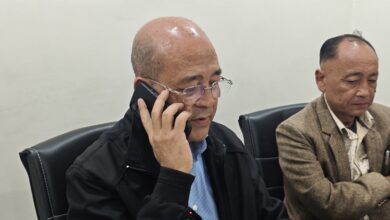

Baburam Rasaily: ‘Once a soldier, always a soldier’
At 91, Baburam continues to live by the timeless Army creed—Service Before Self


Suren Rasaily
Age may slow the body, but it has failed to conquer the indomitable spirit of Havildar Baburam Rasaily (Retd.), a proud veteran of the 1962 Sino-Indian War, 1965 Indo-Pak War and the 1971 Bangladesh Liberation War. At 91 years, the son of Shillong continues to live by the timeless Army creed—”Service Before Self.”
For Havildar Rasaily, retirement never meant standing down. Every morning at three, when most of the city is asleep, he is already out of bed. By dawn, he has completed his physical exercise, morning walk, personal routine and breakfast—all without anyone’s help. He still drives his own car confidently, reads newspapers without spectacles and performs every household chore independently.
“The uniform may have been taken off years ago, but the discipline never comes off,” says the veteran with a smile.
Born on July 1, 1936, in Laban, Shillong, Baburam grew up in a modest lower-middle-class family with five brothers and two sisters. He was the third among the siblings. Fate tested him early. At the age of 12, tragedy struck when both his parents passed away within just 13 days during the cold month of January, leaving the young family shattered.
But adversity only hardened the young boy. From childhood, Baburam loved sports, physical fitness and the sight of soldiers marching proudly in uniform. Every time the Army organised recruitment rallies at the old recruiting office—where the Bara Bazar Fire Brigade now stands—he would quietly stand under a tree for hours, watching the recruitment process with sparkling eyes.
He had only one dream—to wear the olive green.
One day, destiny marched towards him.The recruiting Havildar conducting the recruitment rally noticed the young boy who came every day. Calling him over and asked, “Do you want to join the Army?”
Without a second’s hesitation came the reply—”Yes, Sir!”
The Havildar smiled and ordered him to sprint from one end of the office premises to the other. Baburam ran as if his future depended on those few seconds. Recruitment in those days was straightforward and based on character as much as physical fitness. The Havildar simply asked whether he suffered from any illness or broken bones. After personally examining the young recruit, he declared him fit.
Then came an instruction that Baburam remembers even today:
“Report tomorrow with one plate, one glass and one blanket.”
That evening, when Baburam informed his family that he had been recruited and would leave the next day, his brothers and sisters broke down in tears.
“How will you travel alone?” “Where will you go?” “Who will look after you?”
But the young boy from Laban stood firm like a soldier already under command.
“I don’t know how I will go, but I will go. This is my chance to serve the nation.”
The next morning, carrying nothing more than a plate, a drinking glass and a blanket, he reported to the recruiting office. He received a railway warrant and movement orders to the Bengal Engineer Group (BEG), Roorkee, his Training Centre—the beginning of an extraordinary military journey.
His courage was tested from the very first day of training. During an introduction session when an instructor asked about his community, Baburam proudly replied – “Gorkha, Sir.”
The instructor jokingly remarked, “How has a Gorkha boy landed in the Engineers?”
The young recruit instantly stood his ground and replied- “If a Gorkha is not fit for the Engineer Regiment, then send me back, Sir.”
The instructor smiled, recognising the fire in the young soldier. “Easy, boy… you’ll make a fine Engineer.” and he did.
For the next three decades, Havildar Baburam Rasaily became part of India’s silent warriors—the Combat Engineers, often called the “First In, Last Out” soldiers. While infantry captured objectives, it was engineers who cleared deadly minefields, built bridges under enemy fire, opened routes for advancing troops and ensured that operations never stopped.
During the 1962 Sino-Indian War, he survived freezing conditions in Ladakh with little food and inadequate clothing. During the 1965 Indo-Pak War, he cleared minefields, constructed bridges and sustained shrapnel injuries while supporting assault troops. In the 1971 Bangladesh Liberation War, he worked alongside the Mukti Bahini, helping clear obstacles and build vital crossings that enabled Indian forces to advance towards victory.
For Havildar Baburam Rasaily, patriotism was never confined to the battlefield. Even as a young soldier of the Bengal Engineer Group (BEG), he excelled not only in military training but also on the sports field. Blessed with exceptional stamina, discipline and determination, he soon became one of the finest sportsmen in his unit.
His outstanding performances in Army sports competitions earned him selection to represent the Indian Army at the national level. His dedication and talent eventually brought him to the threshold of an even greater honour—he was selected to represent India in sports, a dream cherished by every athlete. Wearing the India Blazer was about to become a reality.
For the young soldier from Shillong, who had overcome poverty and personal tragedy, it was the proudest moment of his life. Having lost both parents at the age of seventeen and risen through sheer determination, he believed his years of sacrifice had finally been rewarded.
But fate tested him once again.
Just before the final event, unforeseen circumstances forced his name out of the final contingent, denying him the opportunity to wear the prestigious India Blazer. It was a heartbreaking setback—one that would have shattered many dreams.
Yet, true soldiers never surrender to disappointment.
Many would have allowed such a setback to break their spirit.
Baburam Rasaily chose a different path. Instead of giving up, he channelled his disappointment into a greater purpose—serving the nation through the Indian Army.
“I could not wear the India Blazer, but I proudly wore the Army uniform for my country. That became the greatest honour of my life,” he said.
Dreams may change, but determination should never change.
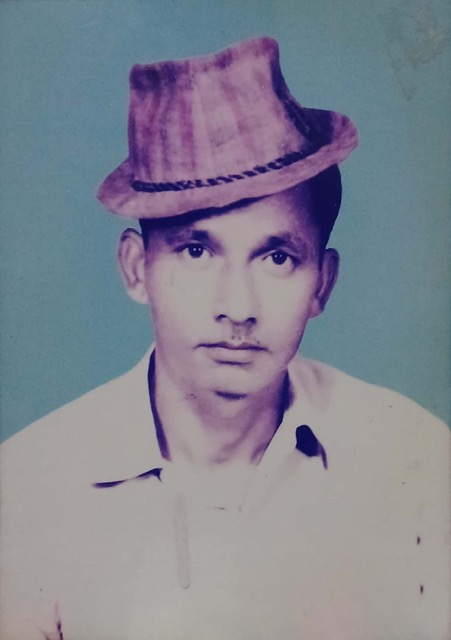
Even outside the battlefield, his life was filled with memorable moments. He met the legendary Milkha Singh during an Army sports camp in Jalandhar and later had the honour of meeting Field Marshal Sam Manekshaw, whose leadership inspired an entire generation of soldiers.
Today, Havildar Baburam Rasaily remains a living institution. His greatest message to the youth is simple: “Success does not come from comfort. It comes from discipline, courage and never giving up.”
For Shillong, he is more than a decorated veteran. He is a symbol of resilience, patriotism and unwavering commitment. As soldiers say, “You can retire from the Army, but the Army never retires from you.”
Today, at 91 years of age, Havildar Baburam Rasaily continues to stand tall—not because of medals alone, but because of the values he represents. A boy who lost both parents at the age of 17, grew up amid hardship, faced poverty, overcame disappointment, survived three wars, endured enemy fire and harsh winters, and still greets every sunrise with the discipline of a soldier.
His life is a living reminder that true heroes are not forged in comfort—they are forged through hardship, sacrifice and an unshakable commitment to duty.