

Protests and festivals: Govt needs to find a way for grievance redressal

 There is music in the air, tourists on the streets and celebrations across Shillong. The Cherry Blossom Festival is back, bringing international artistes, music lovers and visitors to Meghalaya. Also, India International Music Week is promoting the state’s ambition to become a global music destination.
The government has every reason to celebrate these achievements. Tourism Minister Paul Lyngdoh has spoken about taking Shillong’s music identity beyond rock, while Chief Minister Conrad K. Sangma has spoken about building a sustainable music ecosystem and making Meghalaya a music capital rather than just a concert capital.
But while the government is busy showcasing Meghalaya to the world, there is another story unfolding on the streets of Shillong.
And it is a story that deserves equal attention.
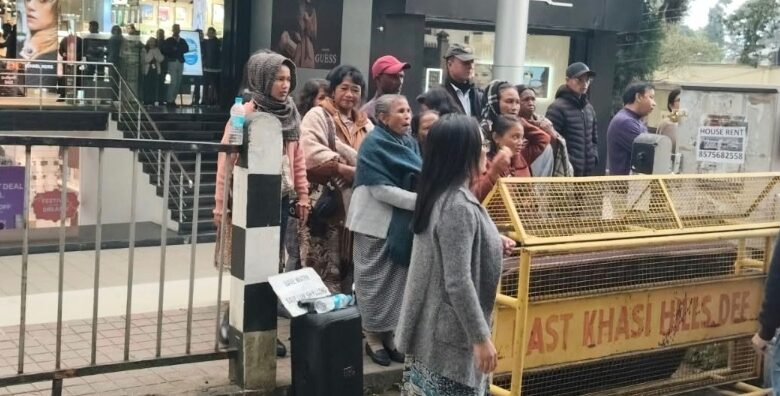
Over the past few days, the city has witnessed multiple protests, each highlighting a different set of public grievances.
First, we have the deficit school teachers under the Khasi Jaintia Deficit School Teachers’ Association, who have been protesting over their long-pending demands. These include issues surrounding the Contributory Provident Fund, National Pension System, pending Dearness Allowance arrears and other service-related benefits.
The agitation also escalated following Deputy Chief Minister Prestone Tynsong’s controversial remarks describing a section of protesting teachers as “termites” and “rotten fruit”.
Tynsong later clarified that his remarks were directed at the association’s leadership and not the entire teaching community. He also questioned the timing of the agitation during examinations, saying it could affect students and parents.
On the demands themselves, the Deputy Chief Minister said the government would clear pending DA arrears, while the CPF matter was before the judiciary and teachers should await the court’s decision.
Chief Minister Conrad Sangma also appealed to the teachers to call off their indefinite strike, saying their concerns had been forwarded to the Education Department for examination. However, the association maintained that the appeal lacked concrete assurances and timelines.
Then there are the bus operators.
The Khasi Hills Bazar Bus Association has been protesting against the government’s decision to shift the Mawlonghat bus stand to Anjalee Parking.
The operators argue that the existing location is important for passengers, particularly farmers, traders and villagers from around 41 villages across five districts who depend on these buses to access Ïewduh.
They fear that relocating the stand could affect their livelihoods and inconvenience commuters.
Despite discussions with officials from the Urban Affairs Department, the association says its concerns remain unresolved and has opposed the deadline to vacate the existing stand.
And then comes the ongoing agitation against the proposed Shillong Peak Ropeway Project.
The Joint Action Committee, supported by several women’s organisations and local residents, has been demanding that the project be scrapped or relocated.
Their concerns revolve around water sources, tree cover, environmental protection, sacred spaces and the possible impact on the livelihoods of people living around Lum Shyllong.
The government’s response has been that the project has received the necessary clearances and that it remains open to discussions.
Chief Minister Conrad Sangma has said the government is examining the concerns raised by the JAC and is willing to engage with stakeholders.
Tourism Minister Paul Lyngdoh, meanwhile, has assured that the protests would not disrupt the Cherry Blossom Festival. He said security arrangements had been strengthened and maintained that festivals and democratic protests could coexist.
He has also maintained that the government is open to dialogue with the JAC, while saying that the committee has not taken up his invitation for discussions.
Now, these are the positions taken by the government and its ministers. And it is important to acknowledge that the government has responded to some of these concerns.
But the larger question remains: Are these responses translating into meaningful resolutions?
There is nothing wrong with promoting festivals. The Cherry Blossom Festival, India International Music Week and other cultural events are important for tourism, local businesses, employment and the state’s economy.
But the government must remember that tourism promotion is only one part of governance.
A state cannot be judged only by the number of tourists it attracts, the international artistes it brings or the scale of its festivals.
It must also be judged by how it handles public grievances.
When multiple groups are taking to the streets at the same time, it should prompt the government to look beyond individual protests and examine whether there is a larger problem with grievance redressal and communication.
The government may not be able to accept every demand. Some issues may require legal intervention, financial approvals, technical assessments or consultations with different stakeholders.
But there must be a clear process.
Why not establish a dedicated grievance coordination cell?
Such a cell could receive representations from protesting organisations, identify the departments responsible, arrange meetings between officials and stakeholders, and monitor the progress of every issue.
It could also set timelines for responses and keep the public informed about what action has been taken.
This would not mean that every protest must end with the government accepting every demand. But it would ensure that people are not left waiting indefinitely for answers.
More importantly, the government should not wait for people to come out onto the streets before engaging with them.
A grievance does not become less important simply because it does not have a festival stage, a celebrity guest or a spotlight.
Shillong can celebrate. Meghalaya can attract tourists. The state can aspire to become a global destination for music and culture.
But alongside all of this, the government must make sure that the people raising concerns are not left unheard.
The real test of governance is not just how well a government organises celebrations, but how responsibly it handles disagreements, dissent and dissatisfaction.
Festivals may put Meghalaya on the world map, but listening to its people is what will build their trust in the government.
And that is the question the government faces today: while the state celebrates its achievements and welcomes the world, who is listening to the people seeking answers?
Festivals will come and go, performances will end and tourists will eventually return home. But the concerns of Meghalaya’s people will remain until they are addressed.
The government does not have to agree with every protest, but it has a responsibility to listen, engage and act.
Good governance is not just about putting Meghalaya on the global stage. It is about making sure that the voices from its own streets are heard.
WATCH MORE VIDEOS