
‘I cried while reading the script during Chinese Whispers audition’
Poonam Gurung shares her experience in the 2015 short film, the latest 'Family Man' series and her going back to Nagaland

Young and exuberant, versatile yet grounded in reality, Poonam Gurung is an actress with a je ne sais quoi. She is distinct from most of the prominent actresses from the North East who have made significant appearances in Bollywood films and OTT series. She is charming and tough at the same time, and this allows her to play different roles. And Gurung does not shy away from any role or film in any language.
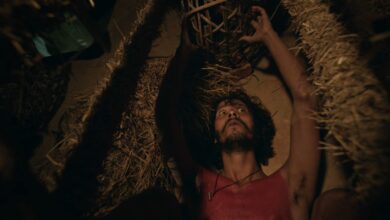
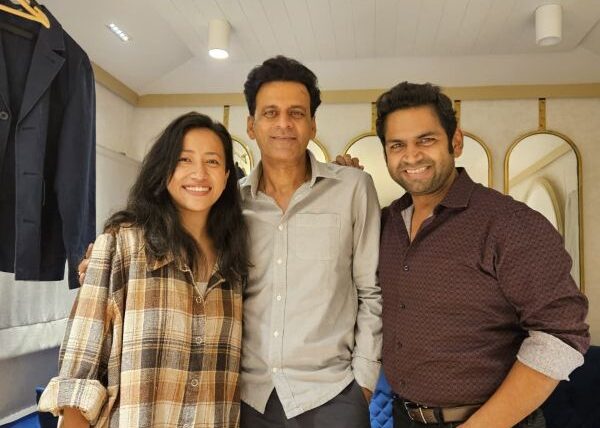
In her latest project, The Family Man Season 3, Gurung plays a tough member of a Naga faction group. She says working with stars like Manoj Bajpai and Jaideep Ahlawat was a memorable experience.
Gurung’s first major project was Chinese Whispers, a short film directed by Charu Sree Roy of Chasing the Rainbow fame, where she plays a teenage girl from the North East who experiences racism outside the region. Gurung says the script made her cry because it told the story that resonated with her and many others from the northeastern states.
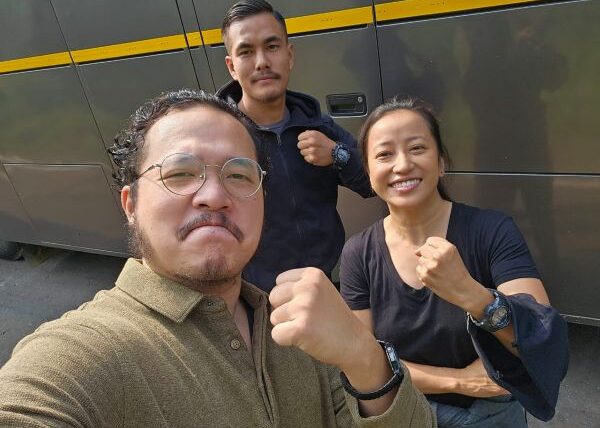
Born in Nagaland and brought up in Nepal and Siliguri, Gurung has lived in Mumbai for a few years. Currently, she is based in Assam. “I came to Assam after the first lockdown because Kenny (Kenny Basumatary) was shooting for a series. He wanted me to assist and act in it. Then, I got two more projects… and then I met Kulanandini Mahanta (she is the national award-winning director of Emuthi puthi) again, and then, we started working on music videos and ad films. Later, we registered a production house named Monkeyscope Motion Pictures,” says Gurung.
Meghalaya Monitor speaks to the actress, singer, dancer and martial arts expert to know about her journey in the Hindi, Bengali, Assamese and Malayalam film industries.
Excerpts:
How was the experience working with so many great Bollywood actors?
First of all, thank you so much for inviting me. It’s a pleasure… So, working in Family Man set among all those people who have worked in the Bollywood industry for decades, it was amazing… They have worked hard for so many years. But I felt that they didn’t behave like that. And there was always a space.
Even before action, when we were waiting for shots, people were really nice. We would just sit and crack jokes and do some things.
And I think because of that, the on-screen transition was very nice and comfortable.
You were born in Nagaland. How was the experience of shooting there?
Whenever somebody mentions where I was born, I keep telling (them about) all the places that I’ve been through because people then get confused… So, I was born in Nagaland. And, then when I was maybe one or two years old, that’s when we moved to Nepal.
And we were there for around eight-nine years. Then we moved to Siliguri. And then I went to Bombay.
Now, for the last five years, I have been in Assam… I went to Nagaland for the first time for a Doordarshan series called Major Kuotsu, which was based on the first lady army officer of Nagaland. I was playing the character… at that point of time, I was quite nervous and excited. That was the first time I had gone back to the place I was born… I was born in Tuensang, and the shooting was in Kohima. But still it was Nagaland. So, I was quite excited to meet the people there and, you know, to understand the culture. And I have always enjoyed understanding culture, learning languages.

Do you think the North-East is still seen as a place where the subject is insurgency or drug-related issues? Do you think that the diverse subjects in the region are not explored properly?
Thank you for the question. When you see something new in a place, you think about how to commercialise it at the beginning. So, if you come directly and show whatever is happening in our daily lives and all of that, it becomes difficult for them. But right now, what they see is that whatever can be highlighted… I hope that, and I also believe, that it’s going to be in phases. Maybe the second phase will be how they’ll try to understand, you know, the lives of northeastern people.
How was your experience in the film Chinese Whispers?
When I went for the audition, they gave me the script, and I read it. And I was still because, you know, we have all faced (racism) whenever you go out of the North East, we’ve all faced this thing. You know, whatever the dialogues were there… when I auditioned for it, when I was, you know, saying the lines and they were recording, I cried. Because it was very personal for me, because I could relate to the dialogues that were written there. Because we’ve all been through that, you know, because when somebody directly calls you, “Hey Chinky, where are you going?” you can go and beat him. But when it is very, very quiet, like somebody just looking at you and they know you can see that in their eyes, that they think that you are something else. So those things you can’t go and confront, but they stay so deep in your heart, and it just seeps in.
~ Team Sunday Monitor
Photos sourced