

LISTENING TO NE: What young researchers are asking
Eighteen research proposals presented in Ziro show why locally grounded scholarship deserves sustained support

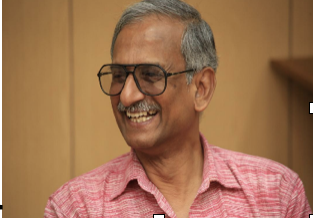
D. Jeevan Kumar
What do heirloom beads tell us about old trade routes through the Eastern Himalayas? How does a community’s knowledge of animals shape conservation? What happens to elder care when family arrangements change? These are among the questions young researchers brought to Ziro in response to an invitation from the Centre for Research and Documentation of the AMA-ABA Multi-Purpose Cooperative Society.
I had the privilege of serving on the Expert Committee before which 18 proposals were presented. The scholars, mostly from the North East, addressed culture, livelihoods, governance, health and environmental change. What impressed me was their willingness to begin with specific communities and practices, then ask questions with much wider relevance. Their proposed studies offer a glimpse of the concerns of a new generation of researchers—and of the knowledge we stand to gain if their work is encouraged.
Some proposals seek to document traditions whose meaning can only be understood through sustained conversation with the people who practise them. A comparative ethnography of funerary traditions among Tani communities, for instance, could illuminate beliefs about kinship, obligation and remembrance. Studies of Apatani shamanism and indigenous knowledge systems in Manipur raise questions about how knowledge is transmitted, preserved and made accessible. Such work requires more than recording a practice before it disappears. It asks who holds the knowledge, who may share it, and how communities wish it to be represented.
Other proposals show how culture connects to material life. Apatani heirloom beads may reveal histories of exchange across the Eastern Himalayas. A study of traditional ecological knowledge and changing human–animal relationships in Ziro Valley could contribute to discussions of biocultural conservation. Research into ethnomedicine among the Memba and Meyor may help us understand healing within its cultural setting, while also opening dialogue with contemporary public health. These subjects resist the convenient division of life into separate compartments called “tradition”, “economy” and “environment”.
The researchers are equally attentive to change in the present. Proposed studies examine cardamom cultivation and Yobin livelihoods; rural non-farm self-employment; trade and markets in Arunachal Pradesh; and the adoption of digital marketing by homestay entrepreneurs. Another asks how tourism affects solid-waste generation in Lower Subansiri and whether greener practices could make a difference. Each question matters to people making decisions about income, land, enterprise and the places they call home.
Health and family life form another important cluster. Proposals on the implementation of AB-PMJAY in Nagaland, mothers’ health-care decisions for preschool children, and the emergence of institutional elder care can illuminate how services and social change are experienced in different settings. A study comparing matrilineal and patrilineal contexts is especially valuable because it avoids assuming that one family model describes the whole region. A proposal on young adults’ perceptions of cybercrime similarly takes a contemporary concern seriously without detaching it from social experience.
The range extends further. A study of Khasi traditional democratic practices asks how indigenous governance and ecological identity relate to one another. Another examines Arunachal Pradesh’s historical and contemporary links with Southeast Asia. One proposal looks beyond the North-East to the market prospects and difficulties of Odisha’s traditional handloom artisans. Together, the projects show researchers moving between the village, the market, the state and wider regional networks.
No single set of proposals can represent every concern in the North East. Nor should titles be mistaken for research findings. Their significance lies in the questions they pose. Too often, public discussion treats the region as one undifferentiated space, or notices it chiefly through conflict, borders and infrastructure. Close research can bring into view the differences between communities, the reasoning behind their institutions and the varied ways people respond to change. It can also test assumptions made in distant policy offices.
For these projects to fulfil their promise, encouragement must extend beyond the presentation stage. Young scholars need modest but reliable fieldwork grants, patient mentoring, access to archives and libraries, and opportunities to work across disciplines. Research conducted with communities should involve informed consent, care over sensitive knowledge and a commitment to sharing results in accessible forms. Where appropriate, findings should return to the people whose time and knowledge made the work possible.
AMA-ABA MPCS deserves appreciation for creating a forum in Ziro where these proposals could be heard and discussed. The next challenge is to help promising questions become careful, ethical and publicly useful research. Supporting young scholars from the North-East will strengthen our understanding of the region. It will also allow more of that understanding to be shaped by people who live close to the histories, concerns and possibilities they study.