

Teara Sangma: Dancing her way beyond boundaries of identity
The young Bharatnatyam dancer from Monica Chanda's dance academy is breaking barriers with art and creating a new identity for her as an artiste

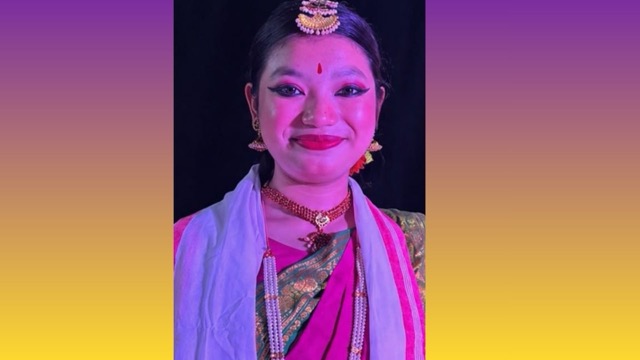
 Teara Ianchi D. Sangma, a young Bharatanatyam dancer from Meghalaya, has become the first Garo girl to be awarded the prestigious CCRT Junior Scholarship in Bharatanatyam — a landmark achievement not only for her, but for the larger conversation around culture, identity and belonging in the North East.
In Meghalaya, where identity is often deeply rooted in tribe, language and tradition, Teara set an example by dancing her way beyond the existing boundaries.
“My classes are on Sundays. And, many people would tell me that being a Christian, you are not attending Sunday service and going for Bharatnatyam. For me, god is there always and everyday, and I do not have to choose one day to pray to Him,” said the young dancer.
Her story is more than winning a scholarship. It is about what it means for a Garo girl from a tribal Christian background to excel in one of India’s oldest classical dance forms, and challenging the idea that art must belong to one religion, one geography, or only one community.
Challenges on the way
For Teara, Bharatanatyam began as a dance form. Over the years, it became something much bigger. “I started learning Bharatanatyam when I was four and a half years old,” she said. “At first, it felt unfamiliar, but slowly I started to understand its beauty. It taught me discipline, emotions, culture, and a powerful way to express myself.”
That journey, however, was not without resistance.
One of the most challenging parts of her journey was navigating the questions that came with being a Christian girl learning Bharatanatyam — a classical form often associated with temple traditions and Hindu mythology. Teara was often asked why she was pursuing something many around her believed did not belong to her.
But Teara’s answer was simple, and perhaps more powerful than the question itself.
“I always told them God has blessed me with these opportunities. He is the one who gave me this art form.”
Broader identity
Teara is not leaving her roots behind. She is enlarging what those roots can hold. She believes that Bharatanatyam does not make her less Garo. It makes her a Garo girl carrying her identity into spaces where it has rarely been seen before.
“It is a big thing for me because I always wanted to represent my own culture through this classical art form,” she said. “From the Garo tribe, nobody had represented something like this before. I always wanted to represent my own culture, and I’m really glad I got this opportunity.”
That is what makes her win more than personal. It is representational.
In Teara’s aramandi, in her mudras, and in the discipline of her Bharatanatyam, there is also the quiet assertion of a Garo girl claiming space in an art form where girls like her have rarely been seen.
Guru’s testimony
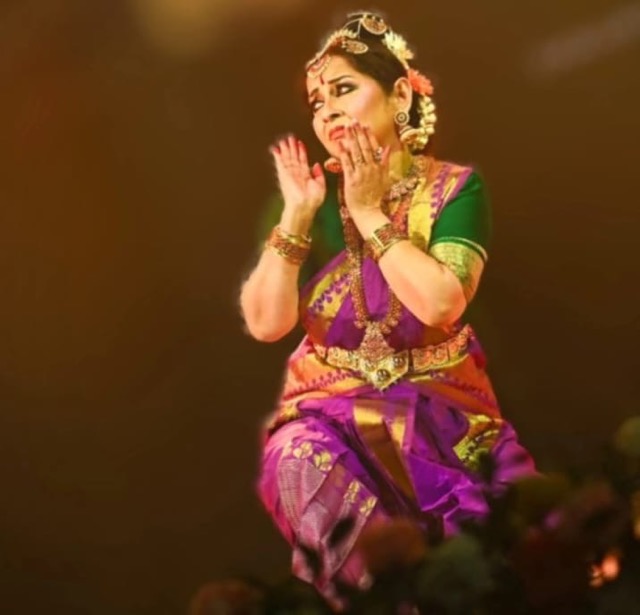
Her guru at Geetanjali Dance Academy, Bharatanatyam practitioner Monica Chanda, sees this not just as a student’s success, but as a cultural moment.
“Dance is universal. It has no religion,” Chanda said. “As an artist, we are storytellers. She is not learning religion. She is learning an art form.”
For Chanda, Teara’s journey is also a testament to perseverance and discipline. “Indian classical dance is not easy. It demands discipline, patience, and years of rigorous training,” she said. “Teara has given herself to that process with sincerity. That is what makes her achievement so meaningful.”
An award-winning dancer herself, Chanda believes Teara’s success is not just personal, but historic.“She is the first Garo girl to reach this stage through Bharatanatyam, and that itself is powerful,” Chanda said. “She is opening a door for others to believe that classical art forms are for everyone.”
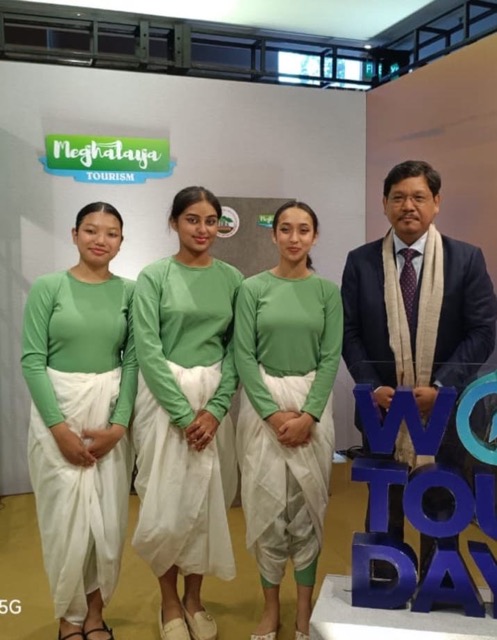
Teara’s achievement also drew praise from Meghalaya Chief Minister Conrad K. Sangma, who congratulated her publicly and called it a proud moment for the state.
The young dancer now dreams of building a future in dance — not only as a performer, but as a teacher. “I want to become a Bharatanatyam dancer,” she said, adding, “It is my dream. I want to open a dance academy one day and teach others, just like my guru taught me. I want to make my guru proud and carry her legacy forward.”