


Shillong, April 25: The discovery of new species of reed snake has revealed the uniqueness of the biodiversity of Garo Hills.
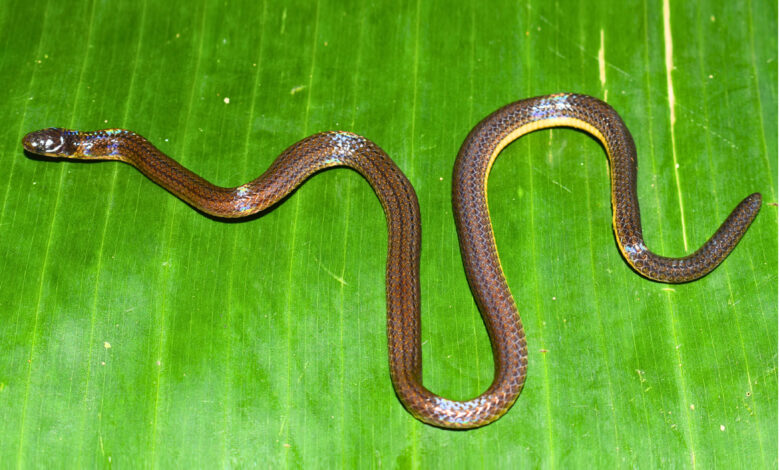
A team of researchers from multiple leading institutions has described a new species of fossorial reed snake from the Garo Hills of Meghalaya, Northeast India. The species, named Calamaria garoensis (Garo Hills Reed Snake), has been published in the international peer-reviewed journal Taprobanica .
The research is a collaborative effort involving Help Earth, Cotton University, Assam Don Bosco University, Mizoram University, Zoological Survey of India, and the National Research & Innovation Agency (BRIN), Indonesia.
The study was conducted by Manmath Bharali, Chesime M. Sangma, A.A. Thasun Amarasinghe, Sanath C. Bohra, Pranjal Swargiary, Griksrang C. Marak, Arup K. Hazarika, Madhurima Das, Bipin M. Asem, Jennifer Lyngdoh, Hmar T. Lalremsanga, and Jayaditya Purkayastha.
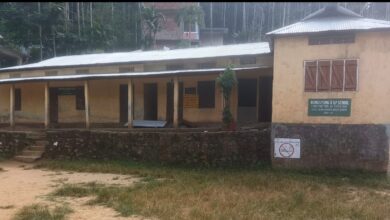
The discovery was made during field surveys in the West Garo Hills district of Meghalaya. The holotype specimen was collected from Oragitok, Rongram Block, an area characterized by rich forested habitats and high ecological significance. The species is currently known only from this region, indicating a potentially restricted distribution and highlighting its conservation importance.
Reed snakes of the genus Calamaria are small, secretive, and largely burrowing in nature, making them difficult to detect and study. Due to their morphological similarity, many species have historically been misidentified, often grouped under widespread names without detailed validation.
The research team employed an integrative taxonomic approach combining detailed morphological examination with mitochondrial DNA-based phylogenetic analysis. The results confirmed that the Meghalaya population represents a distinct evolutionary lineage. Phylogenetic analysis showed that Calamaria garoensis is closely related to Calamaria mizoramensis, but clearly distinct, with a genetic divergence of approximately 6.3%.
Morphologically, the species is characterized by a unique combination of features, including smooth dorsal scales arranged in 13 rows, a short non-tapering tail with an obtuse tip, and a distinct broad median black stripe on the underside of the tail. The body exhibits characteristic longitudinal striping along with a faint nuchal ring, distinguishing it from all known related species.
The study also resolves long-standing taxonomic confusion in the region. For decades, reed snakes in Northeast India were broadly identified as Calamaria pavimentata, a species now understood to represent a complex of multiple distinct lineages rather than a single widespread taxon. This finding highlights the need for re-evaluation of historical records and reinforces the uniqueness of the region’s biodiversity.
Chesmie M. Sangma, student researcher from Assam Don Bosco University and a native of the Garo Hills, stated: “The Garo Hills are a treasure trove of biodiversity that is still largely unexplored. Being from this region, it is incredibly meaningful to contribute to a discovery that highlights the ecological importance of our landscape. This finding shows that many species are still hidden in these forests, and it is crucial that we invest more in research and conservation here.”
Manmath Bharali, student researcher from Cotton University, added:“The discovery of Calamaria garoensis is significant because it adds to our understanding of hidden diversity within fossorial snakes, a group that is often overlooked. Such species play important roles in ecosystem functioning, and documenting them is the first step toward ensuring their conservation. This also reminds us how much biodiversity remains undocumented in Northeast India.
The discovery underscores a broader scientific message that Northeast India, despite being part of a global biodiversity hotspot, remains insufficiently explored, especially for lesser-known faunal groups such as reptiles, amphibians, and invertebrates. Many species, particularly those that are cryptic or fossorial, remain undocumented.
Researchers emphasize that increased scientific exploration, combined with conservation-focused management, is essential to document and protect this hidden biodiversity. Landscapes such as the Garo Hills are emerging as key regions for future research, holding immense potential for further discoveries.