



Arathi Menon/Mongabay India
India’s exotic pet trade has grown from a niche pursuit into a significant industry. Over 40,000 people across 30 states and union territories declared their exotic pets in the government’s 2020 Voluntary Disclosure Scheme, making the scale of ownership hard to ignore, according to a Humane World for Animals report published this year. Even that, the report cautions, could represent only a fraction of actual ownership.
So, what draws people to animals that are often unfamiliar, expensive and difficult to keep?
Conservation researcher working on illegal wildlife hunting and trade Uttara Mendiratta identifies several motives: the desire to own something others do not, the appeal of animals perceived as unusual or “cool”, and the belief that some exotic species are easy to maintain.
Research into exotic pet buyers in Japan points to another dimension. A consumer study found that people were drawn to the “mental healing” (Iyashi in Japanese) they associated with animals, as well as their cuteness (Kawaii).
Social media can amplify these attractions, creating a ready marketplace where people can see what is trending, find sellers and learn how to care for unfamiliar species.
But the impulse to own an unusual animal can be very different from the reality of living with one.
“People buy a small, cute animal that eventually becomes bigger,” says Mendiratta. A teenager may lose interest in a reptile as they both grow older. A turtle may outgrow its enclosure. A parrot may live for decades. A snake may become difficult to house, a primate harder to manage as it reaches sexual maturity, or an iguana, increasingly aggressive. An owner may move cities, face rising veterinary costs or simply find that caring for the animal is far more demanding than expected.
The exotic pet that once seemed unusual, fascinating or adorable can suddenly become a problem. And that is when abandonment begins.
Possession and abandonment
A January 2026 Kerala study of red-eared sliders (Trachemys scripta elegans) offers more insight into why people buy exotic pets. The study interviewed people involved in the pet trade and found that the most common motivation was personal interest in exotic pets (54.8%). Other reasons included the species’ friendly nature and ease of care (16.1%), religious beliefs (12.9%) and its long lifespan (9.7%). Overall, 55% of the turtles were purchased for children, 13% by adults and 32% by both.
The same study also points to what can happen when the appeal wears off. Sixteen per cent of respondents said some owners released turtles into natural or open areas when they grew larger.
Abandonment, however, is not only a welfare concern. The possession, release or abandonment of exotic species can have long-term ecological consequences, both in their native habitats and in the places where they are introduced.
Removing animals from their native ecosystems can also mean removing the ecological functions they perform. This is particularly relevant for species such as gibbons and orangutans, as well as some birds and reptiles, that play important roles in their ecosystems.
A 2024 analysis of the global primate trade, for instance, notes that primates can be important seed dispersers and, in some cases, pollinators. Their removal from forests can therefore affect plant recruitment, forest composition and, potentially, carbon storage. Primates are also culturally important to many Indigenous communities, meaning their loss can have consequences beyond the ecosystem. The analysis also points to the potential for wildlife trade and the removal of primates to alter disease dynamics by changing wildlife pathogen reservoirs.
Ecological damage from invasives
Conversely, introducing a species into a new environment can alter the ecology of the place where it is released. Exotic animals with invasive potential can compete with native species for food and other resources, prey on native wildlife, introduce pathogens, hybridise with related species and alter food webs.
Red-eared sliders are a classic example, says Sumanth Bindumadhav, India director of Humane World for Animals and co-author of the 2026 report. Native to the Mississippi River basin in North America, these freshwater turtles have become popular pets in India within a relatively short period.
“They can become extremely dominant in water bodies, eating other organisms and establishing themselves as a dominant species,” says Bindumadhav.
Multiple studies point to the species’ invasive potential. A 2023 paper describes the red-eared slider as one of the world’s worst invasive species and notes records from India suggesting that it may be expanding into natural habitats. Climate change could further increase the areas of India suitable for the species, including regions with high native chelonian diversity, the study says. A Herpetology Notes paper similarly describes a free-living slider recorded in Kerala as an “Invasive Alien Species” capable of causing severe harm to native ecosystems.
Part of the problem may stem from how the turtles are sold. Red-eared sliders are commonly bought as tiny hatchlings but grow considerably larger as adults, making them increasingly difficult to keep as pets. This can encourage owners to release them into local waterways, according to a study published in the Journal of Threatened Taxa.
Their ecological impact can also increase as they mature. Their diet shifts from predominantly carnivorous to omnivorous, and they can compete with native turtles for food, basking and nesting sites, while also preying on native aquatic animals.
The species has now been recorded in water bodies across several parts of India, including Gujarat, Karnataka, West Bengal, Punjab, Rajasthan, Goa and Telangana. In Gujarat alone, the study documented them in 35 water bodies that are also home to native turtle species.
“There are videos on social media of people releasing them (red-eared sliders) into lakes and ponds and presenting it as a good deed. It is not a good deed; they are releasing a highly invasive alien species,” says Mendiratta.
The red-eared slider is classified by the IUCN’s Invasive Species Specialist Group as one of the 100 “World’s Worst Invasive Alien Species”. The Zoological Survey of India’s reptile checklist, however, notes that no reptile has currently been formally designated as an invasive alien species under India’s biodiversity legislation.
Red-eared sliders are not the only exotic reptiles raising concerns. Green iguanas (Iguana iguana), native to Central and South America, are also popular among pet keepers in India. Their ability to thrive in tropical environments raises concerns about what could happen if they become established outside captivity.
“We are seeing green iguanas in large numbers, along with species such as ball pythons and others, during seizures and on social media,” says Mendiratta. She adds that they could damage crops and create problems for native species.
A 2025 study modelled the invasion potential of green iguanas in India. It found substantial areas with climatic conditions suitable for the species to establish and reproduce, and concluded that the species poses a serious potential ecological threat.
The scale of import and release
The scale of the trade in these reptiles is striking. Reptiles, both native and non-native, form a majority of pets: The latest Directorate of Revenue Intelligence data points to reptiles constituting the highest number of wildlife seizures.
In July 2024, Chennai Customs seized 402 baby iguanas arriving from Bangkok: 229 green, 113 orange and seven yellow iguanas, along with 53 blue iguanas (Cyclura lewisi). Blue iguanas are listed in Appendix I of the Convention on International Trade in Endangered Species (CITES), which provides the species with the highest level of protection from international commercial trade. Sixty-seven of the animals were already dead when they were seized.
The scale of red-eared slider imports is equally concerning. Customs authorities seized 12,385 red-eared sliders at Chennai and Tiruchirappalli international airports between 2018 and 2020, according to a studycovering the period. Their small size, relatively high survival rate and low price in exporting countries make them particularly suited to being transported in large numbers, the study says.
The difficulty of keeping some of these animals as they grow can create another problem. An Indian veterinary review notes the popularity of juvenile green iguanas as pets, but says they are often donated to zoos or other agencies once they grow and become more difficult to manage.
Snakes are also increasingly turning up in rescues, including both venomous and non-venomous species. A Burmese python hanging from an apartment balcony in Mumbai went viral a few years ago. “These are often animals that people have kept as pets and which have either escaped or been deliberately released,” says Bindumadhav.
Pawan Sharma, an advocate and wildlife conservationist with RAWW, says he has encountered anacondas, both juveniles and large individuals. “There have been cases where large snakes have broken out of their enclosures and disappeared. In some cases, we simply don’t know where they have gone.”
The presence of venomous exotic snakes raises an additional concern: India does not have antivenoms for many of these species. “People are bringing animals such as black mambas and Gaboon vipers into the country. These pose an even greater health risk because they are venomous,” says Bindumadhav. “If they escape or are released, they could potentially establish populations because they can adapt to tropical conditions.” He adds that venomous tarantulas are also increasingly being kept as pets, raising similar concerns.
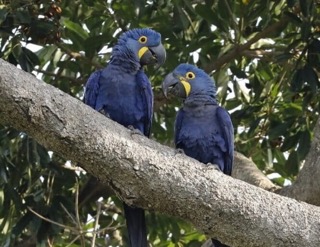
Sharma concurs that escape is a potential pathway for exotic animals to enter the wild. During rescues, he has encountered abandoned or escaped African grey parrots and macaws, as well as marmosets and sugar gliders, in addition to snakes, iguanas and turtles.
Parrots, among the more popular exotic pets, can also enter the rescue system when owners no longer want or are unable to care for them. In Visakhapatnam, a rescue organisation reported taking in exotic parrots and other birds abandoned by owners who had lost interest or moved away. More recently, a media report described a rescue network caring for African greys, eclectus parrots, conures, African lovebirds and cockatiels, among other exotic animals. In that case, however, abandonment was not established.
There is little systematic data on the scale of exotic bird abandonment in India, making it difficult to assess how widespread the problem is.
Dealing with invasives
The growing number of exotic animals entering the country raises an important question: what happens when owners no longer want or are able to keep them?
Mendiratta points to gaps in law, infrastructure and awareness in dealing with invasive fauna. “We have relatively clear approaches for some invasive plants, such as Lantana camara. But what do you do with thousands of red-eared sliders? If we remove them from these waterbodies, where do they go? Can they be euthanised humanely? Do you keep them in captivity indefinitely? There is very little clarity around those questions.”
The Central Zoo Authority (CZA) recognises non-native animals abandoned by owners or rescued from unsuitable environments, including animals originating from the exotic-pet trade, as rescued animals that may be placed in recognised zoos or rescue centres. While its guidelines provide a management framework for zoos receiving rescued or abandoned exotic animals, it doesn’t create a general right for an exotic-pet owner to surrender an animal to a zoo. Acceptance depends on the zoo’s facilities, the animal’s circumstances and applicable legal requirements.
Sharma says CZA guidelines are largely applicable for species listed under CITES. Other species such as red-eared sliders face a challenge. His organisation, RAWW takes them in and in many cases, puts them up for adoption so they go to a home. “We do not have the capacity to take a large number of abandoned animals, so we do this at a smaller scale,” he explains.
Mendiratta says the system for surrendering unwanted exotic animals to the government or rescue centres needs to be better developed. “There are only so many rescue centres, and many are understaffed. Once you hand an animal over, you may also have very little control over what ultimately happens to it,” she says.
Bindumadhav believes India needs a national surrender policy. “It needs to come after we have the infrastructure to take these animals that people don’t want to keep anymore. In the absence of it, people often end up releasing animals where they see fit,” he says.
(The article was first published in Mongabay)
This is Part 3 of a series on exotic pet trade. The series looks at the health impacts, legal challenges and the ecological consequences of keeping exotic wild animals as pets. MM did not publish the other stories in the series, and you can visit the website of Mongabay India to read the articles. Part 1 explores how the trade enables zoonoses, while Part 2 observes how India is emerging as a link in the global primate trade.