


Climate change is making humid heat more intense in these Indian cities
New research shows that cities such as Tiruchirapalli, Chennai, Vijayawada have seen dangerous humid heat days increased manifold in the last five decades

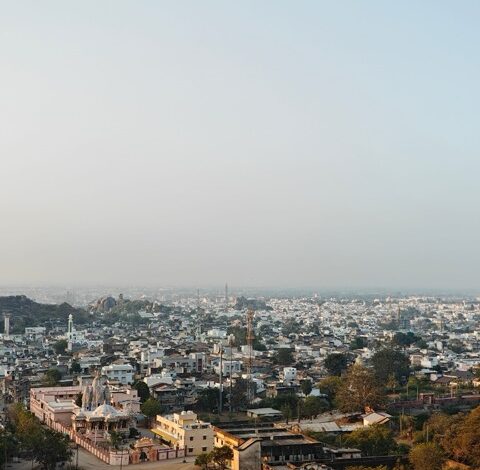
Long dry spells this monsoon in some parts of India meant warmer days and nights even in July. Climate change is making the world hotter and more humid, and the number of dangerous humid heat days is rising, a new study shows. Sixteen Indian cities saw dangerous humid days for more than six months each year, the study found.
‘Felt temperature’ or ‘wet bulb temperature’ is the thermal discomfort the human body feels and is a combination of maximum temperature and relative humidity. Researchers at Climate Central defined dangerous humid heat days as days when the maximum wet-bulb temperature is 25°C or higher. In simple terms, it could mean a daytime maximum temperature of around 26°C and humidity levels around 20% or a variation of the same (use this calculator).
Humid heat inhibits the body’s ability to cool down through its natural mechanism of sweating. Across India, humidity has increased at the rate of 0.79% per decade between 1969 and 2012. High humidity levels coinciding with high temperatures are likely to create lethal weather conditions and affect the lives of millions across the Indian subcontinent. Climate change will make such conditions more frequent as the 21st century comes to a close.
While India is not among the worst-affected countries, the study shows several Indian cities where dangerous humid heat days attributable to climate change have multiplied in about 55 years. Overall, 59 Indian cities were included in the study, of which only two—Bengaluru and Srinagar—did not see any days with dangerous humid heat.
Tirunelveli, Chennai, Tiruchirapalli and Vijayawada saw more than 250 days (or eight months) of dangerous humid heat a year in the past decade. Tirunelveli ranks 34th and Chennai ranks 39th in the list of 961 cities analysed across the globe.
Among the worst affected countries in Asia are Brunei Darussalam (also worst affected in the world), Singapore, Malaysia and Cambodia, while India ranks 16th in Asia. The country had, on average, 141 days of dangerous humid heat during 2016-2025, of which 49 days or 35% were attributable to climate change.
The study calculated the number of observed days with dangerous humid heat, and used a counterfactual analysis to estimate the number that would have occurred without the influence of climate change.
ISignal reached out to the Union health and environment ministries, and the National Disaster Management Authority on how they plan to adapt to climate-driven humid heat, what health protocols will be put in place for vulnerable groups, how the departments will plan for occupational protections and adaptation funding for most impacted Indian cities. We will update this report when we receive a response.
Southern and central Indian cities worst off
Our survival depends on our bodies staying at a consistent temperature, as ISignal explained in August 2017. Normally, our core temperature—from the top of the head to mid-chest, encompassing the brain, lungs and chest—is regulated at 37°C, and our skin at 35°C. Sweating helps us shed excess heat—sweat beads cool the skin, and evaporation of sweat gets rid of heat, restoring the equilibrium.
This process of thermoregulation occurs efficiently only when ambient air is favourable for us. Air can hold a limited quantity of water until it saturates. In dry air without much water content, sweat evaporates quickly, causing cooling. In humid air that has much moisture already, sweat does not evaporate as easily, leading to overheating of the body.
An earlier study by Indian researchers had calculated physiological strain using core body temperature and heart rate. It identified a threshold of 32°C temperature and 60% relative humidity as a “critical point beyond which thermoregulatory mechanisms become inefficient”, we explained last year.
Climate Central uses a lower threshold. Their study found that if the 1970s are compared to the past decade (2016-2025), dangerous humid heat days have more than doubled globally—from an average 10 days per year to 23. In nearly 70% of the cities analysed, climate change led to an average of 46 more humid heat days per year during the last decade.
Climate change is making such days more frequent. For example, in Tirunelveli, climate change was responsible for 72% of humid heat days in the 2016-25 decade as compared to only 32% in the 1970s—or an additional 197 days per year. Five other Indian cities are among the top 100 across the world where this is becoming increasingly frequent: Madurai (164 additional days), Tiruchirapalli (135) and Kallakurichi (125) in Tamil Nadu, and Mumbai and Navi Mumbai (115 additional days) in Maharashtra.
Ranchi saw 12 days with a wet-bulb temperature above 25°C during 1970-79, of which four were attributed to changing climate. During 2016-25, the city saw 83 days with dangerous humid heat, 75 of which were due to climate change. In effect, accelerating global warming led to an 18-fold increase in the number of such days attributable to climate change.
Climate change added 164 dangerous humid heat days a year in Madurai, nearly eight times the 21 days added in the 1970s. Today, 82% of its 200 days every year with humid heat are due to climate change.
In Maharashtra’s Nagpur, humid heat days more than doubled and 71% now are due to climate change. Even Bhopal recorded an 83% attribution, Indore even higher at 94%, Nowrangapur in Odisha 93%. In Hyderabad, 100% or the entire increase in humid days, is attributed to climate change. The other 100-percenters are Aurangabad, Pune, Pimpri Chinchwad in Maharashtra.
“These findings show how profoundly climate change is reshaping our world. Dangerous humid heat has gone from being an uncommon event to a defining feature of daily life in some regions, pushing conditions closer to the limits of what the human body can safely endure,” said Kaitlyn Trudeau, applied climate scientist at Climate Central in a press release.
“Those numbers for southern India, like the 197 extra humid heat days in Tirunelveli, sound extreme, but they track with what we’re seeing on the ground. The Tamil Nadu pattern actually makes a lot of sense,” said Vidhya Venugopal, professor of occupational and environmental health at the Sri Ramachandra Institute of Higher Education and Research (SRIHER), Chennai.
The worst off of the worst hit
Why this matters is because humid heat is affecting our health in several ways. Extreme heat and humidity lead to heat strain, dehydration, cardiovascular strain, renal strain, and respiratory distress, potentially culminating in heat exhaustion, heat stroke, and an elevated risk in cardiovascular and respiratory morbidities and mortalities.
“Elevated body temperatures cause blood to be redirected from the core to the skin to aid in heat dissipation. This decrease… along with high internal temperature, can increase gut permeability, allowing bacteria to enter the bloodstream. As a result, widespread clotting and multiple organ failure can occur, which may be fatal,” found researchers from multiple global universities in this paper published in the journal Annual Review of Environment and Resources last year.
Further, the paper warns, people with preexisting kidney disease are at higher risk of renal failure during exposure to extreme heat and humidity, primarily due to reduced blood flow to the kidneys.
“Vulnerable populations, including the elderly, young children, and those with preexisting health conditions, face greater risks due to lower physiological adaptive capacity. Those from socioeconomically disadvantaged communities are also vulnerable because of increased exposure and reduced capacity,” the paper says.
Workers exposed to high humidity were 150% more likely to experience more physiological strain compared to those in low humidity conditions, we reported last year.
Speaking about why India’s policies for adapting to humid heat fall short, Venugopal said, “In India, heat gets less attention than air pollution does, and even when someone does act on it, they treat it like a public health issue, for example by providing cooling centers, heat alerts, instead of a workplace safety issue.” She explained that heat policy gets split across environment, labour, and health ministries, “and nobody is really coordinating across those”.
Humidity added 5-6 degrees heat stress for Chennai, Mumbai
The Climate Central study mirrors findings of other studies done over the years.
A 2024 report by Delhi-based Centre for Science and Environment analysed three factors that contribute to heat stress in six megacities of India during summer—air temperature, land surface temperature and relative humidity. Humidity had contributed to a significant increase in these cities’ heat stress, they had found.
In Chennai, humidity was responsible for adding on average 6.3°C heat stress to the city.
“There is direct co-relation between increase in built up area and increase in urban heat stress,” the CSE analysis on Chennai found, adding that the city’s built up area has increased in two decades while green cover fell from 34% to 20% in the same time (2003-23).
In Mumbai, summer registered a 0.6°C increase in comparison while relative humidity increased by 7% between 2001-10 and 2014-23. High humidity was responsible for adding, on average, 5°C of heat stress to the city. Mumbai’s built up area has increased from 38% in 2003 to 52% in 2023 while its green cover has decreased from 36% to 30% in the same time period.
Chandni Singh, lead researcher at the Indian Institute for Human Settlements and an Intergovernmental Panel on Climate Change author, believes that India needs a mix of adaptation strategies to deal with humid heat.
“Humid heat is something many of our coastal cities already deal with. We need more research to devise cost-effective ways to deal with humid heat because air conditioning is expensive,” Singh explained. “Tree cover can help with heat but when it comes to humid heat, it is not so simple. Often when you plant trees, localised humidity increases because of evapotranspiration. So, a lot more research is needed on what kind of trees to plant and does that work in hot-humid conditions.”
“Also, we must realise that as built up area changes and air circulation changes, that also exacerbates humid heat. Within cities, you now have spaces where air circulation is not happening. In coastal cities, the sea breeze allows you to have cooler evenings but that changes due to changes in the urban form. That is why, we need a mix of adaptation strategies to deal with humid heat,” said Singh.
Venugopal believes India needs heat and humidity rules with real teeth, real-time monitoring, protection schemes for informal workers, and enforcement that means something.
“Right now, none of that exists at any real scale and the gap between what the research shows and what policy does is only getting wider,” said Venugopal.
(The article was first published in ISignal. ISignal is an award-winning initiative that uses data and evidence to tell stories)