



 Tuberculosis continues to be the most common opportunistic infection as well as biggest cause of deaths of people living with HIV despite decades of progress in diagnosis, treatment and prevention. TB is preventable and curable but it was not so for over 150,000 people living with HIV who died of TB in 2024, as per latest UNAIDS report 2026 launched at 26th International AIDS Conference 2026 (AIDS 2026).
“If we could have prevented TB better among people with HIV or found TB earlier in them and treated it with medicines that work against their TB bacteria, we could have saved these lives. No one needs to die of TB, or HIV” says Prevent-Find-Treat ALL TB campaign. There were over 570,000 deaths in 2025 due to AIDS-related illnesses.
The challenge is not simply the availability of medical tools – it is ensuring that people are identified early enough and connected to care before the disease progresses – with human dignity and respect to their human right to health.
Experiences shared by Humana People to People India (HPPI) experts at AIDS 2026 suggest that one of the most effective ways to bridge this gap may already exist within India’s health system: integrating latest science and evidence-based TB services into established HIV care and prevention platforms rather than creating entirely new programmes – and that too in person-centred manner and led by communities.
HPPI’s National Partnership Officer Jahangeer Alam (a TB survivor and TB champion himself) and National Technical Advisor for TB, HIV and Health Dr Sugata Mukhopadhyay, described how strengthening collaboration between Government of India’s National TB Elimination Programme (NTEP) and National AIDS Control Programme (NACP) is helping identify TB earlier, improve treatment completion and place people – not diseases – at the centre of healthcare.
A Hidden Challenge
According to Jahangeer Alam, TB remains the leading cause of death among people living with HIV, accounting for one in four HIV-related deaths globally.
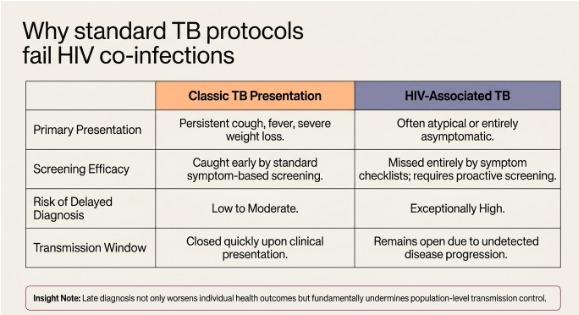
The concern, he explained, is that TB among people living with HIV often does not follow the classic clinical picture.
Many individuals may not present with persistent cough, fever, weight loss or other commonly recognised symptoms. When healthcare systems depend solely on symptom-based screening, many infections remain undetected until the disease has already advanced.
Late diagnosis not only worsens health outcomes for the individual but also increases opportunities for continued transmission.
Another obstacle is that TB screening is not always fully integrated into routine HIV care and antiretroviral therapy (ART) services. Layered on top of this is the persistent intersectional stigma surrounding both HIV and TB, which is a formidable barrier for many people from seeking care early.
These realities make service integration more than a matter of efficiency – it becomes a clinical and human rights necessity.
The power of community platforms
While ART centres offer one important point of contact, Mukhopadhyay described another equally significant opportunity – the extensive community-based HIV prevention network already operating across India.
India’s HIV prevention programme currently reaches approximately 15.8 million people through Targeted Intervention projects, Link Worker Scheme projects, Opioid Substitution Therapy centres and other outreach platforms.
Many of these populations – including female sex workers, gay men and other men who have sex with men, transgender people, people who inject drugs, migrant workers and truckers—not only face elevated HIV risks but are also vulnerable to TB.
Instead of creating parallel TB programmes for these communities, HPPI strengthened the capacity of existing outreach workers.
Community staff received training to conduct TB symptom screening, educate communities about both TB and HIV, reduce stigma and establish referral pathways with the National TB Elimination Programme for diagnosis, treatment and preventive therapy.
The approach demonstrated that integration can be both practical and sustainable because it builds on trusted relationships that already exist within communities.
Rather than introducing unfamiliar health workers, the programme relied on outreach teams who already knew where vulnerable populations lived, worked and sought support.
No parallel systems, better outcomes
A recurring point stressed by both experts Alam and Mukhopadhyay was that integration is not simply about combining two health programmes. Instead, it involves making better use of what already exists.
Rather than creating new infrastructure, HPPI strengthened the skills of existing frontline workers, expanded their responsibilities and deepened collaboration with government health programmes.
Community outreach workers became central to the model – not only screening individuals for TB symptoms but also providing regular follow-up and support (and filling the gap as far as possible which people may face), counselling families, reducing stigma, supporting referrals, following up on treatment, assisting with adherence and facilitating contact investigations.
Because these workers already have trusted relationships within communities, they are often able to reach people who may otherwise avoid health facilities because of discrimination, fear or social barriers.
By leveraging these existing relationships, integration became both practical and cost-effective.
As Mukhopadhyay noted, the model was about “doing things differently – not necessarily doing more things separately.”
As India continues its efforts to eliminate TB and AIDS by 2030, HPPI’s experiences point towards a practical pathway that builds on existing strengths rather than creating new systems.
Proven impact of HPPI-run projects demonstrates that integrating community-based and supported TB screening, diagnosis, treatment and prevention into established HIV platforms is not only feasible but capable of identifying otherwise hidden cases, improving treatment completion and expanding preventive care among vulnerable populations.