


(There is more to Meghalaya than the green hills behind the mysterious veil of clouds. The simple life in its villages, the humility of its people, the harsh reality of their existence and yet the warmth with which they embrace every traveller are unique to this state. Two young adventurers explore some of the places and share their experiences, which will be published in a series in Sunday Monitor. This is the concluding part in the series.)
Heather Cecilia Phanwar & Lyntiborn Marngar
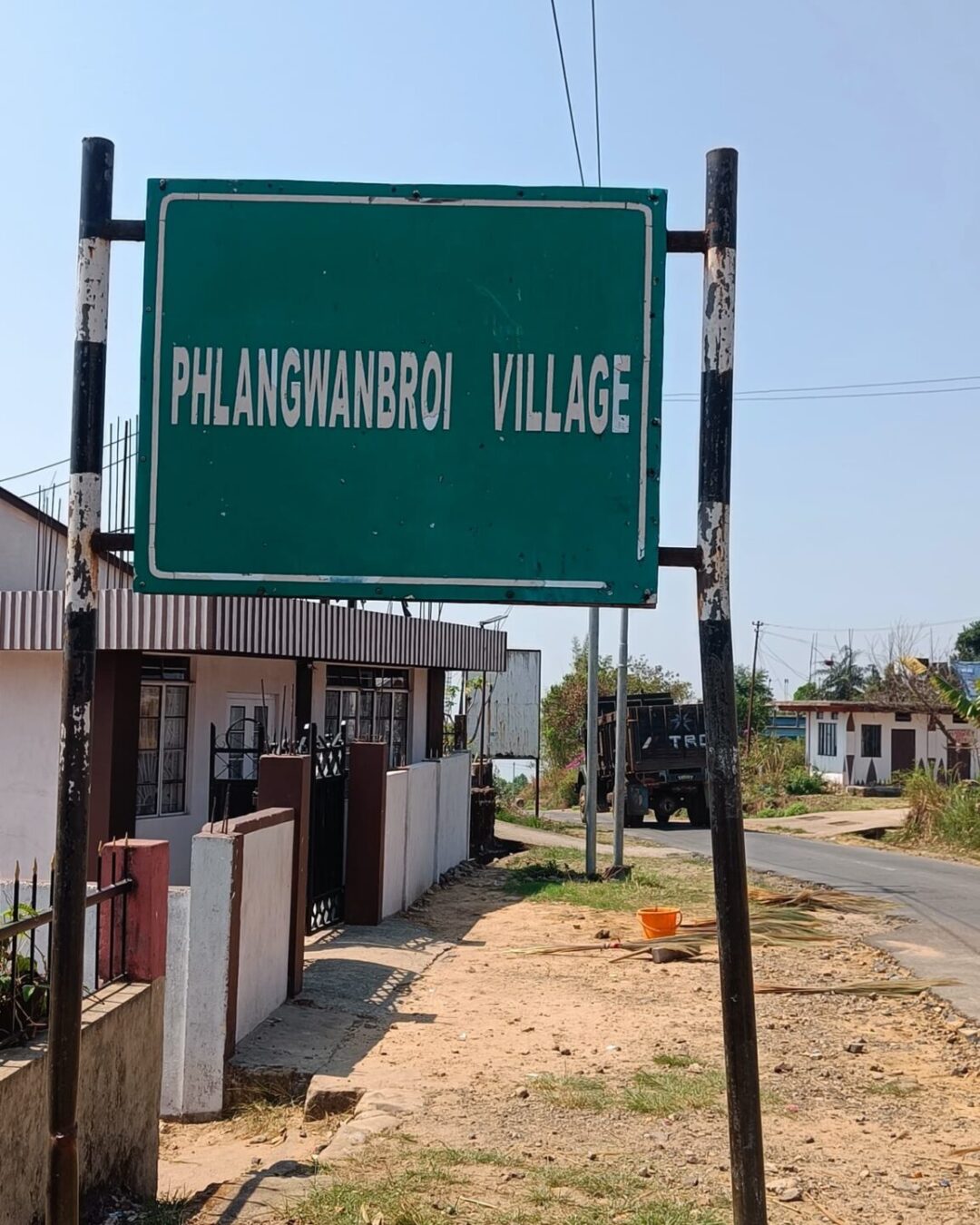
Phlangwanbroi sits in a different direction from Mawsynram town, along the highway that leads to Ranikor. Unlike the other villages we visited, it is more into conservation, specifically the protection of the endangered Hoolock Gibbon, found in the vast forests surrounding the village.
It is, in many ways, the quiet heart of what Phlangwanbroi is trying to become. Its focus, for now, leans more toward conservation than tourism, and the community is still working out how to balance the two as more visitors arrive.
The Huleng cycling trail is one of the village’s more established draws for cycling enthusiasts, and if you are trekking early enough in the day, there is a good chance you will hear the call of the Hoolock Gibbons somewhere in the trees. Local folklore is aplenty too, including stories of animals believed to share ancestry with families settled in the village.
The Beth Humes trail and viewpoints
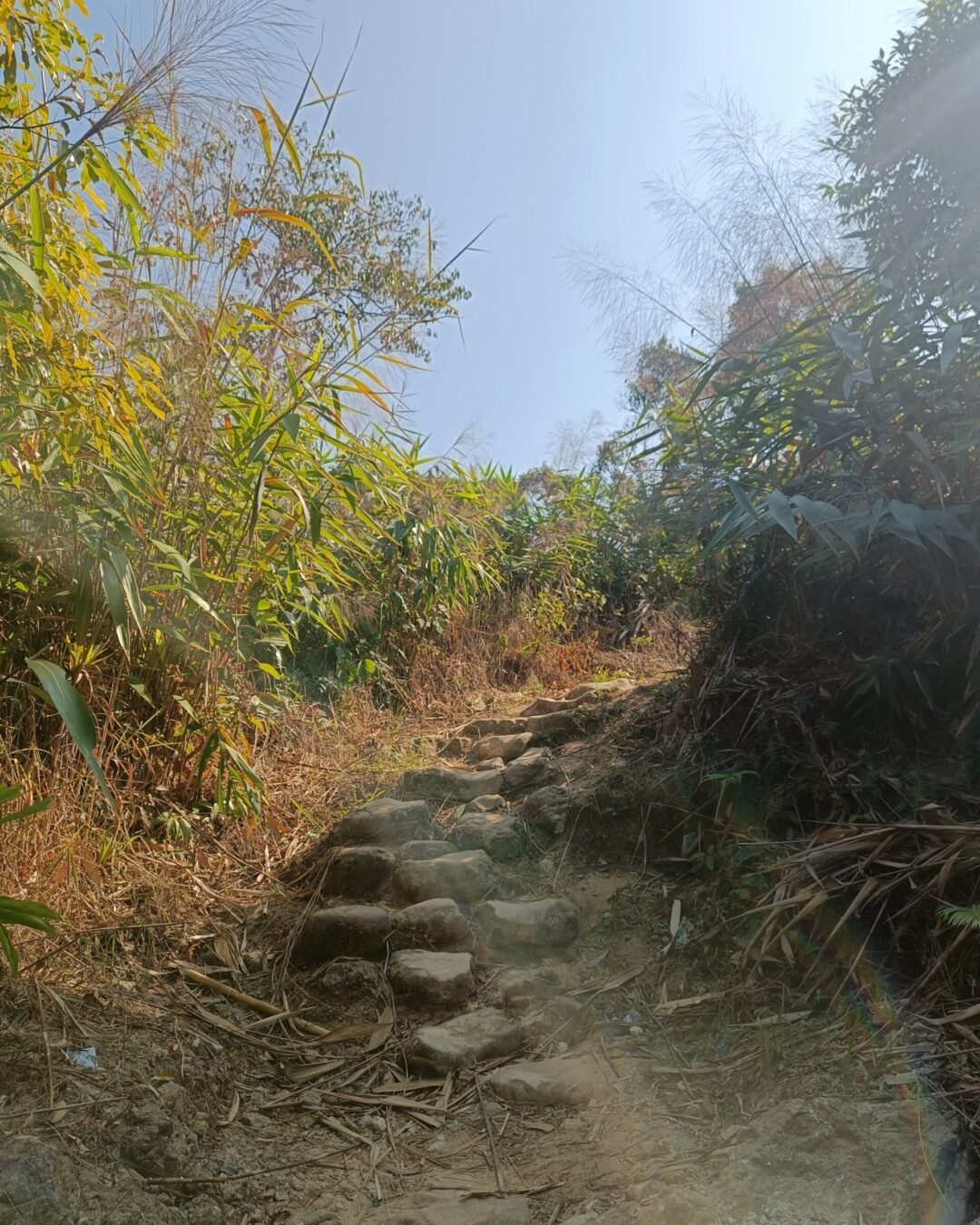
One of the trekking trails here leads down to the Umngi river and carries the name of Beth Humes, a well-known kayaker who drowned in the river during a visit to the village. The trail today stands as a quiet remembrance of her time here, and a reminder of how closely this landscape is tied to the people who have passed through it. The trails around Phlangwanbroi vary widely. Some are easy walks, others will genuinely leave you out of breath.
Comfortable trekking shoes are a must. The best views are tucked away, reachable only on foot, and the paths often take you in from one end of the village and out the other. One viewpoint in particular feels almost unreal, like something painted rather than grown. The mountains fall away in a V shape on one side, stretching as far as you can see, while the other side disappears into thick forest. There are no safety railings along these trails, so taking a local guide with you is not just recommended, it is necessary.
Life in the village
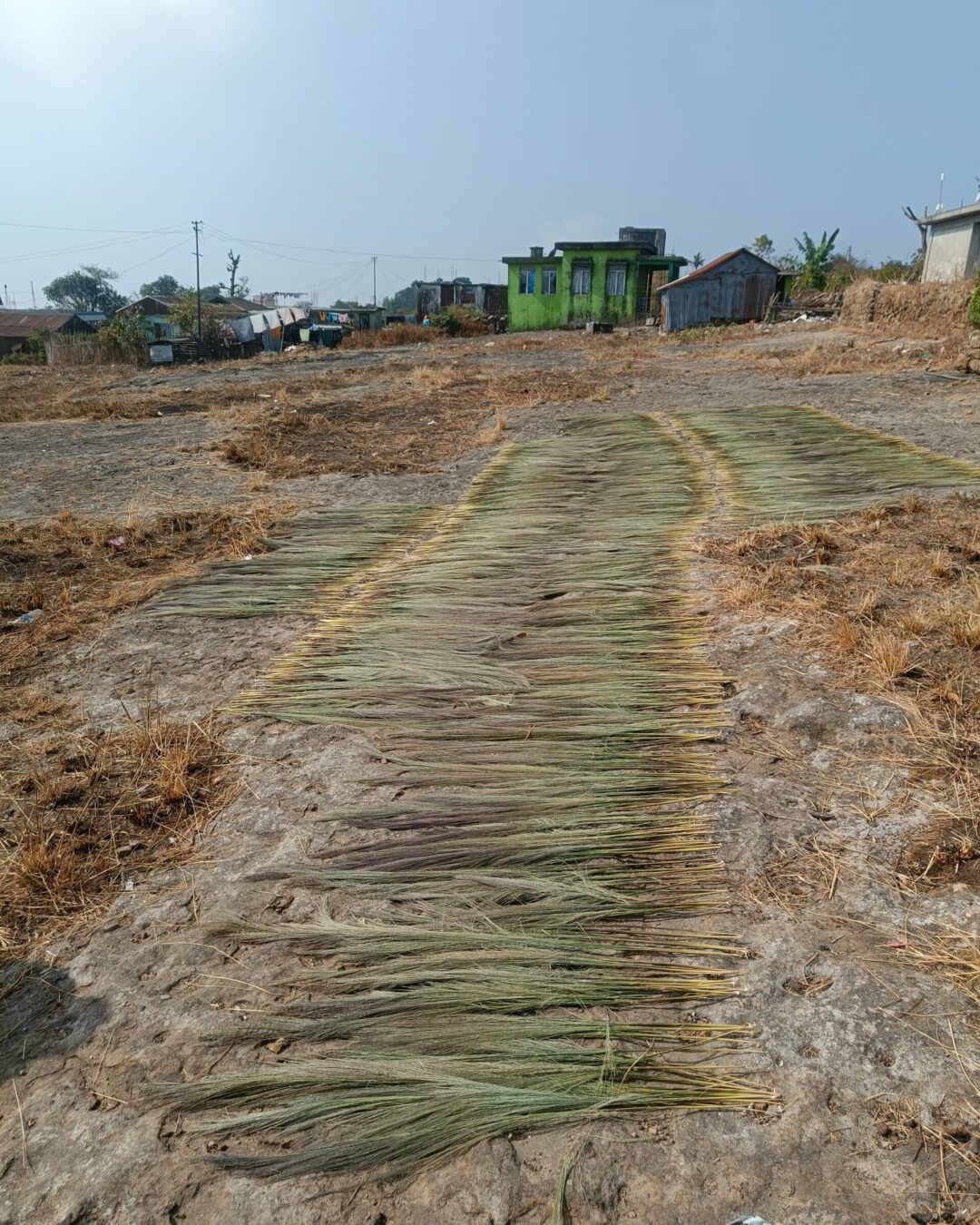
Agriculture is the backbone of life here. Walk through the village during the day and you will find most people out in the fields, cultivating broomstick, bay leaf and wild pepper, all grown in abundance across the region. Both broomstick and bay leaf are harvested around January and February, and during that season, households dry bay leaves outside their homes and sometimes even along the roadways because of how plentiful it is. If you ask, locals are happy to make you a broomstick to take home, usually at a fraction of what you would pay in the city. Food habits here follow the wider Khasi Hills pattern, rice, potatoes, dal and leafy greens. During our visit, we wandered through the weekly haat (Iew rit) and picked up Khasi lemons, locally grown, and one of the most fragrant ones we have come across.
Water, a quiet challenge
One of the biggest challenges Phlangwanbroi faces is water. Many residents walk several kilometres to fetch it, often carrying it home in a rice bag carefully lined with plastic.
There is a quiet irony in this, a region famous for receiving some of the heaviest rainfall on earth, still short on something as basic as drinking water. Better water harvesting systems could go a long way here, and any real growth in tourism will need to reckon with this first.
Phlangwanbroi has strong local institutions keeping things running, and it has joined hands with four neighbouring villages to form a shared tourism committee. It is early days for the group, and much of the region’s tourism potential is still waiting to be developed, but the groundwork is there.
Mawsynram, in all its versions, from Mawlyngbna’s community spirit to Phlangmawsyrpad’s caves to Phlangwanbroi’s Hoolock Gibbons, turned out to be far more than the wettest place on earth. What we found was a place shaped by the people who call it home, some seeking adventure, some peace, and some simply the scenery. It was never really about ticking places off a list. It was about two friends going back to something familiar and finding it was full of things we never knew.
How to reach and where to stay
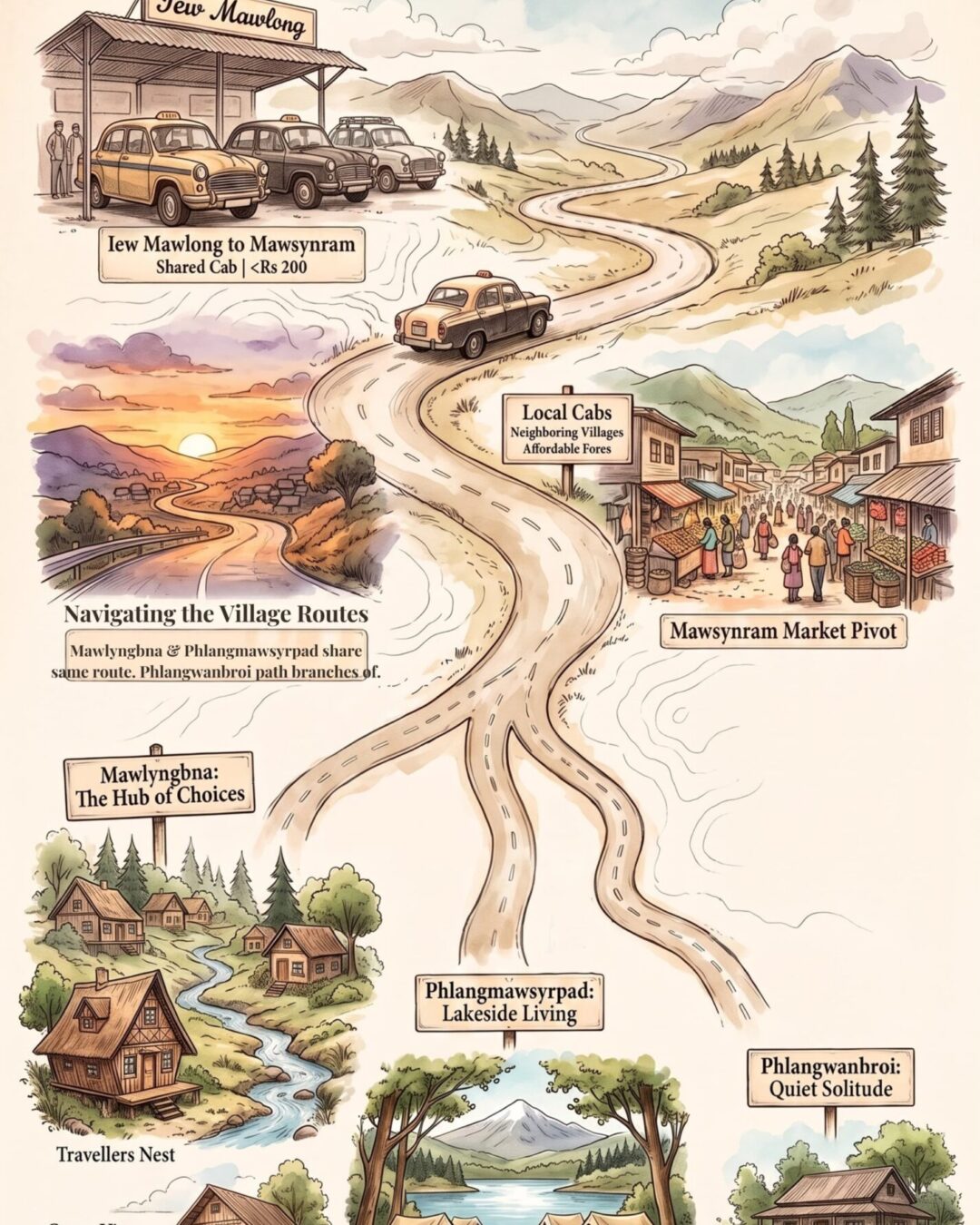
Getting to Mawsynram starts with a shared cab from Iew Mawlong, which will cost you under Rs 200 and drop you at Mawsynram’s own taxi stand. From the Mawsynram market, cabs are available to all three villages. Mawlyngbna and Phlangmawsyrpad lie along the same route, while Phlangwanbroi branches off in a different direction. Fares vary depending on distance, but none of them will burn a hole in your pocket.
Mawlyngbna has the most options when it comes to homestays. A few, like Mawlyngbna Travellers Nest, are already known on social media and offer different packages built around local guides and activities. Gorge View Cottages, run by a senior tour guide with years of experience in the region, is another solid choice. Beyond these, several more homestays dot the road leading into the village.
Phlangmawsyrpad, on the other hand, has just the one option, Weiing Lakefront Camp, which we have already told you about. Phlangwanbroi has a single homestay too, the Umngi Homestay, for those looking to stay overnight.