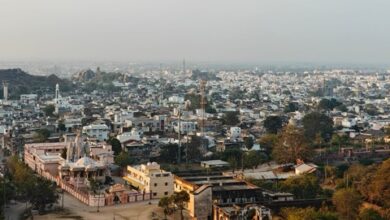


Meghalaya’s urban crisis: Garbage, traffic & dangerous roads no one is fixing

 Meghalaya is growing, and that is evident from the rising number of vehicles, expanding markets, growing tourist footfall and increasing movement across the state.
But for ordinary people, this growth is becoming harder to live with. This is because of poor urban planning. Recently, a 21-member delegation from attended a four-day training on urban strategy in London. Officials said the training will help them find solutions to various problems, such as waste management and sewage issues.
Whether or not the training will help only time can tell. But for now, let us see how for years some of the urban problems have only grown in proportion.
The most important and crucial issue is waste management. When tourists visit the city for the first time, they are greeted by the obnoxious stench and the burning waste at Marten. For years, the government has been planning various ways to manage the growing profusion of waste in the state, but nothing has happened.
A waste management plant is a distant dream. The government could not even stop its citizens from littering and dumping waste along the roadside. Awareness lacks among most of the citizens. There is barely any penalty on dumping garbage. This laxity has made the greater task even difficult.
The problem of waste management is not only in Shillong, which is the main urban pocket in the state, but also in towns like Jowai and Tura.
There should a budget allotted for awareness and rules under urban planning should include penalty. The government should have had a stricter urban rulebook for a better result in the long run.
Another contentious issue is the traffic. Every day in Shillong, people sit through endless traffic just to get to work, school or home. Roads are packed, parking is a mess, footpaths are either broken or missing, and getting across the city has become exhausting. What should be a short commute now takes far longer than it should.
The problem is not just within the city but on the outskirts too. One travelling through Upper Shillong has to face a harrowing time.
Now, in case of a hill town like Shillong, infrastructure is limited, and so, a proper urban strategy is imperative. In the case of tackling traffic, the government could have tightened rules around vehicles ownership. Instead of allowing its citizens to buy cars mindlessly, it could have set criteria for owning a car, such as parking space and number of family members. As harsh as it may sound, but desperate times need stricter ways.
For a handful of inconsiderate people, the mass suffers, and it is the duty of the government to care for the mass and not the few rich citizens.
This is because the traffic problem is turning into a quality-of-life problem. People are spending more time on the road, more money on transport, and more energy dealing with problems that basic planning should have solved years ago.
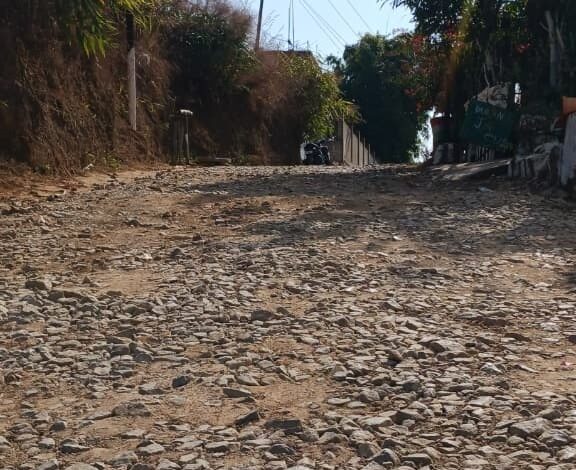
The same frustration shows up in other ways too — poor drainage during the rains, waste piling up in parts of the city, crowded localities growing without proper planning, and public infrastructure struggling to keep pace with the people who rely on it every day.
Now that we are discussing the government’s urban planning, or let’s say lack of it, we have to mention the recent incidents on the Shillong-Dawki road in the Pynursla stretch, even though it is out of the purview of urban planning.
The Shillong–Pynursla–Dawki road is one of the most important roads in Meghalaya. This road should have been one of the state’s biggest strengths. Instead, it has become one of its biggest worries.
The recent mishaps along the Pynursla stretch have once again shown how fragile this route has become. Landslides, falling rocks and repeated accidents have turned a major road into a dangerous one.
A road that should support livelihoods and connect Meghalaya to opportunity is now also a road people travel with caution, and that says a lot.
All this shows that Meghalaya is expanding faster than it is preparing. Only attending training sessions abroad will not help unless there is the will to improve the city. Just creating a facade and false notion about Shillong to attract tourists will not help and this will be exposed in no time.
If roads are unsafe, the city is harder to live in, and basic services fail to keep up, then growth stops feeling like progress. A better urban planning suited to the state and its limited infrastructure is the challenge, and once that is addressed, life will be better for both citizens and visitors.
WATCH MORE VIDEOS: