

Amjad Ali: The man who wrote the first Khasi verse
Amjad Ali should get the due recognition for his contributions to literature and social uplift

For many common citizens of Shillong, the name Amjad Ali may not be familiar. But those who study history or literature would know why Ali is an important figure.
Amjad Ali was the first Khasi poet, even before the most revered U Soso Tham. He was the one who gave the language its literary status in the late 1800s, way before Tham.
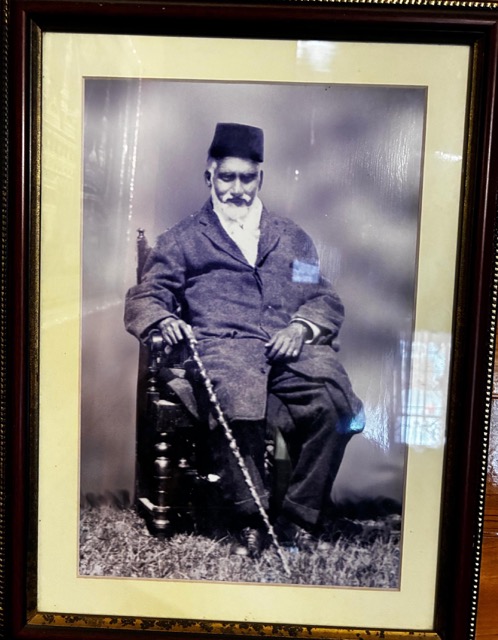
Born in 1868 in Shillong, Amjad Ali belonged to the royal family of Murshidabad and his family migrated to Shillong in the mid 19th century. A Bengali-speaking Muslim, Ali studied in Shillong and completed his matriculation from Mawkhar High School in 1887. He learned the Khasi language and adapted to the culture. He wrote the first poem in 1888. The original edition of his collection of poems, Ka Myntoi, is still in the possession of his family.
When Sunday Monitor met his great grandson Ashfaque Haque in his Laban house, which is a 150-year-old heritage Assam-type building, he took out the book and other documents which told stories of the yore.
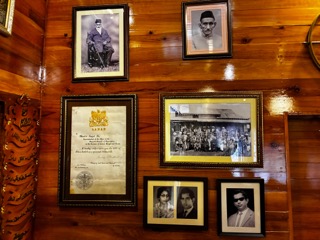
Every part of the house, said Haque, features a memento that speaks about his family’s lineage and ancestry.
Talking about the poet in the family, Haque said Amjad Ali was more than a writer, he was a social reformer and a social worker who worked tirelessly not only for the community but also for the greater good of Laban and its residents.
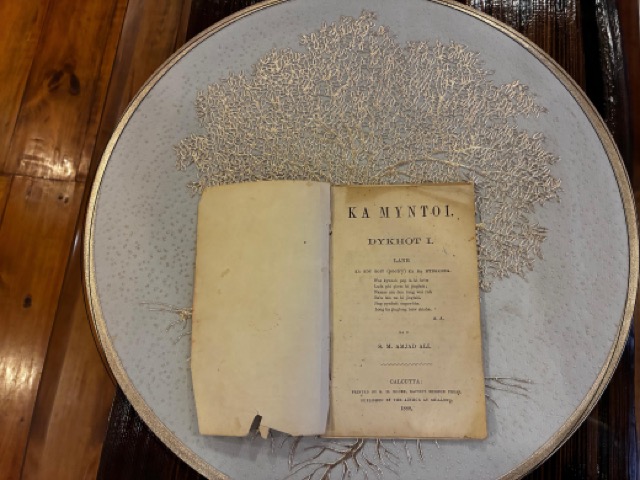 Ka Myntoi is a collection of 19 poems. He also edited the first Anglo-Khasi dictionary.
“In 1905, he became the ward commission of Laban and remained in that post till 1924-25. During that time, he did a lot of philanthropic work. Besides, he was also an advisor to the Syiem of Hima Mylliem, Khyrim and Shooing,” said Haque a he showed the old photographs that adorned the wooden walls of the house.
Ali was a visionary and the developmental works that he commissioned during his tenure as the ward commission helped the laban locality prosper. He built bridges, roads, water works, burial and cemetery grounds. He was also instrumental in setting up the Laban dispensary, the first of its kind in 1905. He also helped in electrifying the locality and setting up the evening market.
A road in Laban was named after him during his lifetime to commemorate the works that he did for the society.

“He received the Khan Sahib title in 1911 from the Governor General of India. By 1924, he received the Khan Bahadur title. However, he could not personally accept the memento as he passed away suddenly in 1926 (January 14). After his demise, my grandfather continued some of the social work, but he was in the A-G office and did not get much time,” Haque said.
Haque is the fifth generation of the family residing in Shillong. As he narrated the stories of the family, he informed that the Shillong muslim union was formed in their house. Amjad Ali was the founding secretary of the union. Also, the Husain family, which was instrumental in developing the Police Bazar area, was also closely associated with the Muslim organisation.
Amjad Ali had a prolific social life, and that became even more vibrant after his retirement from the post of Assistant Inspector General of Registration in 1920. Documents show he was the president of Shillong Taxpayers’ Association, member of the board of trustees of Quinton Memorial Hall, executive member of Shillong India Club and president of Jalalia Maktab, Police Bazar. He was also nominated as a member of the Legislative Council for Sylhet constituency in 1923.
Not many know that the poet and social reformer was also a qualified fingerprint expert.
Amjad Ali’s contributions to the hill town, which is now caught between fast urbanisation and heritage, is immense, and yet the recognition that he has received is dishonouring. Even the road that was named in honour of his great social work does not have a signboard. This reluctance of the government and the blatant rejection of a great personality such as Amjad Ali only show how little sense of history the current generation has.
“Not everyone knows about him, but scholars and researchers who are working in the field of literature and history often visit our house to know more about Amjad Ali. So, I cannot say that people have forgotten him. There have been articles and his book of poems has been translated to Hindi, too,” informed Haque.
When asked whether the family is planning to set up a museum or a digital bank of his works, Haque said plans are afoot, but doing such a work would require logistics. “Let’s see. However, I am doing my bit to preserve whatever documents are there and whatever antiques this house has,” he added.
~ Team Sunday Monitor