



 Air conditioners have seen a significant surge in recent years, particularly in countries with hot climates like India. In our increasingly climate-controlled world, air conditioning has evolved from a luxury into a near necessity. In the scorching heat and the heatwave which breaks the spirit of even most fans of the summer season, air conditioning seems like a blessing.
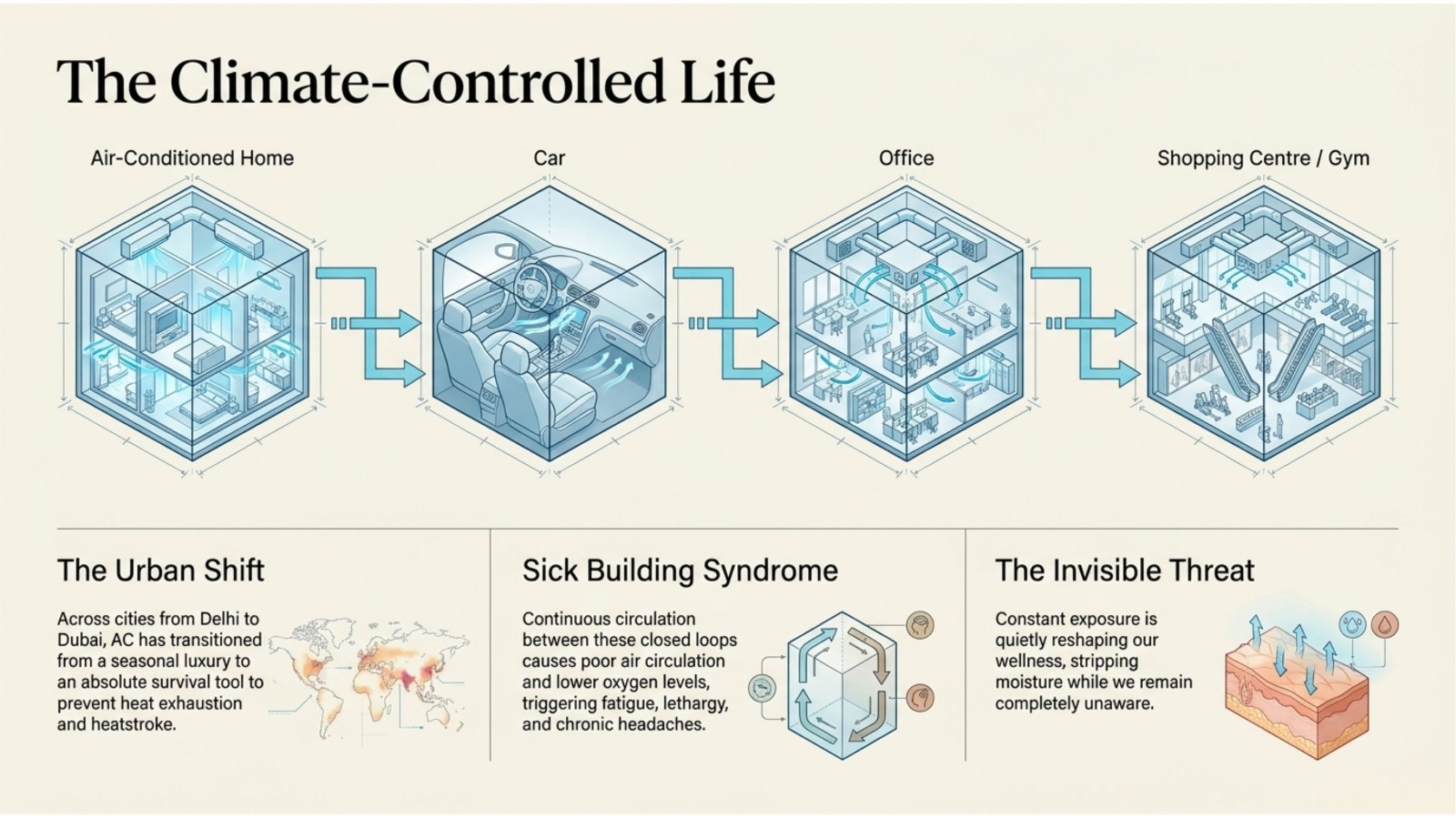
High temperatures combined with humidity can be dangerous, leading to dehydration, heat exhaustion and heatstroke. As a result, people spend most of their lives indoors under controlled cooling, moving from air-conditioned homes to cars, offices, malls, shopping centres and gyms.
Across cities, from Delhi to Dubai, air conditioners have become less of a luxury and more of a survival tool. While AC systems provide comfort and safety, constant exposure to artificial cooling can lead to dry skin, fine lines, dull complexion, brittle hair and fatigue. The very machines protecting us from heat may be quietly reshaping our wellness in ways we rarely question.
Prolonged reliance on artificial cooling can cause fatigue, lethargy, or chronic headaches, sometimes called “sick building syndrome,” due to poor air circulation and lower oxygen levels.
Unlike sunburn or direct heat exposure, AC-related dehydration develops gradually. Many people spend extended hours in offices, cars, shopping malls and air-conditioned bedrooms, often without noticing the slow loss of moisture. Symptoms usually become noticeable only after persistent dryness, itching, or changes in skin and hair texture develop over time.
Immunity Reduction Due to Artificial Cooling
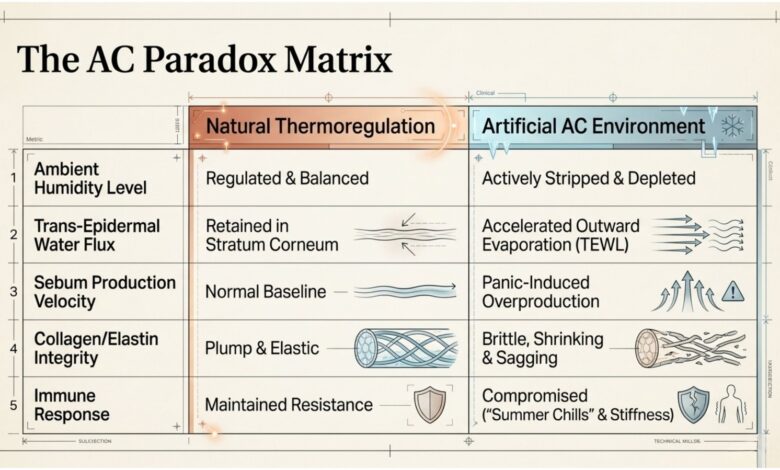
 Constant reliance on ACs can weaken your body’s natural ability to adjust to temperature changes. Drastic temperature swings between air-conditioned indoors and hot outdoors can cause “summer chills” and muscle stiffness, weakening the body’s immunity and overall health. AC systems reduce humidity and create cold environments that draw moisture from the body, causing significant dryness, irritation and brittleness. This environment damages the skin barrier, leading to flaking, itching (winter itch), and cracked skin, while also causing dry, dull hair and brittle, weak nails.
Air conditioners don’t just cool, they strip moisture from the air and that has biological consequences. When the skin loses water, it becomes rough, tight and flaky.
When indoor air becomes too dry, often caused by constant air conditioning, it accelerates trans-epidermal water loss, where moisture is pulled directly from your skin and hair, resulting in a dull, tired and tight appearance, especially after cleansing. Dry air causes skin to contract, making fine lines and wrinkles more pronounced.
AC Acne
Air conditioning causes acne by stripping moisture from the air, dehydrating the skin and causing sebaceous glands to overproduce sebum, leading to clogged pores, inflammation, and acne breakouts, particularly in dry/oily combination skin.
This imbalance can create a cycle where the skin becomes dry and oily at the same time, making it difficult to manage skin care effectively.
Overproduction of oil can also contribute to the development of other skin problems, such as blackheads, whiteheads, and inflammation, commonly known as ‘AC acne’.
Accelerated Ageing
 Prolonged exposure close to 12 hours in an air-conditioned environment can cause premature skin ageing. Cold, dry air reduces skin elasticity and can cause the skin to to shrink, sag and develop fine lines. Over time, prolonged exposure to dry air can lead to premature wrinkles and sagging skin.
When air conditioning removes moisture from the environment, your skin loses its plumpness and elasticity, leading to premature signs of ageing. Wrinkles and fine lines may appear more noticeable.
Chapped Lips
Air conditioners cause chapped lips by reducing indoor humidity, which strips moisture from the air and dehydrates the delicate, gland-free skin on your lips. The skin on the lips is thinner and more delicate than facial skin. It lacks important protective features that other skin areas have.
Unlike other parts of the skin, our lips lack oil glands and can’t produce moisture. This makes them especially vulnerable to external conditions. Prolonged exposure to dry AC environments often leads to dryness, cracking and peeling. Lips cannot produce natural oils to lock in moisture, while moisture escapes faster from lips than from facial skin in a controlled atmosphere.
By understanding how AC affects your skin, hair and body, and by making small but consistent changes, you can protect your youth and maintain healthy, glowing skin despite the hot climate.
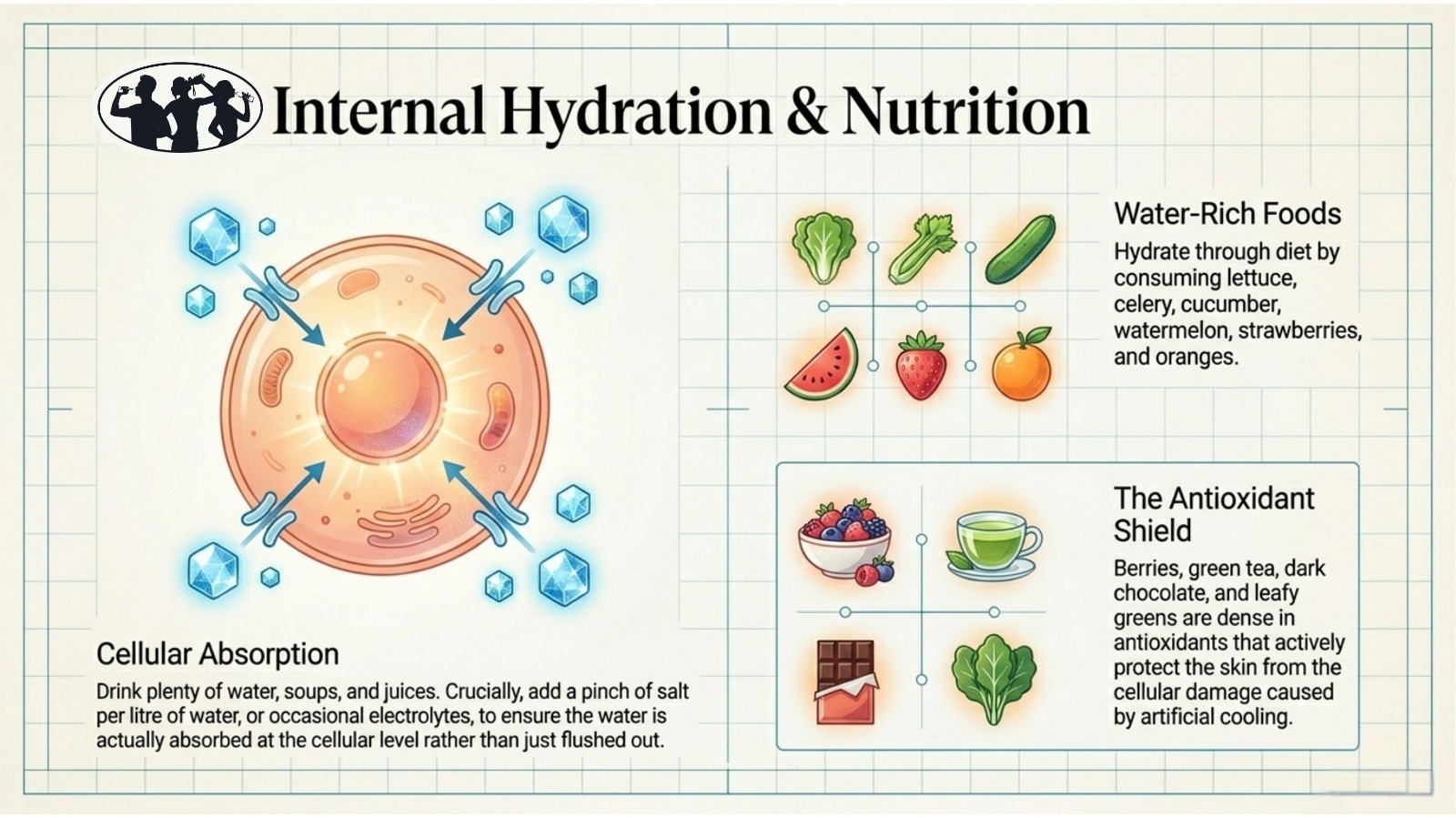
There are several ways to deal with the situation so that your skin doesn’t show signs of damage. First, drink plenty of water, soup, juices, etc. to maintain skin hydration. Add a pinch of salt per litre of water for better cellular absorption. Add electrolytes occasionally to improve absorption. Eat water-rich foods like lettuce and celery, cucumber, watermelon, strawberries and oranges. Foods like berries, green tea, dark chocolate and leafy greens are high in antioxidants. They can protect your skin from damage caused by AC.
Keep indoor temperatures between 23 and 25 degrees to balance comfort and skin health. This range provides comfort without being excessively cold, and thus, it helps to maintain natural thermoregulation while reducing the risk of dryness.
Use a humidifier as it adds back the lost moisture into the air-conditioned room by releasing vapours or steam, thus helping to maintain an optimal humidity level in your living space and countering the drying effect of air conditioning. Using a humidifier at night can significantly improve skin texture over time. Apply moisturiser, lip balm or hand cream after every few hours.
Keep A/C Clean
Clean air filters ensure better indoor air quality, trapping dust, pollen and other particulates. Wash your air filters every third month. Older A/C units can release CFCs (chlorofluorocarbons). This is a refrigerant that can harm the ozone layer, heating the Earth.
Additionally, you should also take regular breaks from air-conditioned environments. It will allow your body to adjust to natural temperatures, thus promoting better thermoregulation and reducing dependency on artificial cooling.
The key lies in hydration, barrier protection, humidity balance and mindful indoor living. When these are addressed, comfort and youth can coexist —even under constant air conditioning.
Dehydration check a must during summer to take action in time