


Samiran Bhuyan
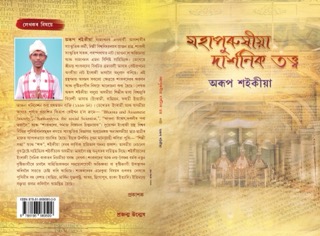
Mahapurushiya Darshanik Tattwa is a book of socio-spiritual philosophy of Sankardeva. Written by renowned Bhaona artiste and writer Arup Saikia, the book’s essence can be defined as the social cult of Assam.
There are a few extraordinary personalities in the history of human civilisation who transcend their age and continue to illuminate the minds of people for generations. One such radiant luminary is Srimanta Sankardeva in Assam. His advent ushered in a new era not only in the sphere of religion but also in society, culture and human values. Therefore, this is the popular cult of Assam.
At first glance, the foundation of Sankardeva’s philosophy appears to be exclusive surrender and devotion to Lord Krishna. Saikia says, “Sankardeva created a cultural framework through which spiritual and social life could be brought together. These are through the Eka Sarana Nama Dharma, Kirtana, Borgeet, Ankiya Naat, Bhaona, Namghar and the Satra institution.”
This philosophy rejected caste distinctions, religious formalism and social discrimination, while offering a simple and egalitarian path open to all.
Mahapurushiya Darshanik Tattwa, or the Social Cult of Assam, presents a fresh and analytical interpretation of Krishna devotion and monotheism.
It argues that Krishna devotion should not be understood merely as a set of doctrines to be followed in their literal sense. Saikia interprets it symbolically in its broader social and philosophical context. This interpretation is inherently subjective. From this perspective, even a sincere devotee of Lord Shiva may embody the true spirit of Sankardeva’s philosophy.
This book examines the philosophical thought of Srimanta Sankardeva in depth. The fundamental principles of the Bhakti movement and its impact on the Assamese society are also thoroughly discussed. It also explores the philosophy reflected in his major literary works, such as the Kirtan Ghoxa, the Assamese rendering of the Bhagavata Purana, and the Ankiya Naat (Bhaona play).
Saikia tries to re-evaluate Sankardeva’s philosophy from a modern perspective, and this makes the book a humble endeavour to explore the depth of Sankardeva’s philosophical vision. It analyses the essence of the Bhakti movement, its social impact and its significance in the modern world. It is hoped that this study will not only acquaint readers with the past but also inspire them to apply the timeless ideals of this great thinker to contemporary life.
The social philosophy of Srimanta Sankardeva represents one of the most remarkable chapters in the intellectual and cultural history of medieval India. His great achievement was the integration of religion, society, literature, theatre, music and community life into a coherent cultural movement.
Saikia, through his writings, urges people for a vision of equality, human dignity and social transformation.
Book: Mahapurushiya Darshanik Tattwa; Author: Arup Saikia; Publisher: Prajanmya Unmesh; Pages: 132; Price: Rs 400
(The author is a contributor)