

Climate variability in Assam’s floodprone region impacts agriculture
Supporting institutions are understaffed and under-resourced, causing a gap between climate science and farming practices

/Mongabay India
Madhusudan Goala has always worked in agriculture for most of his life. During heavy rains starting in late May last year, his farm flooded, just before he was preparing for the transplantation of paddy. Within days, water had risen above the ankle across his field in the Cachar district of Assam.
“In the past, rain would settle in,” he says. “But over the last decade, our farmlands have suffered tremendously; they have been rendered essentially useless. Rains wash away our fields and with them, our efforts to ready the soil for cultivation. Nothing but grass grows on that land after that.”
Across southern Assam’s Barak Valley, which is made up of Cachar, Hailakandi, and Sribhumi districts, farmers say rainfall has become more erratic over the past decade, disrupting paddy and other crops at critical stages.
Geographic impediment
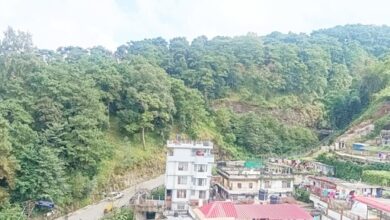
Assam’s geography plays a crucial role in its agricultural challenges. Studies show that almost 29% of Assam’s land is flood-prone, exposing fields and farmlands to hydrological risks such as inundation and surface runoff. Assam lies within a foreland basin shaped by the collision of the Indian and Eurasian plates, and it is characterised by the Brahmaputra and Barak Valleys, surrounded by hills and plateaus. This state is among the country’s most rain-intensive zones. Although its rainfall was always intense, it once followed a predictable cycle. Recently, however, rains have arrived in heavy bursts over short periods, washing away farmland and displacing many.
Several other farmers, such as Bahadur Rabidas and Mohan Dhobi, echo Goala’s concerns. “When there is no rain, our farmlands run dry,” The valley remains particularly vulnerable due to its riverine topography and heavy dependence on monsoon-fed cultivation. Around 14% to 23% of cultivable land in the state is under assured irrigation, leaving much of the state’s agriculture dependent on monsoons.
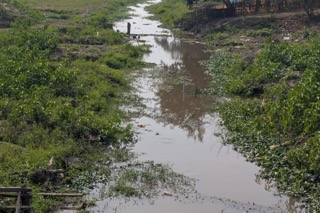
Dhobi mentions, “Two drains were constructed nearly a decade ago around Derby to ease flooding. But due to low or no maintenance during the monsoon, the area is still waterlogged.” Water collects rapidly and spills over into the low-lying fields where Goala, Rabidas, and several others farm, often leaving the land unusable for cultivation.
What the science shows
In response to these climatic changes, agricultural scientists are also monitoring shifts in rainfall patterns. Ejaful Ahmed, an agrometeorology scientist at Assam Agricultural University, notes that rainfall has displayed periodic fluctuation over the past decade.
“Since 2010, the total rainfall amount has been increasing and decreasing at intervals of every four to five years. In 2022, when Barak Valley experienced severe floods, the total rainfall was approximately 4,900 mm. This dropped to around 3,500 mm in 2023, indicating a declining trend that continued till 2025,” Ahmed said.
Data from June rainfall further highlights this instability. In June 2022, the region received around 1,400 mm of rainfall, nearly double the normal average of 710 mm. In 2023, rainfall reduced to 912 mm, and in 2024, it declined further to 732 mm.
A crop built on timing
Erratic rainfall often affects land preparation. When heavy showers arrive before transplantation, nursery beds are washed away, and seedlings are damaged by prolonged waterlogging. “The calendar doesn’t make any sense anymore,” says Rabidas. “We still try to follow the old timing, but the rain doesn’t follow it.”
The crop cycle is unforgiving, and a single season contains multiple small uncertainties. Ahmed explains that rice plants are extremely vulnerable during flowering when heavy rainfall or storms can damage pollen and reduce grain formation. Assam and especially the Barak Valley, where humidity is high all year round, face short spells of heavy rainfall during August-September, which contributes to insect infestation, fungal outbreaks, and pest infestation.”
Like rainfall, shifting temperature patterns are also influencing crop growth and yields, particularly for rice and vegetables. Earlier, July and August traditionally recorded the highest temperatures, but farmers and scientists now report that higher temperatures are extending into September as well. Ahmed explains, “Everything that grows in nature has optimum growing degree days, and these changes are affecting the growing periods drastically, which is catastrophic for traditional farming practices.”
“Earlier, I used to feed my family of six people and was able to send truckloads of seeds and grain more to nearby villages and markets,” Goala explains as his son points to the sacks of seeds and says they now have to buy from the marketplace. “We are really worried about how to sustain ourselves if things continue this way.”
Mitigation efforts and adaptation
To address these concerns, Krishi Vigyan Kendras (KVKs) across the Barak Valley have begun promoting flood-tolerant and short-duration rice varieties, such as Bahadur Sub 1, Disang, and others. Pulakabha Chowdhury, Senior Scientist at KVK, Sribhumi, explains that the climate in the valley, characterised by hailstorms and floods during monsoon (June-August), is not conducive to traditional varieties such as Ahu and Sali. “To tackle this problem, a short-duration and climate-resilient variety, Disang, was introduced.”
However, adoption has been gradual. Farmers say new seed varieties are often more expensive and carry uncertainty if they fail to yield.
Although the yield of Disang was 35% higher than that of the local rice variety, the cultivation cost was also 42.8% higher. Farmers like Goala, who are already drowning in debt, find it very difficult to procure such seeds and have begun looking for alternative sources of income. “I have bought cows and started selling milk. The money I get from selling milk is not enough to even feed my cows or to repay the loan I had taken to build the shed.”
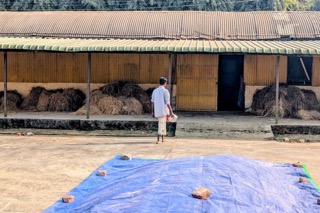
Despite the outreach programmes conducted by KVK centres, Several farmers who live far away from the urban centres and demonstration plots say that they have difficulty accessing such seeds. Chowdhury agrees that the institutional capacity is hollowed out. He adds, “We have staff shortages, and extension services are running behind. There is limited production and seed shortages, and even transportation is scarce for us to reach villages.”
In areas like Ranigram and Brahmanshashan, located on the periphery of Sribhumi district, farmers like Abdul Rozak have shifted entirely to the cultivation of winter crops, mostly vegetables. “There’s no place to cultivate rice anymore, even though I own land, it is flooded during the summer anyway.” When asked about whether he had heard about such varieties or whether such programmes were conducted around his block, Rozak answered, “Yes, I had heard about scientists and people from the Agricultural office coming to teach farmers some time ago. I couldn’t speak to anyone directly.” Adding “if seeds are available, we have to buy them from the market, and it’s very expensive.”
Community-level agricultural facilitators known as Krishi Sakhis are also overburdened by the scope and nature of their work. “In addition to facilitating communication between farmers and state authorities, we also train farmers on how to incorporate organic farming practices,” says Usha Goala, Krishi Sakhi in Barjalenga block in Cachar district. According to her, “Women who used to manage households are now participating at every stage of the farming process.” But frequent crop losses compounded with limited income and labour shortages are restricting the adoption of recommended practices. “Farmers are wary of changing their methods; they need assurance that these changes will not increase financial risk.” She underlines the shortage of human resources and adds, “Right now, I am the only Krishi Sakhi in this block, and it would be great to have more members for the outreach programmes.”
Data without transparency
Data maintained by the National Crop Insurance Portal maps the exacerbating climate crisis and farmers’ responses to ensure their livelihoods. Numbers reveal that over the last four years, crop insurance coverage under Pradhan Mantri Fasal Bima Yojana (PMFBY) has expanded across the region.
Between 2022 and 2025, the overall number of insured farmers in Assam almost doubled, from around half a million (436,618) to one million (10,20,001). The total cropped area insured more than doubled, from 317,000 to 801,000 hectares.
Kharif crop insurance enrollment in the state coincides with the monsoon, which supports rice cultivation. This rise is mirrored in district-level data from the Barak Valley. Between 2022 and 2025, the number of insured farmers in Cachar, Hailakandi, and Sribhumi districts climbed from over 19,300 to over 58,600, while insured land area increased from 13,000 to 43,000 hectares.
Participation during the rabi season remains relatively low. In 2022, only 7,762 farmers were enrolled, but this number increased to 13,810 farmers spanning 5000 to 7000 hectares.
Chowdhury attributes the lower participation during the rabi season to winter climate stability, but his tone suggests underlying uncertainty. Ahmed echoes these concerns, noting, “It’s winter, but winters weren’t like this before. I can count the cold days in 2025 on my fingers.” The number of cold days is decreasing with each passing year. Raw data only tells part of the story. Despite significant growth in insurance coverage, just 16% of the region’s cultivated land is formally insured.
Ram Sinhsan Goala, president of Derby Gram Panchayat, explains that awareness remains critically low or gets lost amid complex legal language. Farmers like Goala and Rozak admit confusion: “We pay some renewal fees but don’t receive any benefits.” In response to Right to Information requests, the Ministry of Agriculture and Farmers’ Welfare directed queries and reasons for rejection to the scheme’s operational guidelines rather than providing settlement performance data. Sinhasan alleges, “Insurance companies manipulate terms to avoid paying compensation.” He laments, “The guidelines are too lengthy, farmers are given hours when days are needed, and insurance jargon obscures understanding”. Words like ‘Yield estimates,’ ‘loss triggers,’ and ‘formal notifications’ exclude the very people it aims to protect. Climate-induced agricultural losses rarely fit neat boundaries. Sometimes floodwaters recede quickly enough to spare crops but leave the soil weakened.
What lies in the future
Numbers show a programme expanding in scale, but for farmers, risk still outweighs protection. Experts warn that unreliable weather calendars will remain a long-term challenge, as climate change introduces ongoing uncertainties into farming practices. The next generation is already leaving agriculture behind to seek other livelihoods. Madhusudan Goala’s four children are scattered: his eldest, Sarat Kumar, works part-time in a nearby tea estate and occasionally sells milk in nearby towns; one son has moved to Bengaluru; and the others struggle to find part-time work locally. Rozak admits, “Maybe I am the last in my family to farm; none of my children is interested, and I don’t blame them.”
The article was first published in Mongabay