


As elephants venture to higher altitudes, researchers track conflicts
Elephants have been recorded 3,266 metres in Arunachal Pradesh, one of the highest altitudes recorded for this species

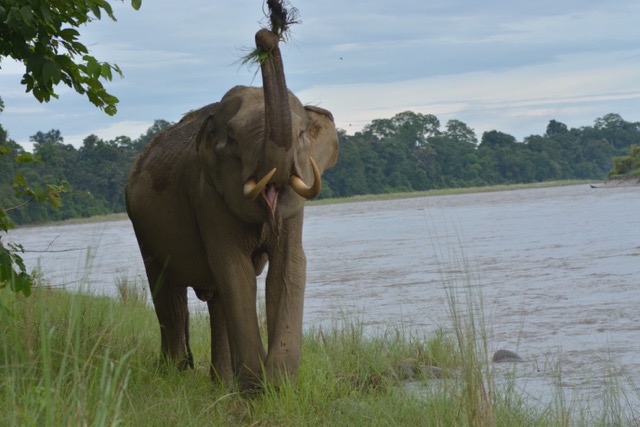
Elephants in Arunachal Pradesh may be present at higher elevations than previously thought. According to the new action plan on managing human-elephant conflict in the state, elephant tracks as well as a camera trap image of a juvenile elephant were observed at an altitude of 3,266 metres in the state’s Eaglenest Wildlife Sanctuary, possibly the highest recorded presence of Asian elephants in the world. The highest known record of an elephant (African elephant) is at around 4,000 metres, on Mount Kenya.
Elephants in Arunachal Pradesh were previously known to be present primarily in the lower reaches and Himalayan foothills occasionally moving up to an altitude of 2,000 meters. However, this assessment found their presence at altitudes going up to 3,266 metres.
The new action plan, released in May 2026, was jointly developed by the Arunachal Pradesh Department of Environment, Forest and Climate Change and WWF-India, to address human-elephant conflict in the state, threats to habitats and analyse whether elephant corridors are well-protected. Data was collected between December 2024 and March 2026. Officials examined elephant habitats where conflict was reported, and where crop or property damage had occurred.
Why the altitude record matters
According to Aritra Kshettry, who works with WWF-India’s Elephant Conservation Programme (ECP), elephants are not typically found at such high altitudes.
The records of elephants at these altitudes gives clues about their movement outside of protected areas which helps predict potential interactions between elephants and humans.
According to the action plan, elephant presence and crop damage have been reported in areas north of the Eaglenest Sanctuary, such as in the Tenga Valley of the Shergaon Forest Range, where herds of 5-6 elephants and single elephants have been reported entering fields.
Aniruddha Dhamorekar, who is associated with ECP, says, “Elephant movements in the high-altitude areas of Eaglenest were already known to the local Bugun and Sherdukpen communities, as well as the staff at Eaglenest Wildlife Sanctuary. Ornithologist Anwaruddin Choudhury documented this in the early 2000s. However, there were no records from this altitude (3,266 metres) before.”
Talking about the assessment, Dhamorekar said, “We wanted to know where the elephants travel and in which seasons. This area (high altitudes in Arunachal Pradesh) gets very cold in the winter. Elephants are usually not found in such temperatures. So, it was important to understand whether this was just a seasonal movement during the summer,” he said. He added that the camera traps revealed that the elephants appeared to be primarily consuming bamboo. “They may also be migrating to salt lick sites on the mountain,” he added, referring to the parts of the mountain where animals find essential minerals.
Better surveys or expanding elephant range?
The current distribution range of elephants in Arunachal Pradesh is estimated at 12,446 square kilometres, a 78% increase from the approximately 7,001 sq km range noted in the 2017 assessment.
“This is certainly the result of improved surveys. In 2025, extensive surveys of elephant signs, such as dung and footprints, were conducted in all elephant-bearing forest divisions. The previous assessment in 2017 had a more limited sampling design,” said Kshettry.
However, improved surveys are not the only influencing factor. “There are also signs of small expansions in elephant ranges in some areas of Arunachal Pradesh where elephants had not been recorded for many years,” he added.
As per the action plan, elephants are present in 17 districts of the state. Most elephants are still found in low-lying areas, river valleys and forested areas.
Living with conflict
According to the action plan, 1,503 incidents of human-elephant conflict were recorded in Arunachal Pradesh between 2007 and 2024. The highest number of these incidents involved crop damage, followed by damage to homes and property and human deaths and injuries. The action plan states that approximately 85% of these incidents occurred in the past 10 years.
Pakke-Kessang, Papum Pare, East Siang, Lohit, Changlang and Tirap have been identified as major conflict hotspots. These districts have recorded high rates of crop damage, property loss and human casualties. Dhamorekar said that many communities struggle to cope with such losses. However, he added that elephant-related human deaths in Arunachal Pradesh are lower than in other elephant-inhabited states in India.
The action plan elaborates how most conflict incidents were reported during the monsoon and winter, when elephants move closer to farmlands in search of food.
In some areas, such as Pakke Kessang, Papum Pare and East Siang, human-elephant conflict has remained a long-standing issue, while in districts like Lohit, Changlang, and Tirap, it appears to be increasing only in recent years. Based on interviews with locals in Lohit, the action plan states that damage caused by elephants is a recent issue and is gradually increasing. In Changlang, conflict-related incidents have also increased since 2021. In Tirap, conflict has been most pronounced around the town of Deomali, where crop damage, property damage and human casualties have been reported.
Land use concerns
The conversion of low-level forests into settlements is aggravating conflict. Some patches of forest lands are used for agriculture or developing infrastructure such as roads, hydropower projects and sand mining, increasing pressure on elephant corridors.
“It is essential to incorporate ecological safeguards into all infrastructure and land-use plans in the state. This is crucial not just for elephants, but for the ecological security of the entire region,” said Kshettry.
According to the action plan, a total compensation of around ₹70 lakh was provided for elephant-related losses between 2019 and 2024. Meanwhile, elephants also were impacted — between 2018 and 2024, 17 elephant deaths were recorded in the state, five of which were caused by electrocution.
Mitigation measures
The action plan suggests measures such as local crop protection teams, village-level response teams, early warning systems, solar fencing, better compensation mechanisms, rapid response teams and protection of elephant corridors.
The action plan also warns that improperly placed fences, ditches or other barriers can block elephant paths and escalate conflict to other areas. Therefore, planning must consider elephant movement while also protecting farmlands and settlements.
“Maintaining connectivity between habitats is crucial to reducing human-elephant conflict as fragmented landscapes can force elephants into human settlements, increasing the likelihood of conflict,” said Kshettry.
(The article was first published in Mongabay)