

Communities in North East rally to conserve marbled cat
The marbled cat remains one of Asia’s least-understood wild cats, with most scientific knowledge of the species still derived from camera-trap records

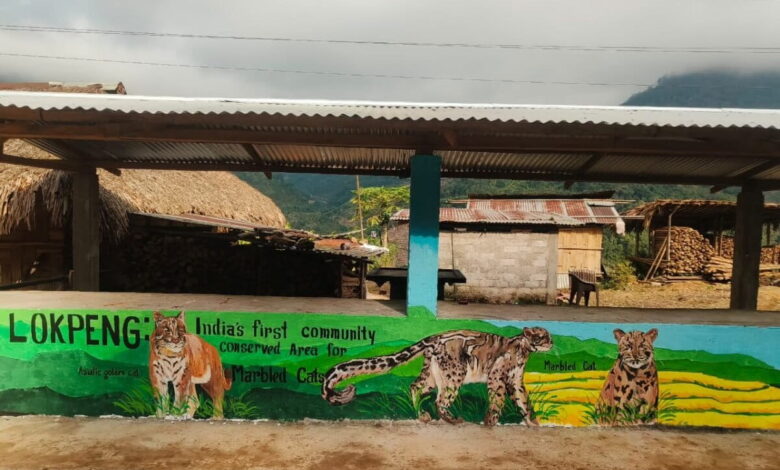
Conservationists and several communities in Arunachal Pradesh and Nagaland gathered on March 1 to mark the first-ever International Marbled Cat Day, drawing attention to one of Asia’s most elusive and least understood wild felids.
Conceptualised by the Eastern Himalayas Marbled Cat Project (EHMCP), in collaboration with state forest departments, the Day focused on engaging local communities and creating spaces for shared learning.
“This timing was chosen deliberately,” says Giridhar Malla, conservationist and founder of the EHMCP. “It marks a seasonal transition. When forests begin to shift with the onset of spring, there is renewed growth, and communities also start preparing for sowing. We saw this as a meaningful moment for people to reflect on ecological change and connect that sense of renewal with the importance of remembering and conserving the marbled cat across Northeast India.”
Community-led conservation
Following a camera-trap survey conducted between 2022 and 2025 by the EHMCP, which confirmed the scattered presence of the marbled cat (Pardofelis marmorata) in parts of Arunachal Pradesh, Nagaland and Meghalaya, residents of the villages where the species was captured on camera decided to take up conservation measures. These villages include Lokpeng in Siang district and Nyorok in West Siang district in Arunachal Pradesh; Riangmaw in West Khasi Hills district in Meghalaya; and Khonoma in Kohima district and Choklangan in Noklak district in Nagaland.
In October 2025, the Hii:ung Hii:eng community forest in Siang district, Arunachal Pradesh, was formally declared India’s first community-conserved area dedicated to the marbled cat by the Lokpeng Welfare Society, marking a rare species-specific conservation initiative led by local residents.
In Hebamlo village in Peren district of Nagaland, community members passed a resolution banning the hunting of marbled cats and other small wild cats. The village also set up anti-poaching camps to curb hunting pressure, particularly during peak seasons.
In Choklangan village, Nagaland, camera-trapping workshops and awareness sessions were organised to introduce participants to the ecology of the marbled cat and build local capacity for wildlife monitoring.
Mapping marbled cat habitat
Widely distributed across Asia, from the Himalayan foothills to Borneo, the species occupies a range of habitats, including montane, peat swamp and bamboo forests, as well as recently logged areas, at elevations of up to 2,000 metres. The marbled cat is currently listed as Near Threatened on the IUCN Red List, with populations believed to be declining due to habitat loss and poaching.
A camera trap study conducted in Southeast Asia indicates that the species is semi-arboreal and particularly sensitive to habitat degradation. The study found that the species avoids degraded and fragmented habitats and that only a small proportion of its range lies within protected forests. Based on these factors, researchers estimate that its population may have declined by more than 30% across the region over the past decade. As these pressures persist, researchers argue that the species could meet the criteria for classification as Vulnerable under IUCN guidelines, underscoring the need to conserve and reconnect large, intact forest landscapes.
Globally, the marbled cat remains one of the least understood small felids, with limited information available on its population density, movement patterns and responses to disturbance. Much of the current understanding of the species continues to rely on camera-trap records.
Creating baseline data for conservation
The EHMCP was started to address this gap in data availability, says Malla. “We began our work around Pakke Tiger Reserve. We soon realised that most wild felid habitats extend beyond protected areas. It became clear that if conservation efforts are to be effective, we need to focus on sensitising communities living around these forests because they interact more frequently with these species but are less aware of them,” Malla says.
To initiate conservation with community participation, the organisation looked for a landscape with contiguous forest cover, relatively low levels of scientific exploration, and strong community ownership of land. “The Siang Valley checked all those boxes. There were anecdotal accounts from villagers of the Adi and Galo tribes describing a cat that closely matched the marbled cat, even if they did not know the species by name,” Malla tells Mongabay-India.
“We began by consolidating existing literature on the species’ occurrence. From there, we carried out spatial analyses using satellite imagery, forest cover data and species distribution modelling to identify large, contiguous forest patches with dense canopies. These were then refined by overlaying known or suspected presence records, along with inputs from local communities gathered through surveys,” he explains.
“In December 2015, after six months of monitoring, we first sighted a marbled cat perched on a tree, urinating — a scent-marking behaviour. It was a male, and the behaviour suggested the presence of other individuals in the area, as it was marking its territory,” Malla adds.
In both Siang and West Siang districts, 10–12 individual marbled cats were captured on camera traps. The images also revealed the presence of other wild felids and mammals, including the mainland clouded leopard, Asiatic golden cat, leopard cat, mainland serow, dhole, Himalayan black bear, barking deer, yellow-throated marten and spotted linsang.
“We found that the Asiatic golden cat and leopard cat used the same trails as the marbled cat, although the golden cat tended to avoid them slightly. What is interesting is that these species are sharing the same landscape, but we do not yet understand how they partition resources,” he says.
People participation
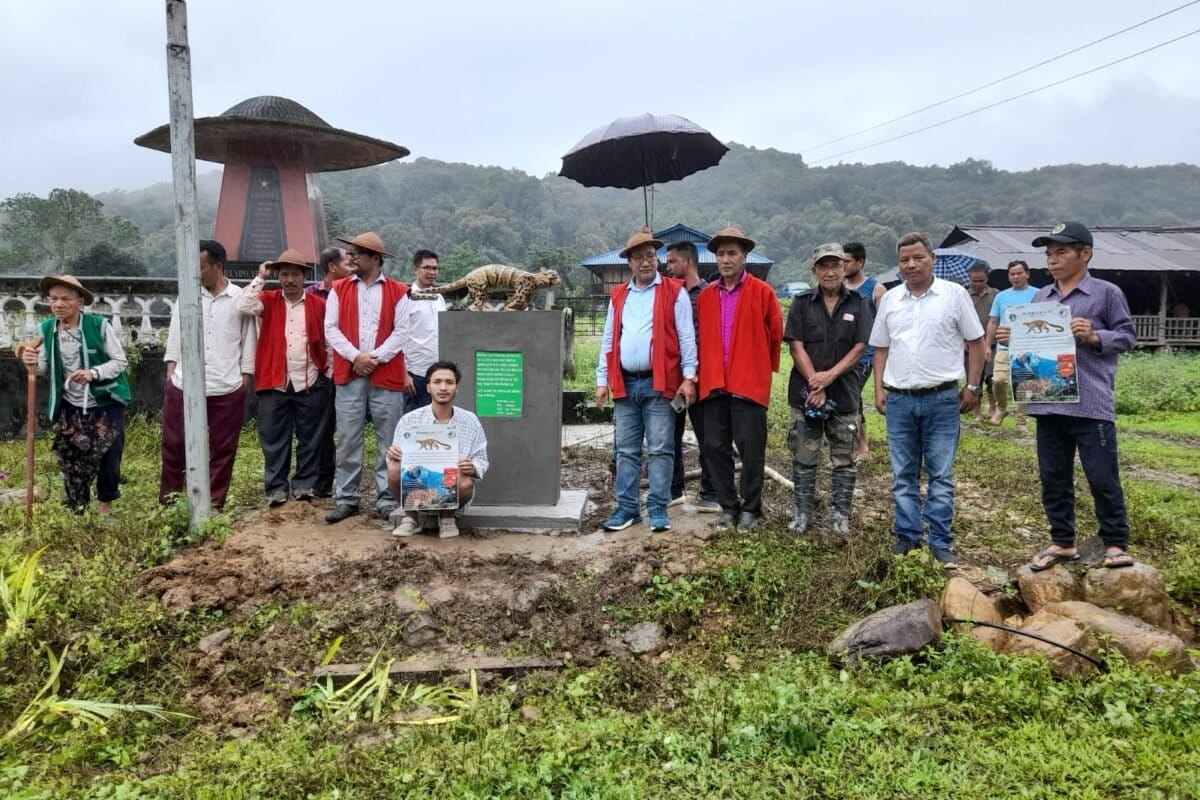
Local youth and even hunters were engaged in camera trapping and research. The exercise also became a tool for dialogue with communities.
Yomli Mayi, from Nyorok village in West Siang district and a member of the Galo tribe, recalls an interview conducted during fieldwork. “An elderly woman told me how the forests used to be much denser and wildlife sightings were more frequent in the past. She spoke about how things have changed over time and how some animals are no longer seen. It reflects what people have witnessed within their lifetime.”
“In my village, like in many others, people do not always realise how closely biodiversity is tied to our environment and daily lives. Through camera trapping, we tried to make this more relatable, so that people could see the value of conserving the plants and animals around us,” Mayi points out.
“The lack of sufficient studies on the marbled cat largely comes down to funding,” says Jimmy Borah, Deputy Director, Legal and Advocacy Division at conservation organisation, Aaranyak. “Species like the marbled cat are often studied as part of broader wild cat groups rather than through species-specific research. Its cryptic behaviour and remote habitat further complicate research. Direct sightings are rare, so studies rely heavily on indirect methods such as camera trapping, which is resource-intensive. The recent efforts in Arunachal Pradesh centred on the marbled cat are commendable.”
“One of the biggest challenges was helping the community understand what conservation really means. While I respect local traditions, it’s equally important to recognise the need to protect every species in our forests and reduce hunting,” adds Anand Goi, member of the Lokpeng Welfare Society, a local conservation organisation.
Awareness building is key
In Arunachal Pradesh, as in Nagaland, wildlife interactions are shaped by evolving socio-cultural dynamics. Hunting, once regulated by customary norms, continues to be practised in many areas, although its intensity and methods have changed. While larger species often feature in conservation messaging, smaller and lesser-known animals such as the marbled cat tend to receive less attention.
Hunting is often driven by the need for bushmeat rather than the targeting of specific species. According to Adi and Galo folklore, humans (Tani), spirits (Taki) and the feline family (Tanyo) share a common ancestor, Turi or Eri. Nyote (tiger), Nyopak-takar (leopard) and Nyoli/Nyomuk/Nyoji (various wild cats) are regarded as elder brothers of humans, a belief that traditionally discouraged their killing.
“The challenge is visibility. If people don’t know about a species, it’s difficult to build conservation around it,” says Malla. “There are about 15 villages on the periphery of the pristine forest landscape in the Siang Valley, and we are working to sensitise these communities and gradually bring a larger area, covering around 5,000 square kilometres, under community-led conservation.”
Community members in the Siang region are also planning to develop village homestays to attract wildlife enthusiasts and involve hunters in these initiatives as an alternative livelihood option.
“Low-impact, well-managed, community-led ecotourism can contribute positively to conservation. In remote landscapes, where forest staff may have limited access due to logistical constraints and limited manpower, there have been instances where tourists and local guides reported wildlife sightings or incidents such as injured animals or poisoning, thereby aiding monitoring efforts,” says Jimmy Borah. “Large-scale and infrastructure-driven tourism, however, can negatively impact wildlife habitats.”
(The article was first published in Mongabay)