

Mysuru: Where a kingdom still breathes
The city is clean, planned & unhurried, & exactly the kind of place you need when you want to breathe away from a crowded, sprawling metropolis

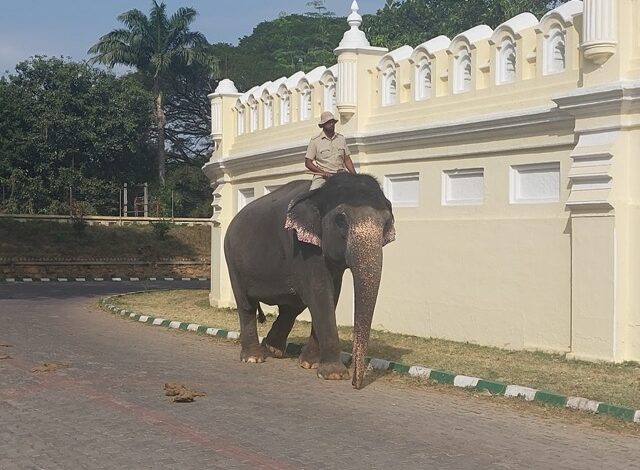
 The Palace of Mysore, in the southern state of Karnataka, is one of India’s most sought-after destinations, its domes and turrets rising over acres of manicured ground right in the heart of the planned, princely city of Mysuru. That this was once the seat of the Wodeyar dynasty is not something you have to take on faith — the whole city tells you so.
Historic gateways, temples and grand old bungalows dot the landscape, and a walk through Mysuru’s broad, tree-lined avenues carries you back to the days when a king ruled these lands. That feeling only deepens the moment you step through the palace gates.
There are two ways to experience the Mysore Palace, also known as the Amba Vilas Palace. The paid entry takes you inside the palace itself — through the Kalyana Mantapa (marriage pavilion) with its stained-glass dome, the Durbar Hall with its sculpted pillars and gilded ceiling, cabinets of royal artefacts, antique furniture and the ceremonial golden throne. It is an experience that leaves you feeling as though you have briefly lived those bygone royal days, and it is impossible to walk through such opulence without wondering what lives were once led by the people who called this place home.
The free entry, by contrast, keeps you within the sprawling outer campus — still grand, still absorbing, just without a foot inside the main building.
The exterior of the palace is every bit as arresting as its interior. Manicured flower gardens and long stone walkways lead visitors past a dozen or so temples tucked into different corners of the complex — among them the Shweta Varahaswamy, Sri Bhuvaneshwari, Ancient Sri Lakshmiramanaswamy shrines — along with an elephant corral, a designated feeding arena, and courtyards that once buzzed with the daily life of the royal household. Visitors are often seen lingering for hours, tracing the rhythm of a bygone dynasty, soaking in an aura that photographs never quite capture.
The story behind all this splendour begins in 1399, when prince Yaduraya Woodeyar founded the Woodeyar dynasty and what followed was a lineage of 25 rulers who governed Mysuru for over five centuries, right up until 1947, when the kingdom acceded to the Indian Union.
The Woodeyars were generous patrons of art, architecture and Kannada literature, and it is their patronage — renewed after fires and political upheavals repeatedly destroyed earlier versions of the palace — that gave Mysuru the fourth and current Amba Vilas Palace, designed by British architect Henry Irwin and completed in 1912 in a lavish Indo-Saracenic style blending Hindu, Islamic, Rajput and Gothic elements.
Perhaps nothing prepares you for the evenings. The palace is fitted with roughly 97,000 incandescent bulbs, switched on every Sunday and public holiday (and nightly during the Dasara festival), tracing every dome, arch, and spire in gold. The sight is genuinely spectacular — hard to put into words — and I found it truly mesmerising, as though the King and Queen themselves had stepped out to greet their subjects once more.
The sound and light show, in English and Kannada, on different weekdays in the evening hours only deepens the spell. Over roughly an hour, dramatic, synchronised lighting plays across the palace façade while a narration brings 400 years of Mysuru’s history to life — from the founding of the dynasty through its wars, its reconstructions, and its golden age — confirming, for the many locals who hold this story dear, that the kingdom is very much alive and kicking.
Mysuru guards its heritage with genuine rigour. Within a 100-metre radius of designated heritage structures, new buildings are capped at just 7.5 metres in height; in the surrounding buffer zones, the limits scale up gradually to 10.5 metres and then 14 metres, ensuring that landmarks like the Mysore Palace and the temple-crowned Chamundi Hills are never swallowed up by concrete.
This is where Mysuru diverges sharply from Karnataka’s bigger metropolis, Bengaluru — unplanned and congested, in no small part thanks to the relentless sprawl of IT firms setting up shop in every corner of the city, to the point where you can find a local branch of almost any major global company operating there.
Mysuru chose a different path. Jawaharlal Nehru, after a visit, is remembered for describing it as a retiree’s paradise, and for the most part it has stayed true to that description — clean, planned, unhurried. That said, the city is not standing entirely still: Infosys, L&T and a handful of other major IT names have set up bases here in recent years. Whether this marks the start of Mysuru becoming “the next Bengaluru” remains genuinely contested — some insist there is no such plan, since large-scale IT expansion is not being actively courted here the way it was in Bengaluru.
For now, at least, Mysuru remains clean, green, strategically located, and exactly the kind of place you need when you want to breathe away from a crowded, sprawling metropolis.
OTHER ARTICLES BY AUTHOR
Borghat’s forgotten Shiva Temple: A quiet legacy of faith, history and harmony